Daughter of Heaven (2007): Nigel Cawthorne

★★★

The True Story of the Only Woman to Become Emperor of China

My recent Chinese escapades left me with a burning desire to find out more about the country’s history and culture, so I couldn’t resist this biography of Wu Chao, a remarkable woman in the 7th century who clawed her way up from the status of a lowly concubine to become Emperor of China in her own right. She was, predictably, a fascinating character and her court, in its intrigues, corruption and eventual dissipation, makes the worst excesses of Westeros look like a village fete. Her rise and fall are worthy of a Greek tragedy but, alas, this book isn’t the best way for a newcomer to encounter her story.
Continue reading

Defacing the Past (2017)

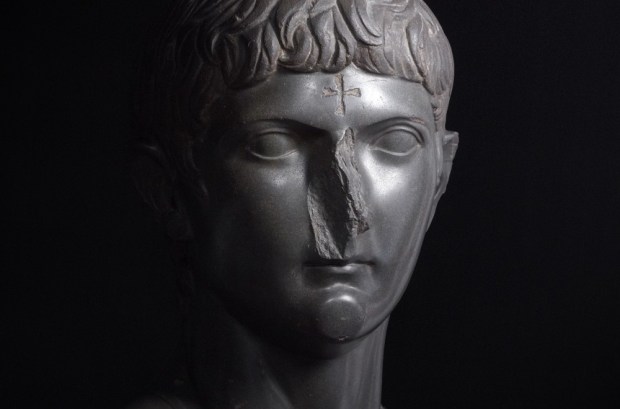
Head of Germanicus

Damnation and Desecration in Imperial Rome

(British Museum, London, until 7 May 2017, Room 69a)

We all know what it means to deface something, but pause a moment and think about the word in greater detail: to de-face, to erase identity, to obliterate the memory of a person. It is one of the most profound punishments that history can inflict, for it either condemns a man to oblivion or associates him eternally with the shame of his downfall. This small but carefully curated show, focusing on coins and medals with some pieces of sculpture, looks at how defacement was used as a political punishment in Ancient Rome, and how it grew out of preexisting traditions of damnatio memoriae that have continued in various forms right up to the present day.

Continue reading

Four Princes (2017): John Julius Norwich

★★★★

Henry VIII, Francis I, Charles V, Suleiman the Magnificent and the Obsessions that Forged Modern Europe

Over the years I’ve assembled a variety of John Julius Norwich’s history books, because he conveniently writes on precisely the topics that fascinate me: Byzantium; Sicily; the Normans in Italy; and so forth. However, although I’ve dipped into all of these books, I’ve rather shamefully never finished any of them, having been distracted for various reasons from savouring Norwich’s sublimely elegant prose. This new history, shorter than the others and full of a delightful liveliness, has the honour of being the first Norwich that I’ve read cover to cover. Taking the unusual format of a group biography, it focuses on the dazzling first half of the 16th century, when four men between them bestrode Europe like colossi. It’s an extremely accessible introduction to the period and the men in question.

Continue reading

Académie Royale (2015): Hannah Williams

★★★★½

A History in Portraits

Published in 2015, this lavishly-illustrated book offers a engaging study of the Académie Royale, from its foundation in 1648 until its abolition in 1793 as part of the intellectual readjustments of the Revolution. While the Académie’s meetings and statutes are well-documented and have furnished much research over the years, Williams seeks to go beyond a simple chronological history of a great institution. Instead, she interrogates the Académie’s values and networks by reconstructing the lived experience of its members, as far as possible, through an examination of the Académie’s collection of official artists’ portraits. It’s an ambitious idea, but the book pulls it off remarkably well and is all the more appealing for its spirited accounts of machinations, alliances and rivalries in the corridors of the Louvre in the 17th and 18th centuries.

Continue reading

Emma Hamilton: Seduction & Celebrity (2016-17)

Romney: Emma as Circle

(National Maritime Museum, Greenwich, until 17 April 2017)

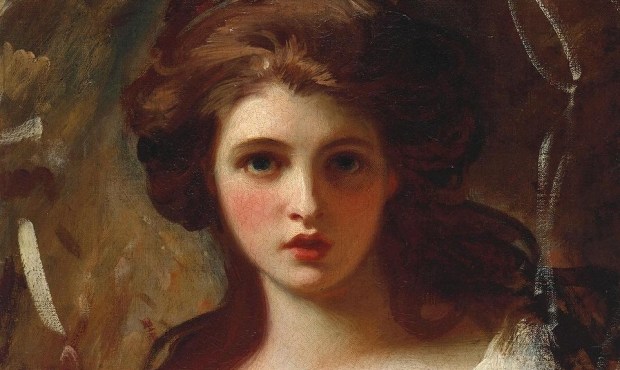
If you aspired to be anyone in the 1790s, one of the mandatory stops on your Grand Tour would be the villa of Sir William Hamilton, British envoy in Naples. You would enjoy Hamilton’s learned conversation, admire his remarkable collection of antiquities and, perhaps, take a trip up Vesuvius to admire the steaming crater. And, if you were especially fortunate, you might have the chance to see Lady Hamilton perform her famous Attitudes, a series of tableaux vivants representing famous women from the Classical world. Yet the appeal was as much due to Lady Hamilton’s notoriety as her talents.

Continue reading

Messages from a Lost World (2016): Stefan Zweig

★★★★ ½

Europe on the Brink

Everyone has been talking about echo chambers recently. Those of us cosily insulated in our liberal-metropolitan-elite ivory towers, with our European friends and our Guardian diet, have had quite a wake-up call this year. We were lulled by our Facebook and Twitter feeds, which reflected back our own views ad infinitum, until it seemed inconceivable that anyone else could think differently. Now we find ourselves in a situation where we have to justify or, worse, defend our longing for a community greater than ourselves. In light of all this, Pushkin Press’s publication of Stefan Zweig’s essays is nothing short of inspired. Written a hundred years ago, these short pieces are charged with the despair of a generation which weathered two cataclysmic wars. They are terrifyingly relevant today. Simple, powerful and unapologetically intelligent, they’re absolutely vital reading as we wait in the shadow of Brexit. Unfortunately those who most need to read them are precisely those who won’t.

Continue reading

Geisha (2000): Lesley Downer

★★★★

The secret history of a vanishing world

In the West we’ve developed a romanticised view of the geisha, largely thanks to Arthur Golden’s Memoirs of a Geisha and the related film. The geisha have become one of the defining images of old Japan for many of us, like samurai or cherry blossom, but Downer takes us beyond the picture-perfect gloss into the complex histories and modern incarnations of this fascinating profession.

Continue reading

The Trouble with Women (2016): Jacky Fleming

★★★★

I suspect Jacky Fleming will hate being labelled with this word, but she’s a little bit of a genius. Her new, tongue-in-cheek book of cartoons takes on one of the big questions of modern society: why is it that there are so many more male geniuses than female? Carefully studying the evidence from the 19th century, and presenting us with the ‘facts’, Fleming embarks on a simple exposé of the downright absurd reasoning by which men have traditionally ‘proven’ that women are the weaker sex.

Continue reading

The Wicked Boy (2016): Kate Summerscale

★★★½

The Mystery of a Victorian Child Murderer

This is the third book I’ve read by Kate Summerscale, after Mrs Robinson’s Disgrace and the excellent Suspicions of Mr Whicher, which I haven’t yet got round to posting about. Like her earlier books, it is a vivid recreation of 19th-century history based on dramatic cases heard in the Victorian courts and reported in the press and, like Mr Whicher, it focuses in on a horrific act of murder. Unlike Mr Whicher, however, this is not a whodunnit. The ‘who’ is clearly and frankly admitted from the very beginning. Summerscale’s investigations seek to understand more about the ‘why’ and to unpick the historical context of the crime and the way in which it was reported by the rapacious press.

Continue reading

Sunken Cities: Egypt’s Lost Worlds (2016)

Canopus: Sunken Cities

(British Museum, 19 May – 27 November 2016)

It’s rather shameful that I haven’t written anything about this exhibition yet, because it’s been open for more than a month and really is worth seeing. My excuse is that I have to squeeze in sightseeing during my lunch breaks and things haven’t been as quiet as they could have been. However, with deadlines out of the way and notebook in hand, I pottered off yesterday lunchtime to explore the underwater delights of ancient Thonis-Heracleion and Canopus.

Continue reading