Moon (2009)

Moon

★★★★

(directed by Duncan Jones, 2009, now on DVD)

Sam Bell (Sam Rockwell) has been on the dark side of the moon for three years. He is the sole inhabitant of a remote lunar base, cut off from live contact with Earth, supervising the machines which mine helium-3, a vital power-source for an overcrowded and exhausted planet. His sole companion is the base’s computer, Gerty (voiced by Kevin Spacey), who simulates moods by displaying a series of text-messaging emoticons. Sam has been sustained throughout his contract by video messages from his wife Tess and daughter Eve, and now he has only two weeks left before his contract ends and he can go home.

Continue reading

Queens’ Play (1964): Dorothy Dunnett

★★★★½

The Lymond Chronicles: Book II

It is 1550, two years after the events in The Game of Kings. Mary of Guise plans a journey to France, to visit her eight-year-old daughter Mary, Queen of Scots, who is being brought up at Henri II’s court as the affianced bride of the Dauphin. The fate of Scotland depends on the fate of this little girl and Mary of Guise fears that the vultures have grown more daring. She calls on Lymond (now restored to favour) to accompany her to France and unearth any plots against the little Queen.

Continue reading

Midnight in Paris (2011)

Midnight in Paris

★★★

(directed by Woody Allen, 2011)

Several people have told me over the last few months that I had to watch this film.  ‘You’ll really like it,’ they said, friends and colleagues alike, ‘it’s just up your street.’ Clearly my conviction that I should have been born in another age (preferably as Lucy Honeychurch) isn’t as secret as I thought. And it’s little wonder the film has been so popular.  Whimsical and light-hearted, it’s set in one of the world’s most photogenic cities and stars Owen Wilson, on mellow form, as a romantic, vulnerable and misunderstood writer.  The concept is fresh and clever, but at heart it’s  a deeply traditional fable of the kind Hollywood loves, all about finding yourself and realising that happiness is about facing up to your problems rather than running away from them.  It’s the kind of film you watch on a girls’ night in with white wine and chocolate truffles.  It was always going to be a hit.

Continue reading

BP Portrait Award 2012

Cumberland: Self Portrait

(National Portrait Gallery, London, until 23 September 2012)

Once again it’s time for the annual BP Portrait Award exhibition.  These shows are always popular, partly because they’re free and partly because it’s part of human nature to be fascinated by images of other people.  You find yourself trying to tease out the stories behind the portraits, to judge the character of the person represented, or the relationship between artist and sitter.

Continue reading

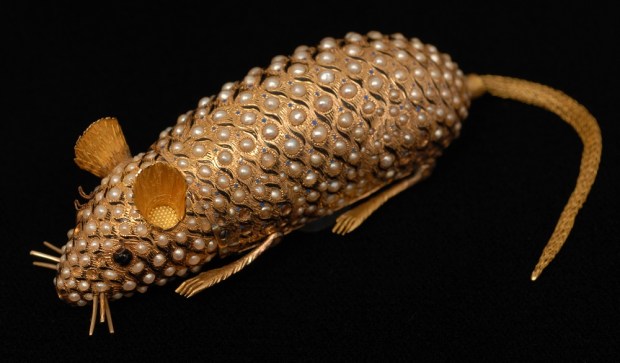
Gold: Power and Allure (2012)

Gold and pearl mechanical mouse

(Goldsmiths’ Hall, London, until 28 July 2012)

Publicity for this exhibition has been rather limited – I only found out about it because I spotted a poster while going up a Tube escalator one day – which is a shame, because it really is something not to be missed. It’s an unprecedented show of almost 500 gold objects, the vast majority of which were made in Britain, showing the versatility and skill of the goldsmith’s craft over the last 4,500 years.

Continue reading

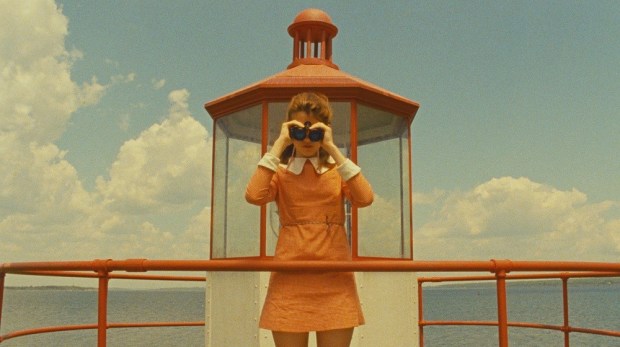
Moonrise Kingdom (2012)

Moonrise Kingdom

★★★★

(directed by Wes Anderson, 2012)

It is summer 1965 and we are in the town of New Penzance, a remote, isolated New England community. Suzy Bishop (Kara Hayward) lives with her parents and three small brothers in a rambling red house which looks like an oversized dolls’ house, where she spends most of her time silently watching others through her omnipresent binoculars.  Sam Shakusky (Jared Gilman), also twelve, is an orphan in a foster home and is spending the summer at a scout camp run by the earnest Randy Ward (Edward Norton).  Both stigmatised as ‘problem children’, Suzy and Sam have been penpals for a year, after a chance meeting at a performance of Noye’s Fludde by Benjamin Britten.  The attraction is immediate: finally each of them has someone who understands their inner turmoil.  They decide – as you do – that they are in love, and plan to run away together.

Continue reading

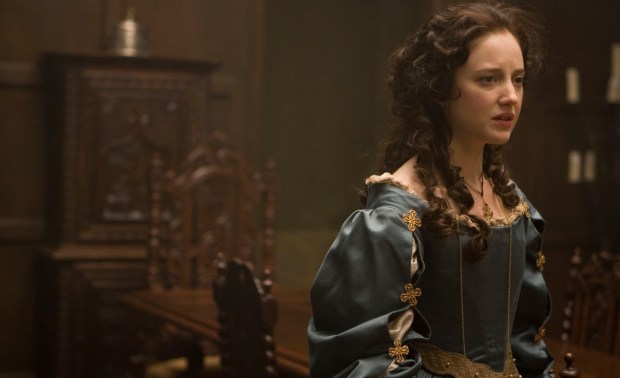
The Devil’s Whore (2008)

The Devil's Whore

★★★★½

First screened in 2008, this four-part TV series shows us the English Civil War through the eyes of a woman. Subtitled, in a teasing nod to the Newgate scandal-sheets, A True Account of the Life and Times of Angelica Fanshawe, it begins in the early 1640s.  Angelica (Andrea Riseborough) is goddaughter to Charles I, blessed with wealth, position and security: the first episode opens on the eve of war, with her wedding to her cousin Harry, her childhood sweetheart.  As hostilities between King and Parliament deepen, her married life comes to an abrupt close and, banished from the court, Angelica finds herself in growing sympathy with those who seek to make a better world.  The series follows her as she struggles to defend her own well-being and her family home, as the sands of political fortune shift under her feet.

Continue reading

Master Drawings from the Courtauld Gallery (2012)

Michelangelo: Il Sogno

(Courtauld Gallery, London, until 9 September 2012)

Over the last few years the Courtauld has become renowned for small-scale exhibitions, which often use works from its enviable collection as springboards to explore particular themes.  Recent personal favourites include Love and Marriage in Renaissance Florence, which focused on 15th-century cassone paintings, and the wonderful Michelangelo’s Dream, which used Il Sogno as the basis of a discussion of Michelangelo’s presentation drawings made for friends.  Both shows included loans from other collections alongside items from the Courtauld’s holdings, but the new exhibition is dedicated to the Courtauld’s own drawings (as was the recent show Spanish Drawings at the Courtauld Gallery).

Continue reading

The Game of Kings (1961): Dorothy Dunnett

★★★★

The Lymond Chronicles: Book I

It is Scotland, in the 1540s. Edward VI is on the throne in England, the realm governed by his Protectors. In Edinburgh, Mary of Guise rules as regent for her infant daughter, later to become Mary Queen of Scots. The vultures, French and English, gather around the little queen, hoping to benefit from her marriage, while the Scottish lords beat back wave after wave of concerted English invasion. Into this political powder-keg comes Francis Crawford of Lymond: nobleman, wit, exile and ex-galley-slave, determined to prove himself innocent of a six-year-old charge of treason.  ‘Lymond is back,’ says the first line of the book; and the game can begin.

Continue reading