Visions of Arabia (Doha, Qatar)

Museum of Islamic Art Doha

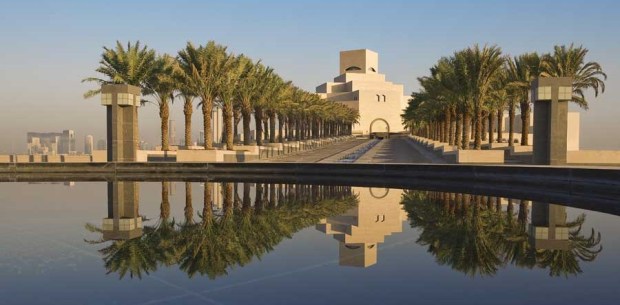
I’ve just returned from a week in Qatar, which is certainly the most exotic place I have ever visited and also one of the most fascinating. This is a place of contrasts: the vast, stark, dusty grey emptiness of the desert butts up against glossy new buildings from cutting-edge architects. Qatari men wearing traditional white robes and headdresses drive around in oil-guzzling white Toyota Land Cruisers. The desert is all around and yet Doha nestles at the edge of the Persian Gulf, mirrored in its waters.

Continue reading

La Belle et la Bête (1946)

La Belle et la Bête

★★★★

Beauty and the Beast has always been my favourite fairy tale.  I remember going to see the Disney film at the cinema for a schoolmate’s seventh birthday.  As a bookish only child, I took that version deeply to heart and still love it to bits; but for pure cinematic fantasy and elegance, Jean Cocteau’s 1946 version is hard to beat.  Rich, sumptuous and stylised, it’s a feast for the eyes (and is best watched with a glass of wine and some chocolate truffles).  Cocteau begins by writing out the credits on a blackboard, followed by a handwritten text in which he makes it clear that we must suspend our disbelief and enjoy the story as children would.  He signs off with the words ‘Il était une fois [Once upon a time]...’

Continue reading

A Song for Arbonne (1992): Guy Gavriel Kay

★★★★

This is the sixth book I’ve read by Guy Gavriel Kay and it is once again set in his distinctive parallel world with its single sun and twin moons – white and blue – though the names of the countries and the gods aren’t the same as in his other books.  Like the vast majority of his novels, A Song for Arbonne takes place in a context closely mirroring a historical period from our own world: in this case, Southern France in the age of the troubadours.

Continue reading

The Skin I Live In (2011)

The Skin I Live In

★★★½

(directed by Pedro Almodóvar, 2011)

When my colleagues and I were discussing films, and I said I wanted to see The Skin I Live In, they said they thought it was a horror film.  That worried me: I couldn’t imagine Almodóvar making a horror film. What I found, as it unfolded, was that this was not a horror film (to my relief): it was a typical Almodóvar film wrapped in the guise of a melodramatic thriller.

Continue reading

The Tempest (1611): William Shakespeare

The Tempest: William Shakespeare

★★★★

(Antic Disposition, Middle Temple Hall, 20 August – 3 September 2011)

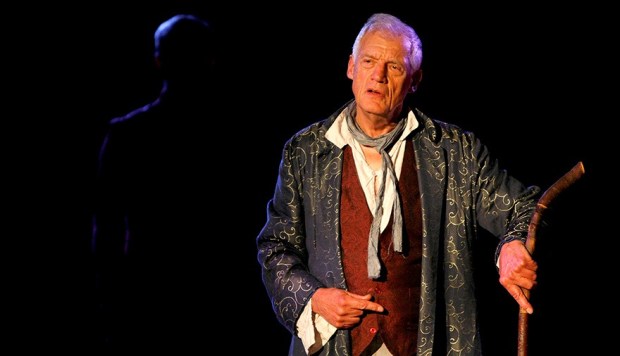
Yes, I know what you’re thinking. ‘She didn’t go to see The Tempest again?!’ Well, yes; I did. Yesterday, while browsing Google in search of other reviews of the Haymarket production, I stumbled across a website for this version also currently being performed in London. I liked the sound of the young and independent theatre company, Antic Disposition (founded in 2005), and was impressed by the reviews of their previous Shakespeare productions. Plus, they were performing The Tempest at Middle Temple Hall, the glorious Elizabethan dining hall of one of the Inns of Court, where Twelfth Night received its very first performance.

Continue reading

The Tempest (1611): William Shakespeare

ARTS THEATER

★★★

(Theatre Royal, Haymarket, 27 August – 29 October 2011)

I wanted so badly to enjoy this play, which I booked after seeing Rosencrantz and Guildenstern at the same venue. It was the final treat of my summer holiday.  I looked forward to seeing another production directed by Trevor Nunn; and I couldn’t wait to see Ralph Fiennes on stage again.  When I saw him in Oedipus, at the National Theatre in 2008, his performance was raw, haunting, and stayed with me for days.  I was sure that The Tempest would be a tour de force; but I’m sorry to say it fell short of expectations.

Continue reading

The Turn of the Screw (1954): Benjamin Britten

Britten: Turn of the Screw

★★★★

(Glyndebourne, 11-28 August 2011)

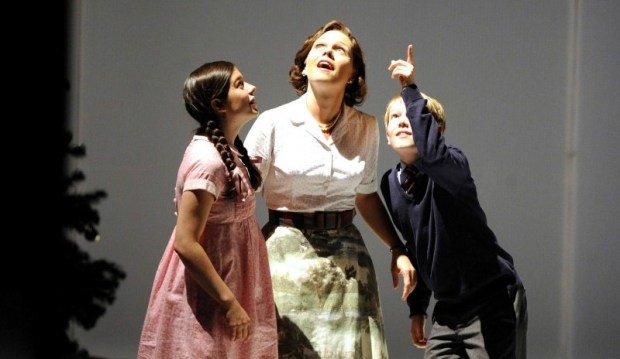
I have a huge debt of gratitude to repay to my friend who, on being given three tickets for this performance (the original purchaser having fallen ill), asked me to come with her. Glyndebourne is a remarkable experience and, for us, it was a brief glimpse into another, gilded, world.  As evening dress is traditional, it was easy to spot our fellow festival-goers on the 14:47 from Victoria.  Well-heeled couples carried Fortnum & Mason hampers and groups of young men, who might have stepped straight out of Brideshead Revisited, lounged in the aisles toting picnic rugs and bottles of champagne.  At Lewes station we all piled out of the train and onto some waiting coaches and then we rattled through narrow winding streets (it’s a picturesque little town; I’d never been before) to the house itself.

Continue reading

Treasures of Heaven (2011)

Limoges Reliquary of St Valerie

Saints, relics and devotion in medieval Europe

(British Museum, London (23 June – 9 October 2011)

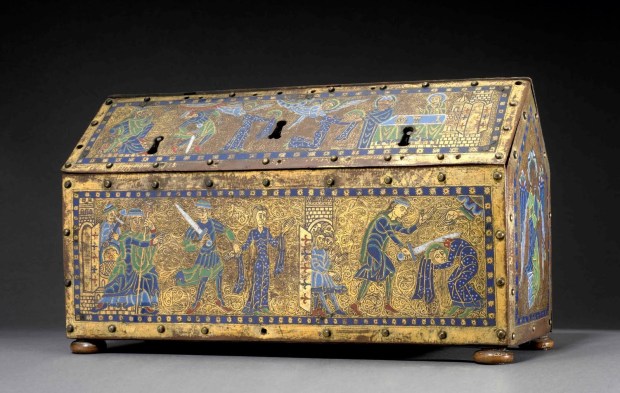
I have a feeling that, while this exhibition was being prepared, I read an article about concerns expressed by some of the lenders – monasteries, abbeys, great Catholic churches – about whether their precious relics would be treated with the respect they deserved in Protestant England.  If I am right, then it shows that awareness of the Reformation remains strong even today.  However, they needn’t have worried.  The exhibition setting is a triumph of simplicity and the objects are left to work their extraordinary power.

Continue reading

Brief Encounter (1945)

Brief Encounter

★★★★

(directed by David Lean, 1945)

Tonight, having a desire for something simple, I sat down with a glass of wine and some white chocolate and watched Brief Encounter.  It’s only the second time I’ve seen it.  And, oh goodness, it’s such a beautiful film.  Shot on an austerity budget, predominantly in and around (the fictional) Milford Junction station, it doesn’t immediately strike you as having the ingredients for one of the great romances.  The characters are as archaic and clipped as their accents, battling back the ungovernable forces of lust in defence of what is right and proper. Like The Remains of the Day, much of what’s important is in fact not spoken.  And, like Casablanca, the conclusion has a bittersweet quality that lingers wistfully, long after the film finishes.

Continue reading