I’d never heard of Dorothy Dunnett until one afternoon when I was in the library, seeking out my next stash of books. Methodically going through the racks, I stumbled across The Spring of the Ram, the second book in her House of Niccolò series. Although I don’t like reading series out of order, the first book was nowhere to be found in the library and there was a synopsis at the start of The Spring of the Ram. I took it home and, very shortly, was absolutely hooked.
Glamour of the Gods (2011)
(National Portrait Gallery, London, 7 July – 23 October 2011)
There’s something about the golden age of Hollywood that still captures the attention today: an era when men were men, women were women and everything was screened by a veil of cigarette smoke. This wonderful exhibition brings together a selection of photographs of the biggest film stars from the 1920s to the 1950s. Most are silvery black-and-white prints, luminous visions of another age, with the odd colour interloper feeling oddly out of place.
How to Train Your Dragon (2010)
(Dreamworks, directed by Chris Sanders and Dean DeBlois, 2010)
Because everyone needs a bit of a break now and again. A couple of friends had told me I would love this film and so, when I saw it discounted in HMV, I thought I’d give it a go. It turns out that my friends know me only too well: I settled down with a glass of wine and had a thoroughly enjoyable couple of hours.
The Tree of Life (2011)
★★
(directed by Terrence Malick, 2011)
Well this was something a little different from the usual. Have many people seen it? I’m still trying to make up my mind about it, and I’d be really interested to know what other people think. I decided to go to see it because I really liked Terrence Malick’s last film, The New World and since The Tree of Life had won the Palme d’Or at Cannes, it promised to be worth watching. So off I trotted to the cinema.
A Midsummer Night’s Dream (1595/96): William Shakespeare
★★★★½
(Iris Theatre, St Paul’s Church, Covent Garden, 2 July – 6 August)
Certain plays are made to be performed outside, and the garden play par excellence is A Midsummer Night’s Dream. Completely by chance, I spotted the banner for Iris Theatre’s current production in the gardens of St Paul’s Church, Covent Garden. It sounded like a lovely way to start off the week and, since the weather promised to be fine, I roped in a colleague to come along with me.
Joan Miró: The Ladder of Escape (2011-12)
(Tate Modern, 14 April – 11 September 2011)
I left it late to come to this exhibition, the first major retrospective of Miró’s work in the UK for 50 years, but I’m glad I caught it. I don’t often venture to Tate Modern, but this is an unconscious prejudice that I’ll have to change in the future. What struck me most about the exhibition was how completely ill-equipped I was to understand what Miró was trying to achieve in his work.
La Princesse de Montpensier (2010)
★★★
(directed by Bertrand Tavernier, 2011)
Bertrand Tavernier’s new historical epic is a bit of a mixed bag. Based on a short story published in 1662 by Madame de La Fayette, it tells the story of a young woman’s fall from grace during the wars of religion in 16th-century France. It looks fabulous, but somehow its Gallic charm never quite forges its way through the eye to the heart.
BP Portrait Award 2011
National Portrait Gallery, London (16 June – 18 September 2011)
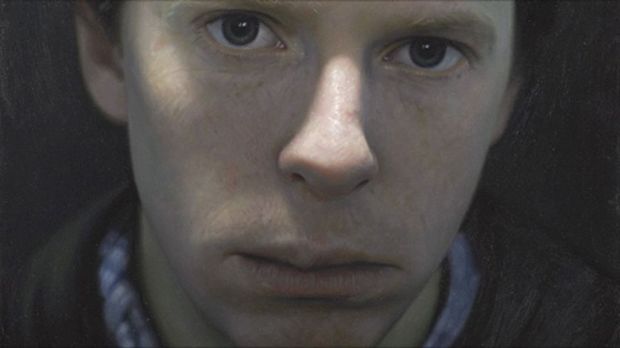
The first thing to say about this year’s Portrait Award is that the standard is very high. There are a few weaker pictures but generally the portraits are arresting and technically very impressive. I confess that I’m always drawn to intense close-ups of faces, which I feel really bring out a personality, and there were a couple of particularly striking ones in the show. One was Jakub by Jan Mikulka, which from a distance looks exactly like a photograph. Only at close range can you distinguish the brushstrokes and see the image dissolve into careful arcs of paint. It’s remarkable; and I was also touched by the sitter’s haunted, slightly sulky expression, which makes him look very young.
Rosencrantz and Guildenstern are Dead (1966): Tom Stoppard
★★★★
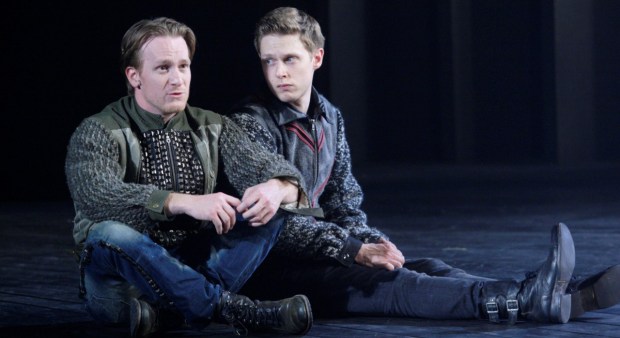
(Theatre Royal, Haymarket, London, 16 June-20 August 2011)
Tom Stoppard’s wonderful play is a modern classic: a witty, intelligent and strangely poignant exploration of what happens when every exit is an entrance somewhere else. I am very fond of the film, starring Gary Oldman and Tim Roth, but this production, directed by Trevor Nunn, was very impressive.
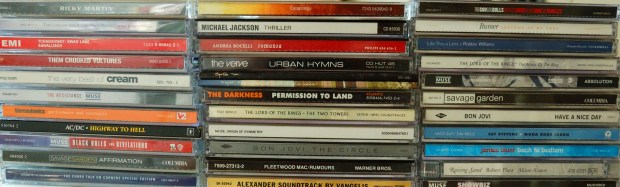
Era-defining albums

My uncle has been doing a stellar job of introducing me to some of the great albums that were around when he was a music journalist for his student paper back in the early ’70s. We’ve already covered the late ’60s and we’ve currently got up to 1971, though I’m sure there have been a couple of chronological diversions here and there. But this got me thinking. Some of these tracks have the power to conjure up very vivid memories for my uncle and my parents of where they were and what they were doing when they listening to them. And I found myself wondering which albums might have the same effect on me in twenty years time. Below were some which sprang to mind.