Jingo (1997): Terry Pratchett

★★★½

The Discworld Reread: Book 21

When a mysterious island rises abruptly out of the sea, right under his boat, fisherman Solid Jackson knows precisely what he’s going to do. He’s going to claim that land in the name of Ankh-Morpork and become a national hero, no question about it. Unfortunately for Solid, he isn’t the only one present at the moment of the island’s apparition, and his great rival Arif promptly decides that it actually belongs to his own country, Al-Khali. As the fishermen scurry home to inform their respective governments, their dispute swiftly escalates to the level of international diplomacy… and worse. While this book sparkles with all Pratchett’s characteristic verve, reading it is a mitigated pleasure, because a satire on the stupidity of racial intolerance, hate crimes and the futility of war feels so bloody pertinent in the modern world. And, unlike the good citizens of Ankh-Morpork, we don’t even have Sam Vimes and the City Watch standing by to save us…

Continue reading

Aspects of Love (1955): David Garnett

★★

I know virtually nothing about Andrew Lloyd Webber’s musical Aspects of Love, except for the song Love Changes Everything, which was on a CD we used to play in the car during long journeys. I certainly didn’t know that the musical was based on a book, still less that said book was a product of the Bloomsbury Group. When I stumbled across it by chance, I decided that I simply had to give it a go – though I can’t say that I enjoyed it. It’s a self-indulgent triumph of style over substance and, while it’s a quick read at fewer than 150 pages, it lingers in the mind for the wrong reasons: for its unpleasant aura of exploitation and emotional manipulation. It becomes even more sinister when you realise that it was inspired by events in Garnett’s own life.

Continue reading

The Barefoot Woman (2008): Scholastique Mukasonga

★★★★★

Scholastique Mukasonga’s mother used to tell her daughters that it was their duty to cover her when she died. By shrouding her body in a pagne, the colourful wrapper worn by both women and men, they could preserve decency and allow her soul to safely move on to the next stage of its journey. But Mukasonga was living far away in France when her mother was horrifically murdered, alongside her sisters, brothers, neighbours and friends, in the Rwandan genocide of 1994. Unable to fulfil her mother’s wish, Mukasonga instead pays tribute to her with this extraordinary memoir. It is a celebration of one remarkable woman, but also of all the women whom Mukasonga knew as a girl: the energetic, creative, passionate, devout neighbours who helped an exiled community to maintain its dignity in the face of racial hatred, and who fought to give their children as normal a life as possible in a world where nothing was normal any more. Blessed with a lyrical and eminently readable translation by Jordan Stump, this little slice of vanished Rwandan life might just end up being one of my books of the year.

Continue reading

Murder at the British Museum (2019): Jim Eldridge

★★

I’m intrigued by stories set in museums, mainly because I love seeing what authors think curators do with their time (hint: less of the jungles, secret societies and revivified mummies; more ferreting around in dusty boxes. Or maybe that’s just me). This particular book caught my eye because it’s set in my own stomping ground. How could I resist a murder mystery in the hallowed halls of the British Museum? In retrospect, I probably should have done: partly for the usual reason (indignation at a lack of familiarity with what the building actually looks like), and partly because I didn’t think it was particularly well-written. But there’s still a measure of interest to be found in this tale of dastardly doings in Bloomsbury, and in the enterprising duo who are called in to help solve the crime and – more importantly – salvage the Museum’s reputation.

Continue reading

Jumping the Queue (1983): Mary Wesley

★★★

I read The Camomile Lawn as a student and, being young and naive, was impressed by its suave, sophisticated, witty characters. With this in mind, I happily snaffled Mary Wesley’s Jumping the Queue when I found it on a bookshop expedition to Winchester with H. Now I wonder whether, if I were to reread The Camomile Lawn, I would find there the negatives that I noticed here alongside the wit and sophistication: detached indifference; clever people behaving horribly to one another; a rather nihilistic view of the world. What, really, is the point? That’s the question we find the recently widowed Matilda Poliport contemplating as the book starts. Carrying a basket of wine, cheese and fresh bread, she’s heading down to the beach for a picnic before she ends it all. When her plans are frustrated, she heads back to a life that she thought she had all neatly tied up; but this time she has an unexpected companion: a soul almost as lost as she is. Be warned. This is not a cosy piece of classic fiction. This is fiction with claws. And teeth.

Continue reading

Valencia and Valentine (2019): Suzy Krause

★★★

Suzy Krause’s debut novel is a charming low-key tale of two women whose lives have been formed by stories. On the one hand is garrulous old-age pensioner Mrs Valentine, always ready with a twinkle in her eye and a new instalment of her colourful life-story. On the other is Valencia, crippled by neuroses and social anxiety, stuck in a dead-end job as a debt collector. Her stories are within her mind: the relentless litany of things that might go wrong if she forgets to do one tiny little things. Crushed by past guilt, Valencia has limited her life to her flat and the four walls of her work cubicle; but, as her thirty-fifth birthday approaches, she begins to long for change. And then, quite of the blue, the possibility of change appears: in the form of a new colleague and an unexpectedly friendly client. Could this be the start of a new life? Or will it be simply the same old tale of opportunities missed through fear, shame and cowardice?

Continue reading

Nine Perfect Strangers (2018): Liane Moriarty

★★½

This is the third Liane Moriarty book I’ve read (I’m working backwards through my recent reading, so bear with me) and my least favourite so far – which feels rather ironic, given that the receipt of a bad review causes such emotional crisis for one of the characters in this book. The formula is similar to that in Moriarty’s other books: a group of apparently successful, well-adjusted people come together and begin to realise that nothing is quite as glossy and simple as it seems. In the other Moriarty novels I’ve read – Truly Madly Guilty and The Husband’s Secret – the action unfolds in the wealthy Australian suburbs among the chattering classes. The unsettling elements arise organically from the complexities of everyday life. In Nine Perfect Strangers, however, our characters are taken out of their routines and thrown into a more ‘engineered’ situation. They meet at Tranquillum House, an exclusive health resort offering a ten-day cleanse that will lead to personal and spiritual transformation. All they need to do is follow the personalised schedules designed by the resort staff; but little do they know that these schedules have been designed to press them to their limits.

Continue reading

The Men Who Stare At Goats (2004): John Ronson

★★½

This is the third of Jon Ronson’s books that I’ve read and probably the most famous thanks to the film based on it; but it’s also the most bewildering. I enjoyed it far less than the other two, The Psychopath Test and So You’ve Been Publicly Shamedbecause it required me, straight off, to give credit to some absolutely ridiculous things. It reads like absurdist fiction and even now I don’t quite believe that it hasn’t all just been made up. Ronson tells us the story of some very senior people in the US military who start believing that they have very strange powers; and whose principles gradually begin to filter throughout the wider military. Quite frankly, I don’t suppose it’s much of a revelation – given the current political climate – that there are some seriously odd and misguided people in power; but are we really expected to believe this? But I’m jumping ahead of myself. Let’s go back to the beginning. Basically, it all begins with these goats…

Continue reading

The Continuous Katherine Mortenhoe (1973): D.G. Compton

★★★

D.G. Compton’s 1974 novel, also known as The Unsleeping Eye, is both eerily prophetic and very dated. It presents a world where medicine has advanced to such a degree that old age and accidents are virtually the only cause of death. When Katherine Mortenhoe, a workaholic editor in her forties, is told by her doctor that she’s one of the rare few to have developed a terminal condition, her imminent death makes her a celebrity. The vulpine TV producer Vincent Ferriman knows that Katherine’s situation will make her perfect for his show Human Destiny, in which the tragedies of the few are played out for the edification (and salivation) of the comfortable masses. Her husband Harry is game to sign the lucrative contract; but Katherine herself won’t so easily be made a victim. Yet she hasn’t reckoned with Vincent’s masterstroke, in the form of very special reporter Roddie Patterson. The high concept, which foreshadows our own age of reality TV shows and constant status updates, is intriguing, but Compton’s novel is dragged down by the fact that his future still looks, and feels, an awful lot like the 1970s.

Continue reading

The Idle Woman’s 8th Birthday

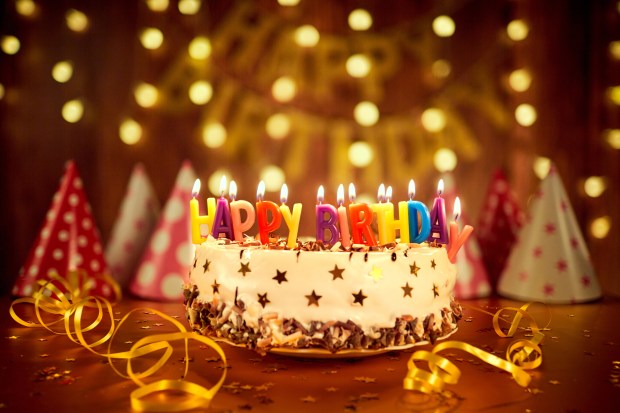
Happy-Birthday-Cake-Image

Time has done that thing again where it speeds up and, before you know it, another whole year has gone round. Today is this blog’s eighth birthday and, even though I haven’t been massively active in the last few months, it’s still very much a going concern, so don’t worry. It takes a special kind of determination, to browse through pictures of cake and candles when it’s so hot here in London that the thought of consuming anything heavier than iced water is almost unbearable… but I’ve taken one for the team, as you can see. So join me in a slice of virtual birthday cake and a glass of the beverage of your choice.

Continue reading