The Girl on the Train (2015): Paula Hawkins

Oh boy. This is that rare thing: a bestseller that actually does live up to its reputation. Whatever you do, don’t start reading it if you have anything to do in the near future. As a contemporary thriller, it’s not the kind of book I’d normally read – but there’s been so much talk about it recently and, with news of a film adaptation in the works, I thought I’d better read it before it can be spoiled for me. I never got round to reading Gone Girl, for example, and now that’s been so widely discussed that there seems little point in starting on it. But The Girl on the Train was all that I expected it to be and more, because I bought it without any real idea of what it was. It’s the kind of book you read with your heart in your mouth and the world around you strangely muted as if you’re submerged beneath the water.

Continue reading

Tipping the Velvet (1998): Sarah Waters

One of the most mortifying moments of my teenage years – and there’s plenty of competition, believe me – was watching the BBC’s adaptation of Tipping the Velvet with my parents at the age of seventeen. I remember being utterly shocked (I had a very sheltered upbringing), although since it’s rated 15 it really can’t have been that scandalous. I’ve read two of Sarah Waters’s books since then, but I’d never quite had the courage to go back to this: her first and most celebrated novel. However, I found it in Oxfam yesterday, decided to give it a go at last, and have devoured it at high speed. Beautifully written, evocative, sexy and playfully transgressive, it deserves its status as a modern classic. I could claim I timed this post specifically to coincide with Pride, but that’s just a happy coincidence.

Continue reading

The Improbability of Love (2015): Hannah Rothschild

★★★

I’ve said before that my reaction to books is often affected by the context in which they’re read. Unfortunately Hannah Rothschild’s Improbability of Love will always be associated, for me, with the bleakness of my country’s vote to leave the EU. I can’t go into my feelings in depth here; I only hope that we find a way to mitigate the disastrous divisions in our society and to keep our relationship with Europe strong. In the meantime, we just have to keep our chins up and hope for the best. And so; back to the book.

Continue reading

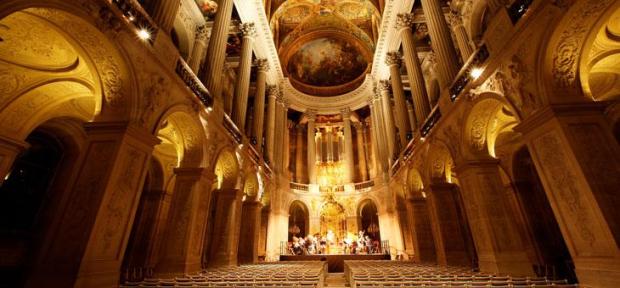
Requiem pour les funérailles de Louis XV (1705/64)

Chapelle Royale, Versailles

(Chapelle Royale, Versailles, 22 June 2016)

What do the composer Jean Gilles (1668-1705), the composer Jean-Philippe Rameau (1683-1764) and King Louis XV (1710-1774) have in common? The answer’s an odd one: they all had the same piece of music at their funerals. This was Gilles’s Messe des Morts, which had its premiere at its composer’s own funeral and remained so popular for the next seventy years that it was reworked and adapted in numerous ways to fit the requirements of later taste.

Continue reading

Sunken Cities: Egypt’s Lost Worlds (2016)

Canopus: Sunken Cities

(British Museum, 19 May – 27 November 2016)

It’s rather shameful that I haven’t written anything about this exhibition yet, because it’s been open for more than a month and really is worth seeing. My excuse is that I have to squeeze in sightseeing during my lunch breaks and things haven’t been as quiet as they could have been. However, with deadlines out of the way and notebook in hand, I pottered off yesterday lunchtime to explore the underwater delights of ancient Thonis-Heracleion and Canopus.

Continue reading

The Princess Who Wouldn’t Come Home (2008): Irving Finkel

★★★★

Let’s establish the key fact first: Irving Finkel is a legend. Not only does he have one of the most impressive job titles at the British Museum (Assistant Keeper of Ancient Mesopotamian Script), but he can read cuneiform, made a replica of the Royal Game of Ur at the age of nine, and looks exactly as a curator should look. I’m resigned to the fact that, even if I spend my entire career wearing tweed and covered in dust – which, to be honest, happens quite a lot – I’m never going to look as much like a curator as Finkel. It’s all to do with the beard, I think.

Continue reading

Four Days in Philly

Philadelphia skyline

In another foray into the drafts folder, I decided it was time to finally post about my trip to Philadelphia just before Christmas. Better late than never, hmm? It was a business trip, as most of my travelling is at the moment, and it was a welcome opportunity to broaden my American horizons beyond New York and Disney World in Florida. Fortunately I enjoyed splendid weather during my stay: very mild, with gorgeous sunshine, which allowed for a lot of walking on the days when I didn’t have meetings. Philadelphia is not the most pedestrian-friendly place in the world, with its main sights rather scattered across the town, but I thought I’d share just a few of the things that really made an impression.

Continue reading

The Parable Book (2013): Per Olov Enquist

★★★

My one previous experience with Per Elov Enquist was via his novel The Visit of the Royal Physician, and it wasn’t an entirely comfortable introduction. I puzzled over what to make of the book’s jagged, disjointed style and was troubled by its detached emotional tone. At the time I wondered whether it was down to author, or translator, but now I can say, quite confidently, that it’s the author’s style. The Parable Book, translated by Deborah Bragan-Turner, has much the same cool, conceptual flavour. It is, however, a rather different beast from the Royal Physician: whereas that was a clear historical novel, this book weaves between genres. Is it novel, autobiography, family memoir, confessional history or philosophical exploration? It is even more disorientating than the Royal Physician, but it makes its mark: there’s something fierce and vivid and urgent at its heart.

Continue reading

Farewell My Concubine (1993)

Concubine6

★★★★

I watched Farewell my Concubine on the same day that I finished reading The Chevalier and found it interesting to compare these two very different stories about the mimesis of femininity. Directed by Chen Kaige in 1993, the film resonates much more strongly, which is unsurprising considering its status as a modern classic. It takes a deep and moving look at the psychological toll of assuming another sex and, using one enduring friendship, tells the story of China’s tumultuous relationship with its own cultural history during the course of the 20th century. Moreover it was my introduction to traditional Chinese opera, which fascinated me of course, even though I feel that the singing is something of an acquired taste for Western ears.

Continue reading

The Chevalier (2016): M.C. Hobbs

★★½

A recent visit to Netgalley revealed a host of interesting fiction titles, but the one which excited me most on first impressions was The Chevalier, based on the early life of the remarkable Chevalier d’Eon. My interest in the Chevalier was originally piqued when a fictionalised version of him appeared in the BBC’s Scarlet Pimpernel series, and it was revived when the National Portrait Gallery acquired his portrait in 2012. He is one of the most colourful and intriguing figures in 18th-century history and I’m extremely surprised that there aren’t more novels about him. I couldn’t wait to settle down with this. Unfortunately, it didn’t live up to expectations.

Continue reading