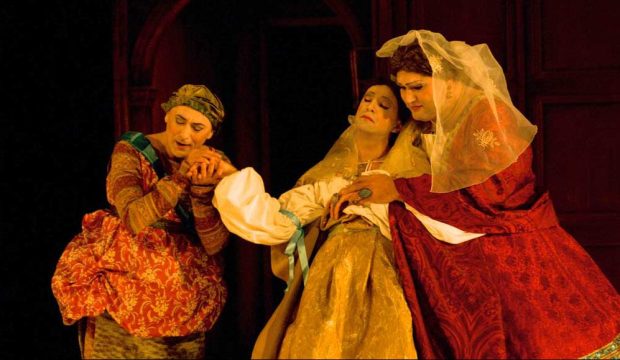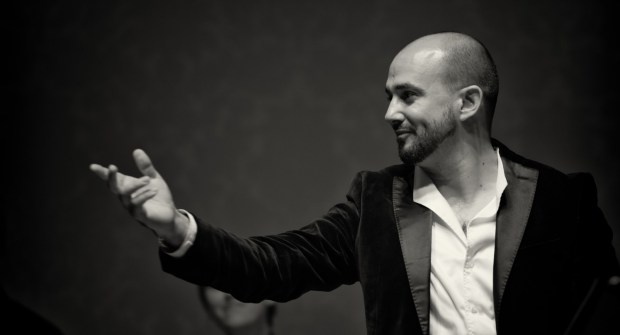
Franco Fagioli: Porpora Arias

Franco Fagioli

(Wigmore Hall, Academia Montis Regalis with Alessandro De Marchi, 21 September 2014)

 If you have the misfortune to follow me on Twitter, you’ll be aware that I have signally failed to remain grown-up and detached about the prospect of attending my first concert of Baroque music. Forgive me. I can only beg the indulgence due to the zealous new convert, while pointing to my almost complete immersion in the Baroque for the last six weeks. And surely I can’t be blamed for my excitement, because I was kicking off my career as a barocchista with a concert by none other than the high priest of showmanship and bravura ornamentation, the inimitable Franco Fagioli.

Continue reading

Arabian Sands (1959): Wilfred Thesiger

★★★★½

Wilfred Thesiger is one of those intriguing people who seem genuinely to have been born out of their time. The Arabian journeys described in his wonderful book could easily have taken place in the late 19th century or, at the very least, in the golden years of Edwardian exploration. They have a timeless quality: the hard slog across the sands; the knife-edge between life and death; the absence of any luxuries or comforts; and only the company of camels and a few trusted men. And yet these journeys, pressing into one of the last great wildernesses of the world, were undertaken between 1946 and 1950: within living memory. Thesiger only died in 2003, but although he is tantalisingly close in time, his spirit is very much that of another age.

Continue reading

The Innamorati (1998): Midori Snyder

★★★

Books often take on something of the spirit of the places where we read them and, in retrospect, it can be hard to separate impressions of the story itself from its context. I read most of this quirky novel curled up on the Loggia dei Lanzi in Florence (some weeks ago now) and so my memories are rather confused and dreamlike, but in a way that entirely suits the book. I’d chosen it deliberately for my trip, because The Innamorati is set in a fantastical version of mid 16th-century Italy, in a world infused with the spirit of the commedia dell’ arte.

Continue reading

The World of the Castrati (1996): Patrick Barbier

★★★½

The History of an Extraordinary Operatic Phenomenon

I should really have kicked off my Baroque reading project with this book by Patrick Barbier. It’s a useful introduction which offers a broad survey of the history of the castrati across Europe, from their beginnings in the church choirs of Byzantium, Spain and the Vatican, up to their twilight years as outdated anomalies, and the departure of the last few castrati from the Sistine Chapel choir at the beginning of the 20th century. Barbier’s focus though, predictably and gratifyingly, is on the heyday of 18th-century opera and, to my relief, he prefers anecdotes and colour to the technicalities of musical vocabulary.

Continue reading

Sant’ Alessio (1632): Stefano Landi

Landi: Sant' Alessio

(Théâtre de Caen, Les Arts Florissants with William Christie, 2007)

★★★★ ½

Over the weekend I treated myself to another opera DVD, this time one which transported me back to the very earliest days of the art form, to Rome in 1632. At this date the Counter-Reformation was in full swing and the Baroque was just coming into being. Gianlorenzo Bernini, who would become the supremo of 17th-century Rome, was 25 and had been asked to design the stage set for Stefano Landi’s new religious oratorio Sant’ Alessio. The production available on this DVD attempts to recreate the feel of that first performance and I admit I came to it with some trepidation. This all felt a very long way from the exuberance of the 18th century.

Continue reading

The Castrato and his Wife (2011): Helen Berry

★★★★

I’ve had an unintentionally Baroque-themed summer, so you’ve got a series of posts on countertenors and castrati coming up. (I was going to apologise for it in advance, but I’ve changed my mind: if one person discovers Leonardo Vinci or Franco Fagioli because of these posts, I’ll be happy.) It’s all because I’ve spent the summer shuttling back and forth across Europe for work, which sounds glamorous, but actually just means that I’m more familiar with the layout of Schipol airport than anyone could really desire. It’s been hard to concentrate on books so I’ve been trying to teach myself about music instead. You’ve already had my Artaserse post and there’s plenty more where that came from, although I will start reading more novels again soon, I promise.

Continue reading

The King and the Slave (2014): Tim Leach

½

When I finished Tim Leach’s debut novel, The Last King of Lydia, I was deeply impressed by the way he’d transformed a story from Herodotus into an elegant and beautifully-written meditation on fortune and happiness. Little did I guess that I’d have the pleasure of reading another of his books so soon (and a sequel no less!), returning to the sumptuous might of the Persian empire in the 6th century BC.

Continue reading

Artaserse (1730): Leonardo Vinci

Vinci: Artaserse

★★★★★

(with I Barocchisti [CD] and Concerto Köln [DVD], directed by Diego Fasolis, 2012)

Before we start, I should emphasise: the composer is not the artist Leonardo da Vinci (1452-1519), but a completely different person, the Neapolitan Leonardo Vinci (1690-1730). I must also add a disclaimer. As you may remember, I know nothing about the technicalities of music. In this field I am, more than ever, merely an enthusiastic amateur. That’s especially the case in Baroque music, which must be one of the most technically complex and elaborate areas of classical music. However, as I’ve said before, I’m fascinated by the phenomenon of the castrati and, as such, this particular opera (and performance) was one I couldn’t resist.

Continue reading

Fool’s Assassin (2014): Robin Hobb

★★★ ½

Fitz and the Fool: Book I

And so the first book in Robin Hobb’s new trilogy is published, reacquainting us with characters whom we last met ten years ago in the heart-rending Fool’s Fate (or during last year’s reread, in my case). I was thrilled to be granted a review copy of Fool’s Assassin, which I’ve mulled over for some months, and now, as publication date draws nigh, it’s time to share my thoughts. As you know, Hobb’s books have played a crucial role in my formation as a reader, and ever since I heard that a new trilogy was in the pipeline, I haven’t been able to help feeling rather anxious. Let me explain.

Continue reading

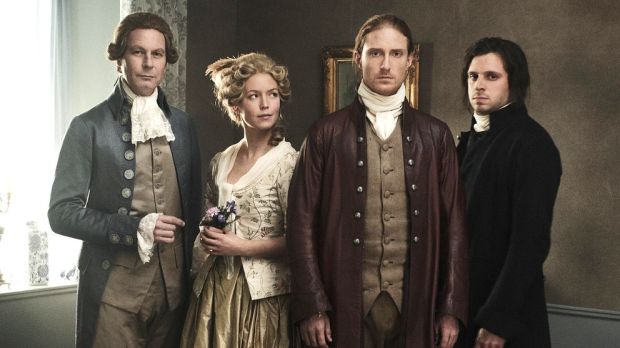
Anno 1790: Season 1 (2011)

Anno 1790

★★★★

(Sveriges Television, 2011)

I’ve been meaning to write about this for ages and, if I don’t do so now, I will completely forget to mention it; and that would be a shame, because this really is rather good. You’ll be aware by now that I don’t really do crime fiction. It’s not that I have a problem with it per se, but I prefer historical fiction and fantasy, and there are plenty of those books to keep me amused for now. I read The Girl with the Dragon Tattoo, of course, but the Millennium Trilogy is about as far as I ever got into the Scandi-crime field. However, I recently stumbled across Anno 1790, an excellent 2011 TV series from SVT (the Swedish national broadcaster). It combines crime investigation, historical drama and just a hint of illicit romance. It’s full of gorgeously bleak, brooding views of 18th-century Stockholm and features a sensitive, educated and equally brooding hero.

Continue reading