‘Tis Pity She’s a Whore (c1626): John Ford

'Tis Pity She's a Whore: John Ford

★★★½

(Sam Wanamaker Playhouse, Shakespeare’s Globe, October-December 2014)

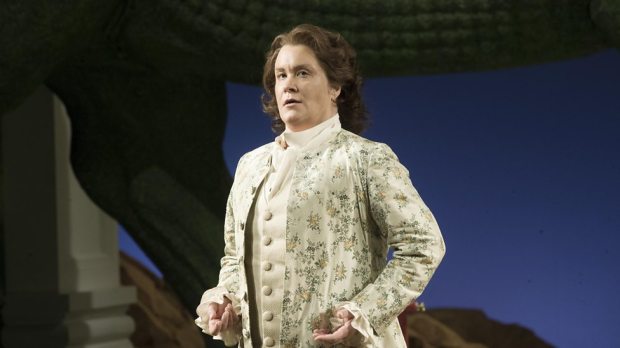
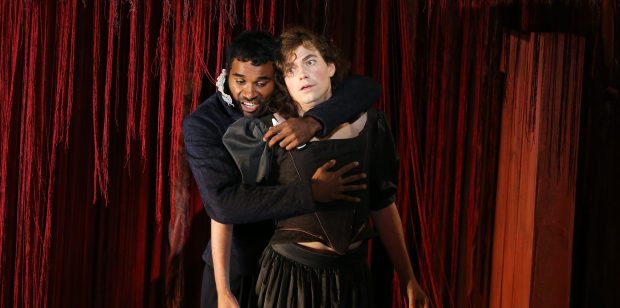
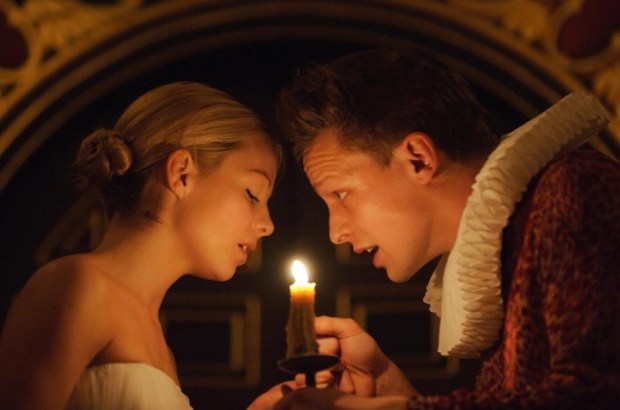
Say what you like about Baroque operas (or, indeed, George R.R. Martin), but nobody does dysfunctional families quite like the Jacobeans. The Globe’s winter season opens with John Ford’s play, written around 1630, which takes place in 17th-century Parma. Here the young scholar Giovanni is in torment. He desires his sister, the beautiful Annabella, but despite the advice of his former tutor, the Friar, he sees no way to cure his illicit passion. Annabella herself is being courted by three suitors: the swaggering Roman soldier Grimaldi; the nobleman Bergetto, who has the promise of a vast inheritance but not a brain in his head; and the handsome gentleman Soranzo, whose courteous manner masks a darker temper.
Continue reading

Giulio Cesare (1724): George Frideric Handel

Handel: Giulio Cesare

(Glyndebourne, 2005, directed by Sir David McVicar, conducted by William Christie)

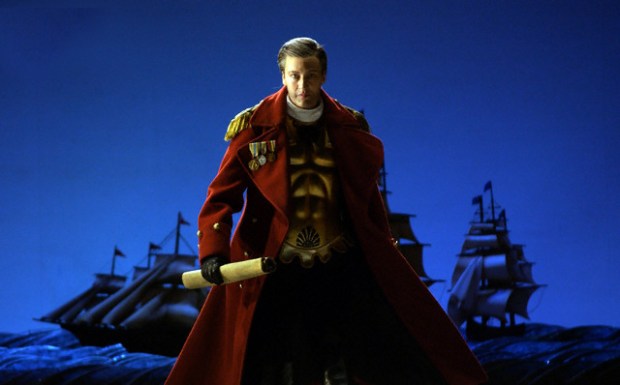
One thing’s for sure. Handel certainly didn’t imagine anything quite like this. With zeppelins hovering over the Alexandrian harbour in the final act and Bollywood-style dance routines thrown into the arias, this production is joyously exuberant and thoroughly addictive. It was the first time I’d watched or heard the opera and it was the perfect introduction: indeed, I ended up feeling quite jealous of the people who’d been able to see it in the flesh.

Continue reading

The Brethren (1977): Robert Merle

Fortunes of France: Book I

First published in 1977, The Brethren was followed by a whole series of novels which trace the fortunes of the de Siorac family in late 16th-century France. The French editions have been tremendously successful and Pushkin published this English translation of the first volume earlier this summer. I was delighted to be invited to review it, partly because it was compared to Dumas and Dunnett, but primarily because the blurb included the word ‘swashbuckling’ and that was too much to resist. There hasn’t been enough swashbuckling around here recently. This must be rectified.

Continue reading

L’Incoronazione di Poppea (1643): Claudio Monteverdi

Monteverdi: L'Incoronazione di Poppea

★★★★

(Teatro Real, Madrid, with Les Arts Florissant and William Christie, 2010)

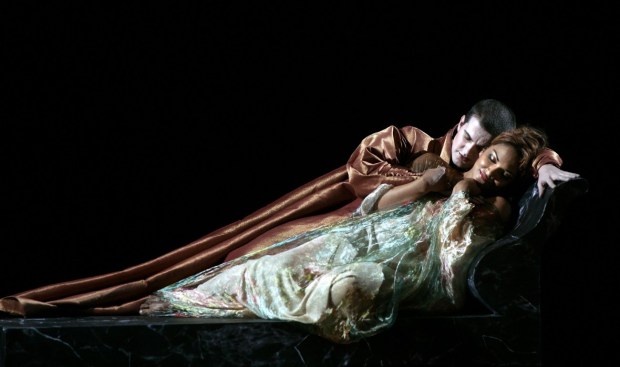
In the wake of the Barbican’s semi-staged Poppea, I decided to have another go at the DVD of this 2010 version from the Teatro Real in Madrid, to see how the two productions compared. It had completely bewildered me first time round. Perhaps unsurprisingly, I enjoyed it much more now that I had a better appreciation of the opera and its context. There are certain elements that I think the Barbican did better, but the Madrid version, with its stellar cast, certainly throws a long shadow. It’s staged, which is a big plus for me; but it completely overshadows the Barbican in one other important way as well.

Continue reading

A Year in the Life of Handel: 1738 (2014-15)

Roubillac: Handel

 (Handel House, until 4 January 2015)

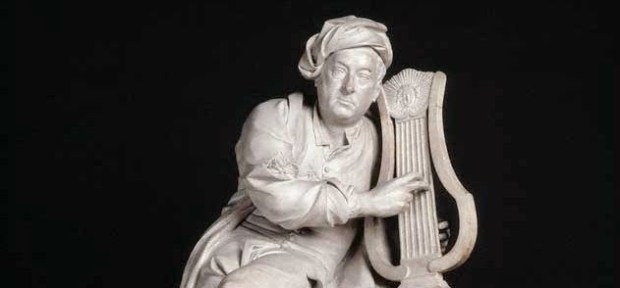
In January 1738 an amateur theatre critic reported on the premiere of Handel’s new opera, Faramondo: ‘On Tuesday last, we had a new opera of Handel’s… It is too like his former compositions, and wants variety – I heard his singer that night, and think him near equal in merit to the late Carestini, with this advantage, that he has acquired the happy knack of throwing out a sound, now and then, very like what we hear from a distressed young calf.

Continue reading

A First Visit to Handel House

Handel House

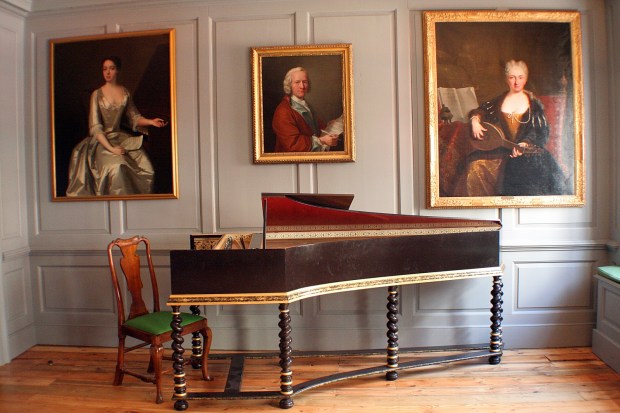
The Rehearsal Room with its harpsichord

(25 Brook Street, London)

Although I’ve lived and worked in Central London for eight years, I’d never been to Handel House before; but this morning I went to the Queen’s Gallery to see their First Georgians exhibition before it closed, and this offered the perfect complement. All in all, it was a very Georgian day out. The contrast between the two views of 18th-century London was telling. The Queen’s Gallery understandably presents a very elevated view of the period – paintings, furniture, battles and politics – whereas Handel House offers a glimpse of a more down-to-earth, scurrilous, energetic London: a ‘teeming, filthy, vibrant city’, the largest metropolis in Europe, full of appealingly larger-than-life characters. It is only a glimpse, but it leaves you keen to find out more about the personalities you encounter.

Continue reading

L’Incoronazione di Poppea (1643): Claudio Monteverdi

Sarah Connolly

(Barbican, Academy of Ancient Music with Robert Howarth, 4 October 2014)

★★★★

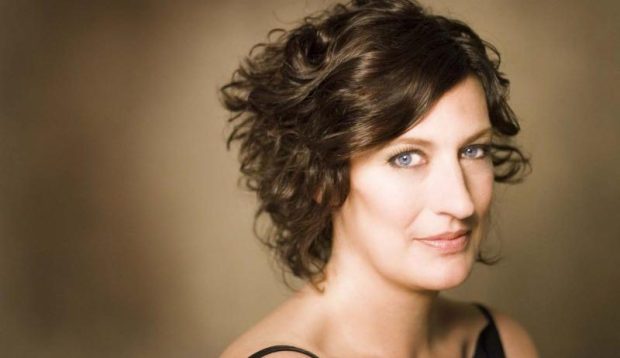
When a friend asked if I wanted to see Monteverdi’s Poppea at the Barbican on Saturday, I said yes immediately. Poppea is a landmark in the history of opera: the first to weave a story around historical characters rather than myths or saints. I’ve only seen one production so far: the version directed by William Christie, with Philippe Jaroussky as Nerone, Danielle de Niese as Poppea and Max Cencic as Ottone. I haven’t written about it yet because I’ve been biding my time until I felt I had a better understanding of it; and this semi-staged version at the Barbican was the perfect way to put the Jaroussky version into context. Its abiding legacy will be a couple of extremely strong performances which I can use as a benchmark in the future.

Continue reading

Xerxes (1738): George Frideric Handel

Handel: Xerxes

★★★★

(English National Opera with Michael Hofstetter, until 3 October 2014)

This was all rather spontaneous. Having heard good things about the ENO’s current production of Handel’s Xerxes, I managed to get a last-minute ticket up in the balcony for Friday night and headed off for my inaugural Handel opera. It wasn’t at all what I was expecting it to be like. It was lyrical rather than bombastic; humorous rather than noble; and full of the kind of bubbly wit that made it feel disconcertingly like The Marriage of Figaro. I knew virtually none of the music: the only aria I had to hand on my tablet was Se bramate d’amar vi chi sdegna from Cencic’s Handel album. It turned out of course that I knew another aria as well: it was a bit of a surprise when the opera opened with Ombra mai fù. (No, I didn’t know it was sung to a plane tree either: you learn something every day.)

Continue reading

Jeeves in the Offing (1960): P.G. Wodehouse

★★★★

It’s extraordinary that it took me this long to get round to Jeeves and Wooster, partly because it’s exactly the kind of silly English humour that I like, and partly because I spent three very happy years eating strawberries, drinking champagne and falling out of punts at Bertie Wooster’s alma mater. I suppose I should really have been methodical and started with the first Jeeves collection, but someone donated Jeeves in the Offing (1960) to the book stall at the village fete this year, so it seemed a good place to begin.

Continue reading

Elena (1659): Francesco Cavalli

Cavalli: Elena

(Aix-en-Provence, 2013, with Leonardo García Alarcón and Cappella Mediterranea)

How do I begin to describe Elena? It definitely isn’t your average opera. Imagine a Baroque cross-dressing operatic romantic comedy, with importunate lovers (plenty), pirates (sort of) and bears (briefly). How can you refuse something so gloriously over-the-top? Performed with gusto by a brilliant young cast, many of whom have since made names for themselves all over Europe, this charming, rambunctious, occasionally downright daft production from the Aix Festival is in a genre all by itself.

Continue reading