Partenope (1725): Leonardo Vinci

Vinci: Partenope

★★★★

(I Turchini with Antonio Florio; recorded at Murcia in 2011)

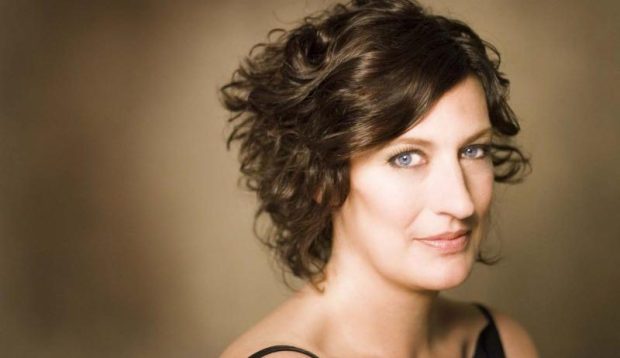
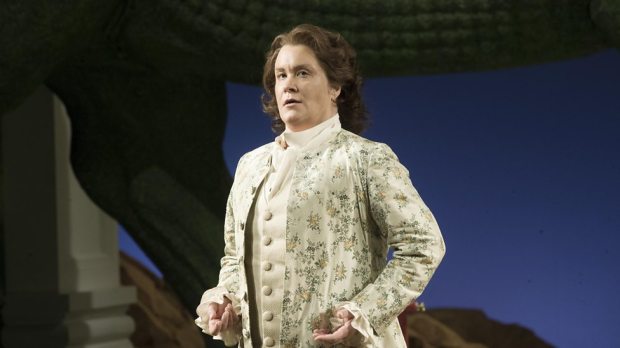
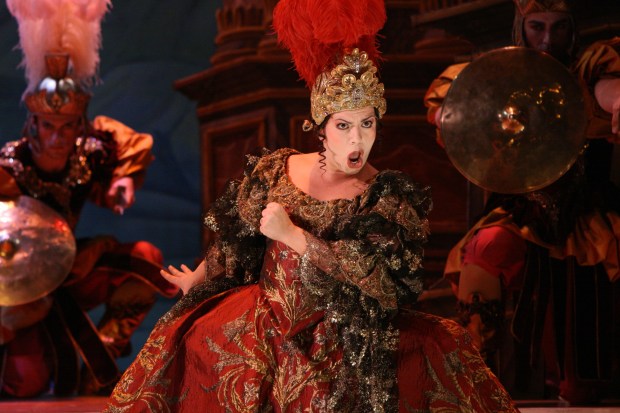
Partenope (Sonia Prina) is queen and founder of Naples: powerful, majestic… and single. Rather like Elizabeth I of England, she has attracted a swarm of hopeful suitors. For the time being she plays one off against the other while weighing up their comparative merits. There’s Armindo (Stefano Ferrari), prince of Rhodes, who has brought a host of warriors to fight under Partenope’s banner and who languishes in the hope that one day she’ll deign to return his love. But Partenope has a soft spot for his rival, the dashing Arsace of Corinth (Maria Ercolano). As the opera opens, a third suitor arrives: Emilio of Capua (Eufemia Tufano), who crosses Partenope’s borders with his Cumaean army. He helpfully tells her that she has a choice: marry him or fight. Showing satisfying gumption, Partenope disdainfully sends him away and readies her troops for battle.
Continue reading

La Clemenza di Tito (1791): Wolfgang Amadeus Mozart

Mozart: Clemenza di Tito

★★★★

(Salzburg Festival 2003; Wiener Philharmoniker conducted by Nikolaus Harnoncourt)

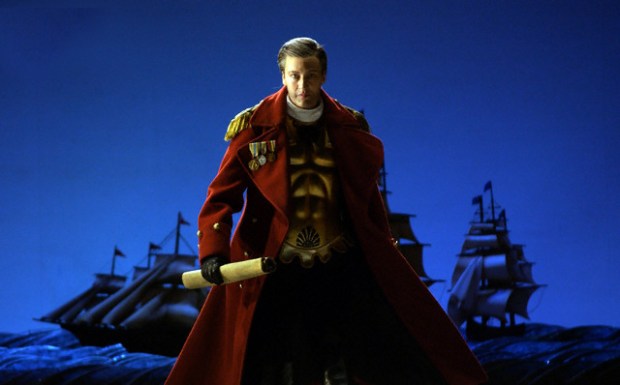
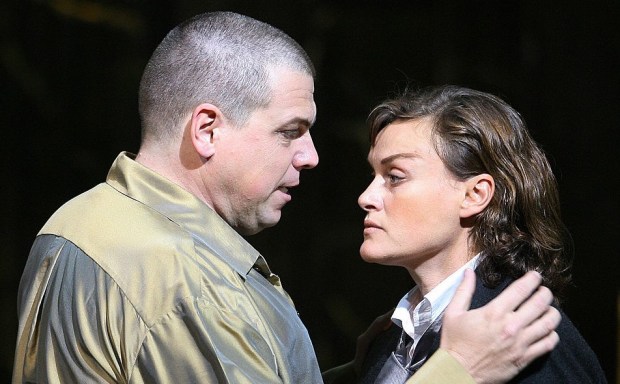
For my first opera DVD of the new year, I decided it was time to make the acquaintance of Mozart’s Clemenza. This is one of the most popular and frequently filmed operas out there and it can be hard to know where to start; but fortunately there was help on hand in the form of Dehggial, who writes the knowledgeable and deliciously irreverent blog Opera, innit. Dehggial has a particular fondness for Clemenza and recommended this production from the 2003 Salzburg Festival. It’s a rather austere, dark take on the opera with some splendid singing and powerful acting. It was only after buying it that I realised it had been designed by none other than Martin Kušej, which meant there were some interesting links with motifs from the Royal Opera House’s recent Idomeneo.

Continue reading

Tristan und Isolde (1865): Richard Wagner

Wagner: Tristan und Isolde

★★★★

(Royal Opera House, London, 14 December 2014)

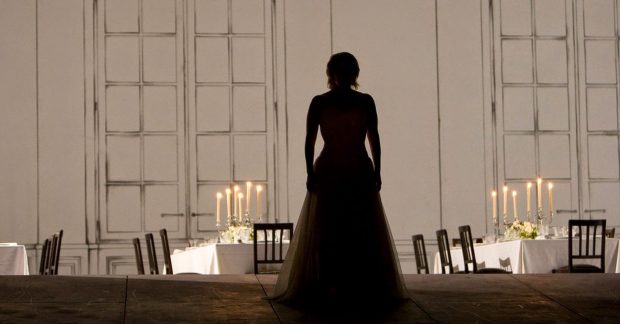
I ended up at Tristan by accident, if such a thing is possible. Shortly after I’d seen Poppea at the Barbican and Giulio Cesare on DVD, I was enthusing to my opera buddy about how marvellous Sarah Connolly was. She said that Connolly would be at the Royal Opera House this December. Would I like to go to see her? ‘Hell, yes!’ I said. Then my friend mentioned the catch. Connolly was singing in Wagner’s Tristan. Five hours of psychologically intense angst including a forty-minute love duet. In German.

Continue reading

Max Emanuel Cencic: Venezia

Venezia: Max Cencic

(Wigmore Hall, with Il Pomo d’Oro and Riccardo Minasi, 12 December 2014)

First I must apologise for the recent hiatus in my posting. For the last few weeks life has been little more than an extraordinary barrage of events that finally came to a head this week in surreal but glorious fashion. You wouldn’t believe me if I told you. Now it’s all over and I can slowly get back into my normal rhythm again. There are lots of things that have been going on which I’d love to share with you in due course. And I’m going to kick off with the most recent and the most exhilarating.

Continue reading

Idomeneo (1780): Wolfgang Amadeus Mozart

Mozart: Idomeneo

★★★

(Royal Opera House, Covent Garden, 3-24 November 2014)

The one with the shark

There’s something rather exciting about going to see a production which has divided opinion as starkly as this new staging of Mozart’s Idomeneo. There has been at least one one-star review and one five-star review, but most critics seem to come down somewhere in the middle, struggling in a sea of interesting ideas which never quite come together. I sympathise with them. There were certain things I liked very much and some things I found self-indulgent and silly, but my overall impression was that it was a mixture of promising concepts which lacked the Promethean spark to bring them to life.

Continue reading

Giulio Cesare (1724): George Frideric Handel

Handel: Giulio Cesare

(Glyndebourne, 2005, directed by Sir David McVicar, conducted by William Christie)

One thing’s for sure. Handel certainly didn’t imagine anything quite like this. With zeppelins hovering over the Alexandrian harbour in the final act and Bollywood-style dance routines thrown into the arias, this production is joyously exuberant and thoroughly addictive. It was the first time I’d watched or heard the opera and it was the perfect introduction: indeed, I ended up feeling quite jealous of the people who’d been able to see it in the flesh.

Continue reading

L’Incoronazione di Poppea (1643): Claudio Monteverdi

Monteverdi: L'Incoronazione di Poppea

★★★★

(Teatro Real, Madrid, with Les Arts Florissant and William Christie, 2010)

In the wake of the Barbican’s semi-staged Poppea, I decided to have another go at the DVD of this 2010 version from the Teatro Real in Madrid, to see how the two productions compared. It had completely bewildered me first time round. Perhaps unsurprisingly, I enjoyed it much more now that I had a better appreciation of the opera and its context. There are certain elements that I think the Barbican did better, but the Madrid version, with its stellar cast, certainly throws a long shadow. It’s staged, which is a big plus for me; but it completely overshadows the Barbican in one other important way as well.

Continue reading

L’Incoronazione di Poppea (1643): Claudio Monteverdi

Sarah Connolly

(Barbican, Academy of Ancient Music with Robert Howarth, 4 October 2014)

★★★★

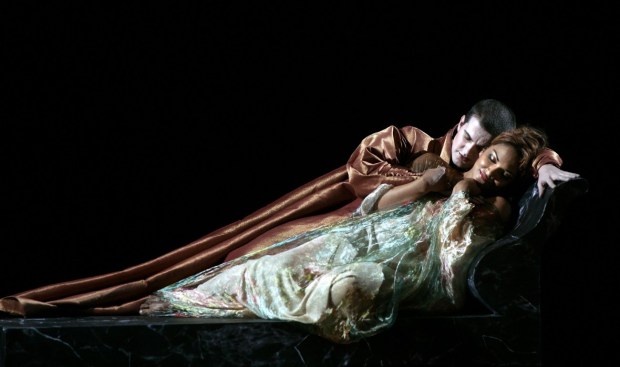
When a friend asked if I wanted to see Monteverdi’s Poppea at the Barbican on Saturday, I said yes immediately. Poppea is a landmark in the history of opera: the first to weave a story around historical characters rather than myths or saints. I’ve only seen one production so far: the version directed by William Christie, with Philippe Jaroussky as Nerone, Danielle de Niese as Poppea and Max Cencic as Ottone. I haven’t written about it yet because I’ve been biding my time until I felt I had a better understanding of it; and this semi-staged version at the Barbican was the perfect way to put the Jaroussky version into context. Its abiding legacy will be a couple of extremely strong performances which I can use as a benchmark in the future.

Continue reading

Xerxes (1738): George Frideric Handel

Handel: Xerxes

★★★★

(English National Opera with Michael Hofstetter, until 3 October 2014)

This was all rather spontaneous. Having heard good things about the ENO’s current production of Handel’s Xerxes, I managed to get a last-minute ticket up in the balcony for Friday night and headed off for my inaugural Handel opera. It wasn’t at all what I was expecting it to be like. It was lyrical rather than bombastic; humorous rather than noble; and full of the kind of bubbly wit that made it feel disconcertingly like The Marriage of Figaro. I knew virtually none of the music: the only aria I had to hand on my tablet was Se bramate d’amar vi chi sdegna from Cencic’s Handel album. It turned out of course that I knew another aria as well: it was a bit of a surprise when the opera opened with Ombra mai fù. (No, I didn’t know it was sung to a plane tree either: you learn something every day.)

Continue reading

Elena (1659): Francesco Cavalli

Cavalli: Elena

(Aix-en-Provence, 2013, with Leonardo García Alarcón and Cappella Mediterranea)

How do I begin to describe Elena? It definitely isn’t your average opera. Imagine a Baroque cross-dressing operatic romantic comedy, with importunate lovers (plenty), pirates (sort of) and bears (briefly). How can you refuse something so gloriously over-the-top? Performed with gusto by a brilliant young cast, many of whom have since made names for themselves all over Europe, this charming, rambunctious, occasionally downright daft production from the Aix Festival is in a genre all by itself.

Continue reading