As Nature Made Him (2000): John Colapinto

★★★★

The Boy Who Was Raised As A Girl

Following on from Geniethis book explores another case which featured prominently in my A level Psychology textbook. It’s one of the most famous stories in the canon, a case which has been used on both sides of the nature-nurture debate, and one which does more than any other to prompt outrage at the medical establishment. It tells the tale of twin baby boys, born in Winnipeg in 1967 and admitted at eight months old for circumcision. When error, either mechanical or human, caused catastrophic burns to the penis of the elder twin, doctors advised that the only option was to castrate the child and raise him as a girl. His distraught parents followed this advice. This is the story of David Reimer: a story of dizzying medical hubris and humbling resilience, made deeply poignant by a tragic coda which postdated the publication of this study.

Continue reading

The Ladies of Llangollen (1971): Elizabeth Mavor

★★★★

Like the Chevalier d’Eon, the Ladies of Llangollen came my way thanks to a work project. When trying to find an introduction to their lives, I judged that Elizabeth Mavor’s book seemed the best option, despite now coming across as slightly dated (it was published in 1971). Yet, for all that, it presents a thorough and sensitive discussion of these two remarkable women, who created an idyllic lifestyle together on their own terms and in defiance of social convention. Drawing on the Ladies’ own journals and correspondence, along with the letters of their immediate circle, newspaper reports and other documents, Mavor’s book isn’t just the sound introduction I was looking for, but an admirably unbiased and scrupulously fair double biography.

Continue reading

The Kingdom of Women (2017): Choo WaiHong

★★★

Life, Love and Death in China’s Hidden Mountains

Some time ago, I heard about a book called Leaving Mother Lake, which told the story of a young woman raised in a remarkable tribe in western China near the Tibetan border, and her journey into mainstream Chinese life. I haven’t yet got round to reading that, but it meant that I immediately jumped on this forthcoming book about the same Mosuo tribe, this time told by someone entering, rather than leaving, the community. The Mosuo are remarkable as (apparently) the only remaining matriarchal and matrilineal society in the world, and this book tells the tale of a successful Singaporean lawyer who takes early retirement and finds a spiritual home in this unique community.

Continue reading

The Swashbuckling Life of the Chevalier d’Eon

The Chevalier d'Eon

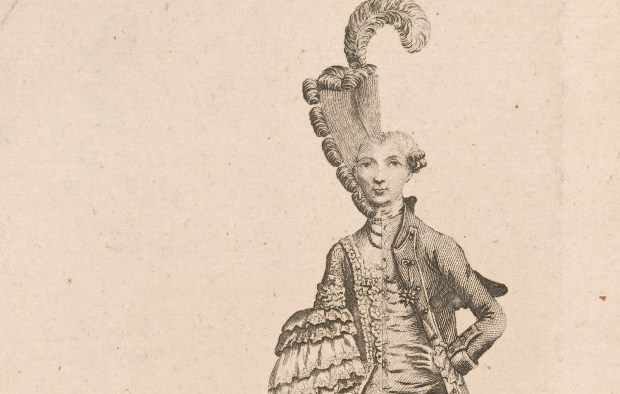
I mentioned in my post on Monsieur d’Eon is a Woman that I’d been asked to give a lecture in my professional capacity about the Chevalier d’Eon. I’m pleased to say that it went very well and feedback suggests that the Chevalier’s story exerts just as much fascination today as it did back in the 18th century. Since there’s a lot of misleading information about the Chevalier online, and since this remarkable story deserves to be known more widely, I decided to turn my lecture into a blog post. What follows is, therefore, considerably longer than my usual posts but is amply illustrated. The British Museum has almost sixty prints and other documents relating to the Chevalier’s life in London, many of which I reproduce here. So let’s delve in to a tale of espionage, secrecy, swashbuckling and remarkable self-fashioning.

Continue reading

Monsieur d’Eon is a Woman (1995): Gary Kates

★★★★½

A Tale of Political Intrigue and Sexual Masquerade

When I reviewed The Chevalier back in June last year, I was interested in the life of the Chevalier d’Eon but didn’t know much beyond what I’d read on Wikipedia. Since then, life has played one of its serendipitous little jokes on me. I was recently asked to give a lecture on the Chevalier in my professional capacity, which means that I’ve spent the last month poring over books written both by and about him. My experience has emphasised exactly how inaccurate The Chevalier is (horribly!), but has also revealed the full complexity of this utterly fascinating life. And, if you want to get the facts, this book is the place to start.

Continue reading

Thomas More (2017): John Guy

★★★★

A Very Brief History

I’ve always wanted to like Thomas More, largely thanks to Hans Holbein’s magnificent portrait. It offers such an appealingly naturalistic image of the man. More is intense, slightly homely with that overlarge nose, his eyes crinkling at the corners and his mouth quirked benevolently at the corner. He hasn’t shaved: his jaw is scattered with soft grey bristles. The red velvet and fur-trimmed cloak look incongruous: you get the impression he’s indifferent to worldly finery, his mind resolutely fixed on higher things. We almost forget the artist’s craft: we treat the portrait as a photograph, a direct record of the man. But art isn’t like that. And nor is history. The problem is that history has left us so many Mores – the principled objector; the humanist; the saint; the idealistic author of Utopia; the burner of heretics. How can we find our way through the mire? Fortunately this short, lucid and lively book offers a crash course in all things More – and our guide is one of the world’s foremost Tudor historians.

Continue reading

Genie: A Scientific Tragedy (1993): Russ Rymer

★★★★

When choosing A levels, I was advised to demonstrate some scientific aptitude alongside my arts-dominated curriculum. I chose Psychology which, despite some erratic teaching, opened my eyes to a whole world of incredible case studies. Three in particular have stayed with me: Philip Zimbardo’s Stamford Prison Experiment; Stanley Milgram’s experiment on obedience to authority; and the story of Genie, a child discovered in November 1970, who spent her first thirteen years in enforced isolation from virtually all human contact. I had no idea, though, that her life had been discussed at any length outside academic textbooks and conferences. When I stumbled across this book the other day, I decided it was time to reacquaint myself with the details of this distressing case, which has haunted me ever since I first read about it in my schoolbooks.

Continue reading

Daughter of Heaven (2007): Nigel Cawthorne

★★★

The True Story of the Only Woman to Become Emperor of China

My recent Chinese escapades left me with a burning desire to find out more about the country’s history and culture, so I couldn’t resist this biography of Wu Chao, a remarkable woman in the 7th century who clawed her way up from the status of a lowly concubine to become Emperor of China in her own right. She was, predictably, a fascinating character and her court, in its intrigues, corruption and eventual dissipation, makes the worst excesses of Westeros look like a village fete. Her rise and fall are worthy of a Greek tragedy but, alas, this book isn’t the best way for a newcomer to encounter her story.

Continue reading

Four Princes (2017): John Julius Norwich

★★★★

Henry VIII, Francis I, Charles V, Suleiman the Magnificent and the Obsessions that Forged Modern Europe

Over the years I’ve assembled a variety of John Julius Norwich’s history books, because he conveniently writes on precisely the topics that fascinate me: Byzantium; Sicily; the Normans in Italy; and so forth. However, although I’ve dipped into all of these books, I’ve rather shamefully never finished any of them, having been distracted for various reasons from savouring Norwich’s sublimely elegant prose. This new history, shorter than the others and full of a delightful liveliness, has the honour of being the first Norwich that I’ve read cover to cover. Taking the unusual format of a group biography, it focuses on the dazzling first half of the 16th century, when four men between them bestrode Europe like colossi. It’s an extremely accessible introduction to the period and the men in question.

Continue reading

Anna and the King of Siam (1943): Margaret Landon

★★★★

This wonderful little book is a reissued classic first published in 1944, which tells a story made famous by the Rogers & Hammerstein musical The King and I. Having neither heard nor seen that musical, I had no real idea of what to expect from this novel. My vague notions that I’d picked up here and there turned out to be completely mistaken and perhaps the result of confusing The King and I with The Sound of Music (musical governesses, you see). This book is not a love story at all, but something far more interesting: the tale of a confrontation between two worlds, two belief systems and two indomitable personalities. Based on Anna Leonowens’s own letters and other documents, it lures the reader into the exotic world of mid-19th-century Siam.

Continue reading