Randall Scotting: A Year in the Life of Handel: 1738

Randall Scotting

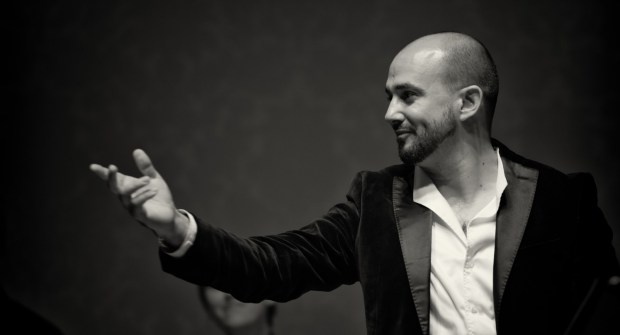
A recital by Randall Scotting and Marie van Rhijn

(Handel House Museum, 22 March 2015)

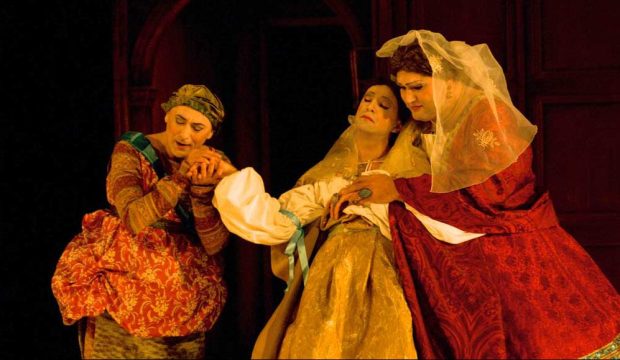
Back in October, on visiting Handel House for the first time, I wrote about their exhibition, A Year in the Life of Handel. This focused on the works produced by Handel in 1738 and the challenges he faced at the time. Not least of these was the growing indifference of the English public to Italian opera seria: audiences were thinning out and there was barely enough interest to sustain one Italian opera company, let alone Handel’s team at Covent Garden and the rival Opera of the Nobility. As if that wasn’t enough, Italian opera was also being satirised in English-language burlesques, most famously The Dragon of Wantley.

Continue reading

Max Emanuel Cencic: Venezia

Venezia: Max Cencic

(Wigmore Hall, with Il Pomo d’Oro and Riccardo Minasi, 12 December 2014)

First I must apologise for the recent hiatus in my posting. For the last few weeks life has been little more than an extraordinary barrage of events that finally came to a head this week in surreal but glorious fashion. You wouldn’t believe me if I told you. Now it’s all over and I can slowly get back into my normal rhythm again. There are lots of things that have been going on which I’d love to share with you in due course. And I’m going to kick off with the most recent and the most exhilarating.

Continue reading

L’Incoronazione di Poppea (1643): Claudio Monteverdi

Monteverdi: L'Incoronazione di Poppea

★★★★

(Teatro Real, Madrid, with Les Arts Florissant and William Christie, 2010)

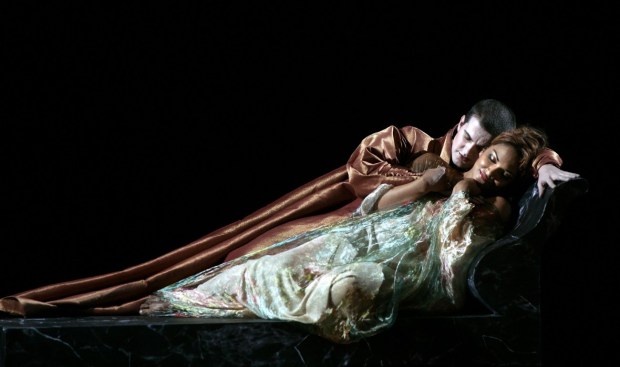
In the wake of the Barbican’s semi-staged Poppea, I decided to have another go at the DVD of this 2010 version from the Teatro Real in Madrid, to see how the two productions compared. It had completely bewildered me first time round. Perhaps unsurprisingly, I enjoyed it much more now that I had a better appreciation of the opera and its context. There are certain elements that I think the Barbican did better, but the Madrid version, with its stellar cast, certainly throws a long shadow. It’s staged, which is a big plus for me; but it completely overshadows the Barbican in one other important way as well.

Continue reading

Franco Fagioli: Porpora Arias

Franco Fagioli

(Wigmore Hall, Academia Montis Regalis with Alessandro De Marchi, 21 September 2014)

 If you have the misfortune to follow me on Twitter, you’ll be aware that I have signally failed to remain grown-up and detached about the prospect of attending my first concert of Baroque music. Forgive me. I can only beg the indulgence due to the zealous new convert, while pointing to my almost complete immersion in the Baroque for the last six weeks. And surely I can’t be blamed for my excitement, because I was kicking off my career as a barocchista with a concert by none other than the high priest of showmanship and bravura ornamentation, the inimitable Franco Fagioli.

Continue reading

Sant’ Alessio (1632): Stefano Landi

Landi: Sant' Alessio

(Théâtre de Caen, Les Arts Florissants with William Christie, 2007)

★★★★ ½

Over the weekend I treated myself to another opera DVD, this time one which transported me back to the very earliest days of the art form, to Rome in 1632. At this date the Counter-Reformation was in full swing and the Baroque was just coming into being. Gianlorenzo Bernini, who would become the supremo of 17th-century Rome, was 25 and had been asked to design the stage set for Stefano Landi’s new religious oratorio Sant’ Alessio. The production available on this DVD attempts to recreate the feel of that first performance and I admit I came to it with some trepidation. This all felt a very long way from the exuberance of the 18th century.

Continue reading

Artaserse (1730): Leonardo Vinci

Vinci: Artaserse

★★★★★

(with I Barocchisti [CD] and Concerto Köln [DVD], directed by Diego Fasolis, 2012)

Before we start, I should emphasise: the composer is not the artist Leonardo da Vinci (1452-1519), but a completely different person, the Neapolitan Leonardo Vinci (1690-1730). I must also add a disclaimer. As you may remember, I know nothing about the technicalities of music. In this field I am, more than ever, merely an enthusiastic amateur. That’s especially the case in Baroque music, which must be one of the most technically complex and elaborate areas of classical music. However, as I’ve said before, I’m fascinated by the phenomenon of the castrati and, as such, this particular opera (and performance) was one I couldn’t resist.

Continue reading