Vikings: A History (2012): Neil Oliver

★★★★★

This post comes with a warning for overbubbling enthusiasm; but I just can’t help myself. I didn’t watch Neil Oliver’s BBC series on the Vikings, but when I spotted this companion volume, on the Book People’s stall during a Christmas fair at work, it was difficult to resist. The Vikings, like the Romans, are a shadowy but constant presence in British history and yet I don’t know as much about them as I would like.
Continue reading

The Lost Prince: The Life & Death of Henry Stuart (2012-13)

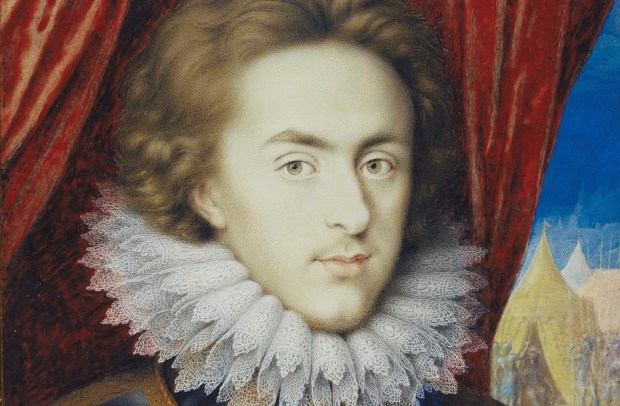
Oliver: Henry Stuart, Prince of Wales

(National Portrait Gallery, London, until 13 January 2013)

No expense was spared to educate Henry Stuart, the eldest son of James I and the future Henry IX of England. Thanks to the efforts of his tutors, friends and courtiers he showed every sign of growing up to be a perfect example of the Renaissance prince.  He was tutored in history and the classics, and his adoring father wrote a manual for him, the Basilikon Doron, which offered advice on good governance (the original manuscript is in this exhibition).

Continue reading

HHhH (2010): Laurent Binet

★★★★

By any standards, this was an unusual choice for me. The story of the assassination in Prague of Reinhard Heydrich, architect of the Final Solution and one of the most terrifying figures in the Third Reich, is not the natural successor to Dorothy Dunnett’s Gemini. It is certainly not the kind of book I would pick out for myself. But it was persuasively and persistently recommended to me by someone whose opinion I respect a great deal and so I decided to give it a whirl. It was the right decision.

Continue reading

The Land of the Leopard (Sicily)

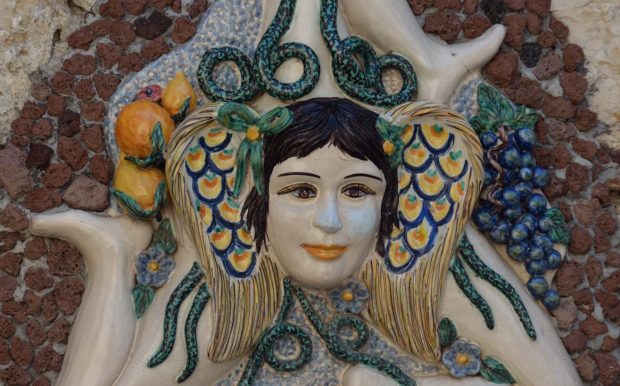
 Trinacria, Sicily

This is going to be a long one, because I’m bubbling over with enthusiasm. I’ve just returned from a marvellous week in Sicily with my parents, who had very kindly taken pity on me and invited me to join them on Voyages Jules Verne’s ‘Treasures of Sicily’ tour. This post therefore has two parts: the first focuses on Sicily itself and the places we visited, while the second part focuses on my experience of travelling with an organised group.

Continue reading

Shakespeare: Staging the World (2012)

William Shakespeare

(British Museum, until 25 November)

Even though I’m a bit of a Bardophile, I make the mistake of looking at Shakespeare’s plays as texts, rather than as expressions of a living, vivid, turbulent world. When I watch Romeo and Juliet, or As You Like It, or The Merchant of Venice, I focus on the world that Shakespeare is creating, rather than the world that created him. And that’s where this exhibition provides a really interesting counter-balance.

Continue reading

Theodora (1989): Antony Bridge

★★★½

While still at school, I somehow acquired a copy of the Folio edition of Procopius’ Secret History, which I’m ashamed to say I never read and always regarded with slight suspicion. Since I didn’t encounter Byzantine history until one particularly complex and unsuccessful week in Hilary Term of my first year at university, I’ve no idea what possessed me to buy it.  Did I think it was some unusual edition of Donna Tartt’s excellent novel (one of my favourites)?  At any rate, poor Procopius lingered unloved and unread on my bookshelf until, at some point in the last ten years, he was obviously consigned to the charity shop.  It’s typical that, as soon as I yearn to plunge into his small-minded and salacious history, it turns out that I gave it away.  After reading this book, I definitely want to go back to it.

Continue reading

Cyrano (2008): Ishbel Addyman

★★★

Let me start with a disclaimer. I’ve had this book on my Amazon wishlist for two years and so, when I stumbled over it on the shelves of the addictive Book & Comic Exchange in Notting Hill, I snaffled it immediately. I’ve long been fascinated by the few details I know about the real Cyrano de Bergerac and, since I first saw it, the film version of Edmond Rostand’s play has been one of my all-time favourites.

Continue reading

Troy: Fact and Fiction

Troy

Imagine you’re at a party.  You’re in the middle of a crowded room with conversation going on all around you, but suddenly in the midst of the hubbub you hear a word which immediately makes your ears prick up.  What words or phrases would catch your ear like that?  I have a few, but one of them is ‘Troy’.  If I overheard someone talking about Troy, I’d be compelled to shuffle closer and eavesdrop quite shamelessly until they either changed the subject or let me into their conversation.  There’s a magic to the name, a grandeur, not unlike that conjured up by the word ‘Byzantium’.  Unfortunately, if you hear the word ‘Troy’ nowadays it’s most likely that people would be talking about the film.

Continue reading

Treasures of Heaven (2011)

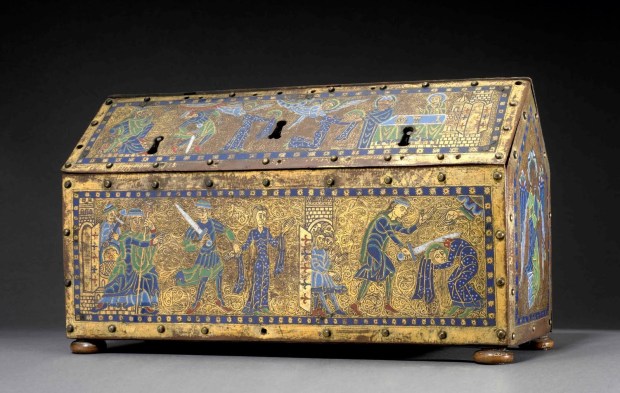
Limoges Reliquary of St Valerie

Saints, relics and devotion in medieval Europe

(British Museum, London (23 June – 9 October 2011)

I have a feeling that, while this exhibition was being prepared, I read an article about concerns expressed by some of the lenders – monasteries, abbeys, great Catholic churches – about whether their precious relics would be treated with the respect they deserved in Protestant England.  If I am right, then it shows that awareness of the Reformation remains strong even today.  However, they needn’t have worried.  The exhibition setting is a triumph of simplicity and the objects are left to work their extraordinary power.

Continue reading