Giovanni Battista Moroni (2014-15)

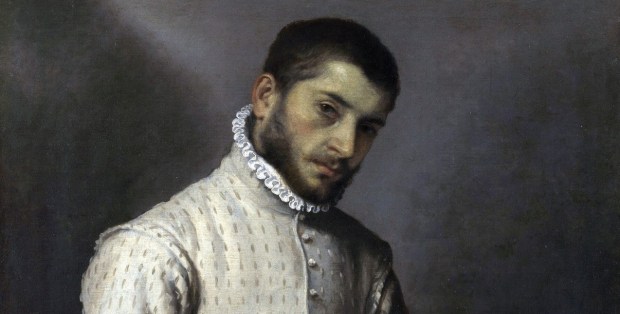
Moroni: Portrait of a Tailor

(Royal Academy, London, until 25 January 2015)

He’s a familiar sight in the National Gallery. A young tailor has been distracted in the middle of his work. Resting his scissors on the table for a moment he glances up, as if you’ve just wandered into his workroom, half-inquisitive, half-challenging. His clothes are simple but well-made, showing off his craft: his cream doublet is elaborately pinked and finely-detailed lace peeks out at collar and cuffs. In a moment his assessing gaze will shade into something more specific: a frown at being disturbed, perhaps, or a welcoming smile, but for now he’s captured in that split second where everything is still possible: a moment of infinite potential.

Continue reading

The Innamorati (1998): Midori Snyder

★★★

Books often take on something of the spirit of the places where we read them and, in retrospect, it can be hard to separate impressions of the story itself from its context. I read most of this quirky novel curled up on the Loggia dei Lanzi in Florence (some weeks ago now) and so my memories are rather confused and dreamlike, but in a way that entirely suits the book. I’d chosen it deliberately for my trip, because The Innamorati is set in a fantastical version of mid 16th-century Italy, in a world infused with the spirit of the commedia dell’ arte.

Continue reading

Idling in Italy (Florence)

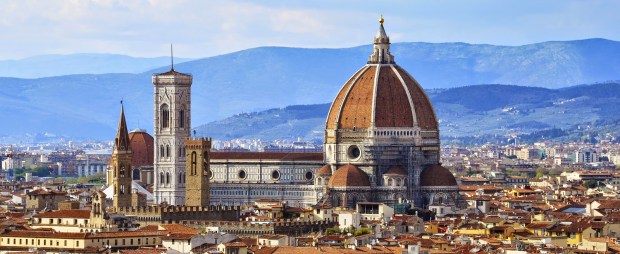
The Duomo, Florence

Last week, in a spirit of spontaneity that’s entirely uncharacteristic, I went on a last-minute trip to Florence. Work has been very intense this year, and that looks set to continue, so I was in desperate need of sunshine, gelati and the scent of pine, the chatter of cicadas and the quiet grace of frescoed churches. Fortunately I had a marvellous excuse. This summer everyone has been talking about the exhibition on Pontormo and Rosso Fiorentino, subtitled Diverging Paths of Mannerism, at the Palazzo Strozzi. Not that I needed much of an excuse to return. Florence has been a very important place for me ever since I first went there with my parents at the age of fifteen, my head full of A Room with a View and the Medici, Leonardo and Michelangelo. I managed to get there three more times in my student days, but it’s been eight years since I was last there at the age of twenty-one. It was time to go back.

Continue reading

Veronese: Magnificence in Renaissance Venice (2014)

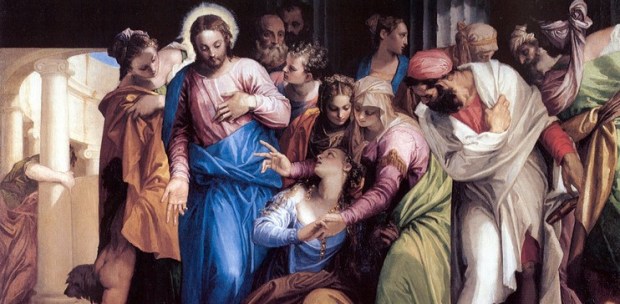
Veronese: Conversion of the Magdalen

(National Gallery, London, until 15 June 2014)

The National Gallery’s Veronese exhibition is already being described as the one show that you have to see this year and glowing opinions have proliferated: from The Times’s five-star review to the enthusiastic post by the exacting Grumpy Art Historian. Needless to say, I’d been very much looking forward to it. And I was especially excited because, a couple of weeks ago, I went to a very enjoyable lecture by Matthias Wivel, one of the curators, who’d suggested a way of ‘reading’ Veronese’s pictures that I was keen to put to the test.

Continue reading

Prince of Foxes (1947): Samuel Shellabarger

★★★★½

Shortly after I finished the excellent Blood & Beauty, this historical novel about Renaissance Italy popped up in my automatic recommendations. The author and title were both unfamiliar and, when I realised that it was again about the Borgias, I was tempted to pass: I had no plans to read another novel on the subject so soon. However, as the reviews were glowing, I persuaded myself to give it a chance; and I can honestly say that I’ve loved every minute of it.

Continue reading

The Swerve (2011): Stephen Greenblatt

★★★

How the Renaissance began

The winner of the 2012 Pulitzer Prize for Non-Fiction, this book was recommended to me during our Sicily trip a year ago, in the course of a rather splendid dinner-table conversation. It tells the story of Poggio Bracciolini, an Italian humanist who worked at the papal curia and who, during the upheavals after the Council of Constance, sought to distract himself by going book-hunting in the monasteries of Germany. Poggio dreamed of finding previously unknown classical texts in these monasteries, preserved by chance through years of copying as part of the monastic discipline. He and his fellow humanists had already uncovered fragments of letters and treatises, but the discovery that Poggio would make in 1417 would come to have a powerful impact on the very roots of Western philosophy: the full text of De rerum natura (On the Nature of Things) by Lucretius.

Continue reading

Blood & Beauty (2013): Sarah Dunant

★★★★½

In 1492 the Spaniard Rodrigo Borgia is elevated to the papacy as Pope Alexander VI. It’s an appointment based less on piety than political shrewdness. Generous to his friends and flexible in his scruples, Alexander may not be the pope that Rome wants, but he is the one that it deserves. After all, Renaissance Rome is a seething, ambitious, dangerous city where life is merely a poor shadow of its ancient vanished grandeur. There are as many courtesans as clerics; anything can be had at the right price; and a man can be made to disappear between dusk of one day and dawn of the next. If the Tiber keeps its secrets, he might never be seen again.

Continue reading

Artists on Film: Caravaggio (2007)

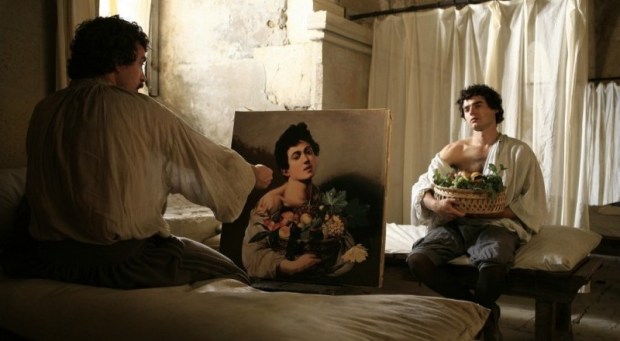
Caravaggio

★★★

(directed by Angelo Longoni for Italian TV, 2007)

Considering my interest in the Old Masters, my affection for swordsmen, and my possible weakness for doomed heroes, it’s hardly surprising that I have a soft spot for Caravaggio. One of the first exhibitions I saw as a teenager was The Genius of Rome, a feast of the Caravaggisti held at the Royal Academy in 2001, and from that moment I was captivated by the violent swagger of the period.

Continue reading