Across the Nightingale Floor (2002): Lian Hearn

★★★★

Tales of the Otori: Book I

I’ve wanted to read this for years. Although I only visited Tokyo last year, I’ve long been interested in certain aspects of Japanese history: the samurai, especially, and the codes of honour and nobility that governed their society. I was intrigued by Hearn’s world, which is inspired by medieval Japan and promised to be refreshingly different from the pseudo-European fantasy norm. And yet, when I began reading yesterday morning, it was with some trepidation. After all, when you’ve looked forward to reading something for so long, there’s always a fear that it might not be as good as you expected. Fortunately that fear was unwarranted. The book lived up to its reputation and dragged me, wide-eyed and wondering, into a thrilling tale of revenge, intrigue and forbidden love.

Continue reading

A Tale for the Time Being (2013): Ruth Ozeki

★★★★

It’s been a long time (for me) since I read a novel: the last few months have been more conducive to dipping in and out, and not really getting anywhere with anything. And so on Saturday I went on a day trip out of London, left my tablet and my phone behind, and took a book for the journey. Being alone with the book for that length of time was exhilarating: for the first time in weeks I became dragged into another world and I spent the rest of Saturday and Sunday reading. For, if it’s been a long time since I read a novel at all, it’s been even longer since I read the kind of novel that, on finishing, elicited a strangled half-yowl of frustration – not at the book itself, but at the knowledge that I just don’t have the depth of understanding in order to appreciate all the clever stuff that I’m sure is going on in there.

Continue reading

The Land of the Rising Sun (Tokyo)

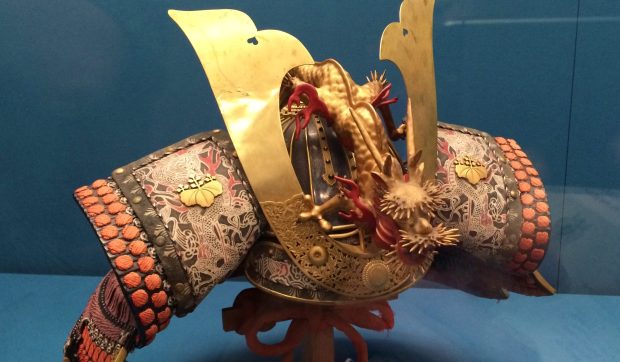
JapanDragonHelmet

In other news, I’ve just got back from my first visit to Japan: a week in Tokyo, on business, which turned out to be one of the most enjoyable and brilliant trips I’ve ever been on. I had the good fortune to travel with some really lovely colleagues from other companies, and our hosts could not have been kinder or more eager to help: Japanese hospitality truly is remarkable and I’ve certainly now been spoiled for life as far as business trips are concerned.

Continue reading

Throne of Blood (1957)

Throne of Blood

★★★★

(directed by Akira Kurosawa, 1957)

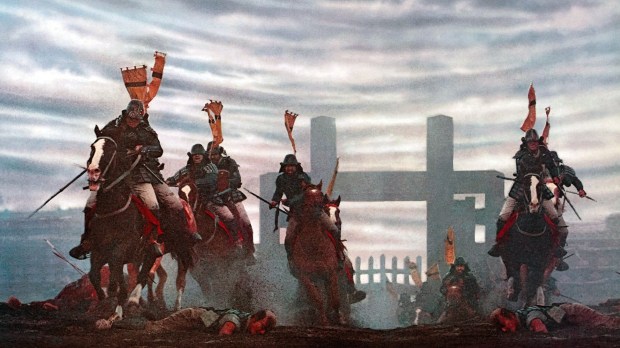
This post is severely overdue: I watched this about a month ago and I’m not sure how it slipped through the net (Goodwood seems to have distracted me). To recap: back in early September I had my first proper encounter with Kurosawa, in the form of Ran. That was a reimagining of King Lear set in samurai-era Japan; and Throne of Blood gives Macbeth the same treatment. As I’ve said before, I’m not familiar with Kurosawa’s films and I don’t know which of these two is generally considered the better. My own preference is for Throne of Blood, which I found much more accessible than Ran, even though it was filmed almost thirty years earlier. (In fact, I was surprised to find out just how old it is.)

Continue reading

Ran (1985)

Ran: Akira Kurosawa

★★★

(directed by Akira Kurosawa, 1985)

I’ve just joined LoveFilm and am busily kicking myself for not having discovered it years ago, thereby saving myself hundreds of pounds on DVDs. I began with Ran, which is the first Kurosawa film I’ve really paid attention to (I saw Yojimbo at my university film club, but don’t remember much about it). I ordered it because I was intrigued to see how Kurosawa would adapt his source material of King Lear into a Japanese setting – Throne of Blood, which takes on Macbeth, is also on my wishlist.

Continue reading

1Q84 (2009): Haruki Murakami

★★★½

Back when I first moved to London, and was even smaller and more daunted by it than I am now, I found a room in a flat owned by a successful lawyer, who also happened to have a select but very admirable collection of books which she didn’t mind sharing. Thanks to her, I became acquainted with two writers who impressed me with the clever way they deal with myths and ideas: the first was Borges; the second Murakami. Kafka on the Shore is one of my favourite books and, although I’ve only read a few of Murakami’s novels, I’ve had my eye on 1Q84 ever since it came out.

Continue reading

The Woman in the Dunes (1962): Kobo Abe

★★

This was an impulse loan from the library, which caught my eye because I’d started looking through the shelves alphabetically, hadn’t read it and thought the cover was rather elegant. I’m fond of Murakami‘s particular brand of magical realism and wondered whether this book, with its stylised and rather otherworldly story, might offer a similar experience. The short answer is that it didn’t. The longer answer is that I really wish I hadn’t bothered, and that I’ve come to the conclusion that I’m simply not cut out to read existential fiction.

Continue reading