Thomas More (2017): John Guy

★★★★

A Very Brief History

I’ve always wanted to like Thomas More, largely thanks to Hans Holbein’s magnificent portrait. It offers such an appealingly naturalistic image of the man. More is intense, slightly homely with that overlarge nose, his eyes crinkling at the corners and his mouth quirked benevolently at the corner. He hasn’t shaved: his jaw is scattered with soft grey bristles. The red velvet and fur-trimmed cloak look incongruous: you get the impression he’s indifferent to worldly finery, his mind resolutely fixed on higher things. We almost forget the artist’s craft: we treat the portrait as a photograph, a direct record of the man. But art isn’t like that. And nor is history. The problem is that history has left us so many Mores – the principled objector; the humanist; the saint; the idealistic author of Utopia; the burner of heretics. How can we find our way through the mire? Fortunately this short, lucid and lively book offers a crash course in all things More – and our guide is one of the world’s foremost Tudor historians.

Continue reading

City of God (1979): Cecelia Holland

★★

A Novel of the Borgias

I’m on a bit of a Borgia kick at the moment. Having just finished Sarah Dunant’s new book In the Name of the Family (the post will go live on the 18th, nearer its publication date), I moved on to Cecelia Holland’s vision of 16th-century Rome. The Borgias are at the apex of their power, with Alexander VI on the Papal throne, his daughter Lucrezia being offered in marriage to the d’Este in Ferrara, and his son Cesare driving the fear of God into the Romagna at the point of a sword. As Italy shifts under the weight of their dominance, a sharp-eyed envoy at the Florentine embassy begins to wonder whether he can use the Borgias as a stepping stone to his own fortune. As a roistering story of the Roman underbelly, full of dark alleyways, abductions and subterfuge, this should have been an absolute stunner… and yet it’s oddly stilted and unsatisfying.

Continue reading

Four Princes (2017): John Julius Norwich

★★★★

Henry VIII, Francis I, Charles V, Suleiman the Magnificent and the Obsessions that Forged Modern Europe

Over the years I’ve assembled a variety of John Julius Norwich’s history books, because he conveniently writes on precisely the topics that fascinate me: Byzantium; Sicily; the Normans in Italy; and so forth. However, although I’ve dipped into all of these books, I’ve rather shamefully never finished any of them, having been distracted for various reasons from savouring Norwich’s sublimely elegant prose. This new history, shorter than the others and full of a delightful liveliness, has the honour of being the first Norwich that I’ve read cover to cover. Taking the unusual format of a group biography, it focuses on the dazzling first half of the 16th century, when four men between them bestrode Europe like colossi. It’s an extremely accessible introduction to the period and the men in question.

Continue reading

Gutenberg’s Apprentice (2014): Alix Christie

★★★ ½

What was the year that changed the world? We could probably argue about that until we were all blue in the face, but 1450 has more claim than most. For it was in this year, in Mainz, that a small team of artisans began work on a formidably ambitious project: the creation of the very first book printed with movable type. This novel follows the gestation of this project, drawing out all the sweat and labour of the process, under the beady eye of its suspicious, unpredictable, misanthropic begetter: Gutenberg.

Continue reading

The Ornatrix (2016): Kate Howard

★★★

Flavia knows she is ugly. It is the one constant in her life and, because of it, her mother resents her, her father pities her, and her younger sister Pia steals all the glory, savouring the betrothal and marriage night that Flavia herself will never have. With a purple birthmark in the shape of a bird soaring across her cheek, Flavia is irrevocably marked. And yet, when her vindictive behaviour leads her parents to wash their hands of her at last, and confine her to a convent, Flavia discovers a remarkable truth: beauty can be assumed. Assigned to the elegant Ghostanza Dolfin, serving as her ornatrix or beautician, Flavia discovers that beauty can come out of a jar and that ugliness can be hidden beneath the glowing white mask of cerussa. Suddenly, life is full of possibility.

Continue reading

Children of Earth and Sky (2016): Guy Gavriel Kay

★★★★

It’s been three long years since River of Stars, Guy Gavriel Kay’s last novel, so the publication of Children of Earth and Sky is quite an event and a cause for some celebration. From a personal point of view, the new book is made even more exciting by its setting. While Under Heaven and River of Stars took me out of my historical comfort zone – unfolding in the alternate-universe empire of Kitai, which drew on the dynastic splendour of medieval China – Children plunged me into the knotty political world of my very favourite period: the Renaissance.

Continue reading

Giovanni Battista Moroni (2014-15)

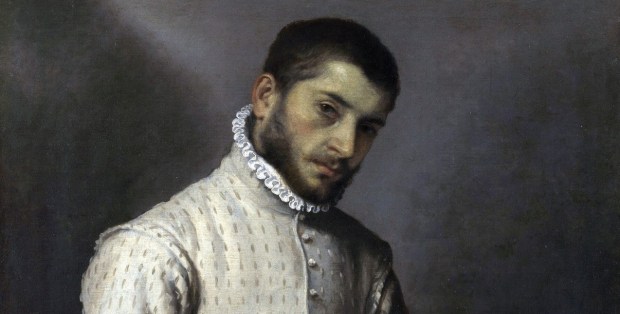
Moroni: Portrait of a Tailor

(Royal Academy, London, until 25 January 2015)

He’s a familiar sight in the National Gallery. A young tailor has been distracted in the middle of his work. Resting his scissors on the table for a moment he glances up, as if you’ve just wandered into his workroom, half-inquisitive, half-challenging. His clothes are simple but well-made, showing off his craft: his cream doublet is elaborately pinked and finely-detailed lace peeks out at collar and cuffs. In a moment his assessing gaze will shade into something more specific: a frown at being disturbed, perhaps, or a welcoming smile, but for now he’s captured in that split second where everything is still possible: a moment of infinite potential.

Continue reading

Idling in Italy (Florence)

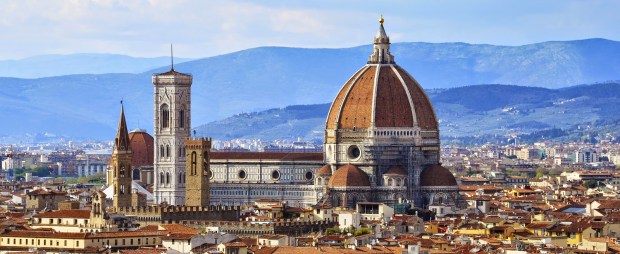
The Duomo, Florence

Last week, in a spirit of spontaneity that’s entirely uncharacteristic, I went on a last-minute trip to Florence. Work has been very intense this year, and that looks set to continue, so I was in desperate need of sunshine, gelati and the scent of pine, the chatter of cicadas and the quiet grace of frescoed churches. Fortunately I had a marvellous excuse. This summer everyone has been talking about the exhibition on Pontormo and Rosso Fiorentino, subtitled Diverging Paths of Mannerism, at the Palazzo Strozzi. Not that I needed much of an excuse to return. Florence has been a very important place for me ever since I first went there with my parents at the age of fifteen, my head full of A Room with a View and the Medici, Leonardo and Michelangelo. I managed to get there three more times in my student days, but it’s been eight years since I was last there at the age of twenty-one. It was time to go back.

Continue reading

Veronese: Magnificence in Renaissance Venice (2014)

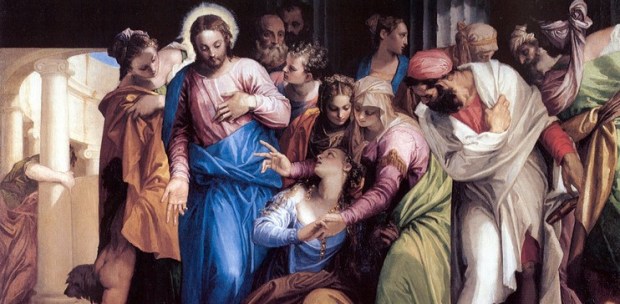
Veronese: Conversion of the Magdalen

(National Gallery, London, until 15 June 2014)

The National Gallery’s Veronese exhibition is already being described as the one show that you have to see this year and glowing opinions have proliferated: from The Times’s five-star review to the enthusiastic post by the exacting Grumpy Art Historian. Needless to say, I’d been very much looking forward to it. And I was especially excited because, a couple of weeks ago, I went to a very enjoyable lecture by Matthias Wivel, one of the curators, who’d suggested a way of ‘reading’ Veronese’s pictures that I was keen to put to the test.

Continue reading

Prince of Foxes (1947): Samuel Shellabarger

★★★★½

Shortly after I finished the excellent Blood & Beauty, this historical novel about Renaissance Italy popped up in my automatic recommendations. The author and title were both unfamiliar and, when I realised that it was again about the Borgias, I was tempted to pass: I had no plans to read another novel on the subject so soon. However, as the reviews were glowing, I persuaded myself to give it a chance; and I can honestly say that I’ve loved every minute of it.

Continue reading