The King’s Pleasure (1969): Norah Lofts

★★★★

I thought twice about buying this, mainly because of the title, which implied an historical romance full of heaving bosoms and ripped bodices. Plus, did I really need another take on the overly familiar tale of Henry VIII, Katharine of Aragon and Anne Boleyn? But I’ve heard a lot about Norah Lofts over the years and so did buy it, and to my relief it was a very pleasant surprise. Thoughtful and intelligent, it was grounded in the period mindset in such a way that I never felt myself sinking into a quagmire of historical exposition.
Continue reading

Research in Action: Performing Gender on the Indoor Stage

Performing Gender: Shakespeare's Globe

(Sam Wanamaker Playhouse, 7 May 2015)

We all know that in Shakespeare’s day women weren’t allowed on the stage. Recently several productions have tried to recreate the flavour of those original performances: Mark Rylance’s Twelfth Night and Richard III productions come to mind. But even these don’t give an accurate flavour of what Elizabethan and Jacobean audiences would have seen. Female roles were played by young boys aged between 12 and 22 years old, highly skilled actors who would specialise in playing women until at a certain stage they were no longer able to convince with the illusion (many ended up transitioning across the gender divide and took on male roles within the company).

Continue reading

The First Blast of the Trumpet (2012): Marie Macpherson

John Knox made a brief cameo appearance in my GCSE History course, mainly to demonstrate that many people in the 16th century thought female monarchs were A Bad Thing. As part of a monstrous regiment of my own, in my girls’ school, I never had the chance to learn much more about him than the title of his most famous work, which naturally made me regard him with slight disapproval; and now, fifteen years later, it’s time to finally redress the balance. Marie Macpherson’s novel – the first in a proposed trilogy – turns him from merely a name on a history syllabus into a much more rounded and appealing figure, set firmly in his time.

Continue reading

The Altarpiece (2013): Sarah Kennedy

★★½

The Cross and the Crown: Book I

It is 1535 and Henry VIII, bedazzled by a pair of black eyes, has put aside his wife Katherine of Aragon and turned his back on the Catholic Church in favour of Reform. His sentence falls heavily on the kingdom’s monasteries, which are charged with immorality and avarice, and their rich goods and lands seized for the benefit of the king – or more accurately the benefit of the local lord, should he have the courage to take them.

Continue reading

The Cheapside Hoard (2013)

The Cheapside Hoard

(Museum of London, until 27 April 2014)

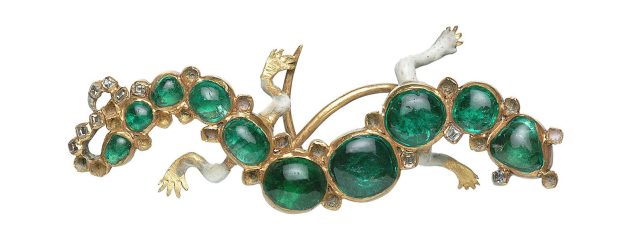
All that glisters is not gold in the Museum of London’s dazzling new exhibition: there are also rubies, emeralds, garnets, diamonds, pearls and cameos, amethysts, rock crystal and sapphires. Discovered just over a century ago, during demolition work on a row of 17th-century houses in the City of London, the Cheapside Hoard is a treasure-trove of more than five hundred jewels, which offer an unparalleled glimpse both of Stuart tastes in jewellery and of the goldsmith’s trade in early modern London.

Continue reading

Elizabeth I & Her People (2013-14)

The Darnley Portrait of Elizabeth I

(National Portrait Gallery, London, until 5 January 2014)

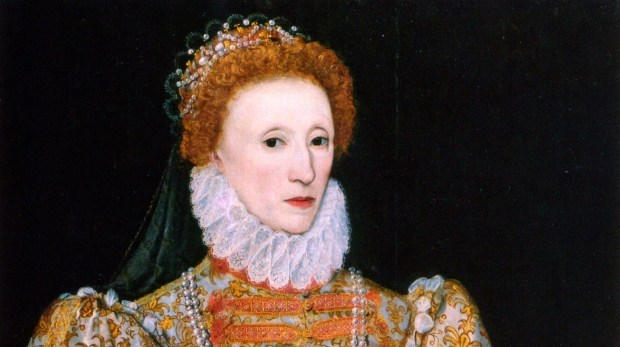
The National Portrait Gallery’s autumn exhibition is the most recent in a long line of Tudor and Stuart shows in London over the last eighteen months. It’s much smaller than most of the others: a tasting menu compared to the banquet of the Royal Collection’s In Fine Style or the sprawling buffet of the V&A’s Treasures of the Royal Courts. Its purpose is to look at the social stratification of Elizabethan England and how luxury goods such as portraits, books and fine clothing were becoming increasingly available to the lower classes – merchants, clerics, writers and gentry – as well as to royalty and nobility.

Continue reading

Fallen in Love: The Secret Heart of Anne Boleyn (2011): Joanna Carrick

Fallen in Love: The Secret Heart of Anne Boleyn: Joanna Carrick

(Red Rose Chain at the Tower of London and Gippeswyk Hall, Suffolk, until 16 June 2013)

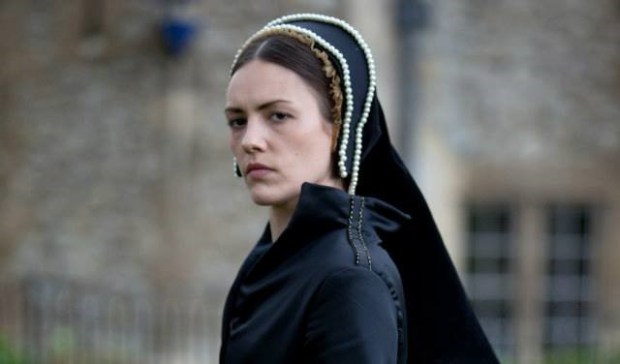
This was something I heard about at the very last minute: having missed any mention of it in the press, I came across an entry on Laura Winningham’s indispensable London culture blog, The Winning Review. The prospect of seeing a play about the rise and fall of Anne Boleyn, in Tudor costume, at the Tower of London, was simply too good to resist.

Continue reading

In Fine Style: The Art of Tudor and Stuart Fashion (2013)

Elizabeth I as princess

(Queen’s Gallery, London, 10 May-6 October 2013)

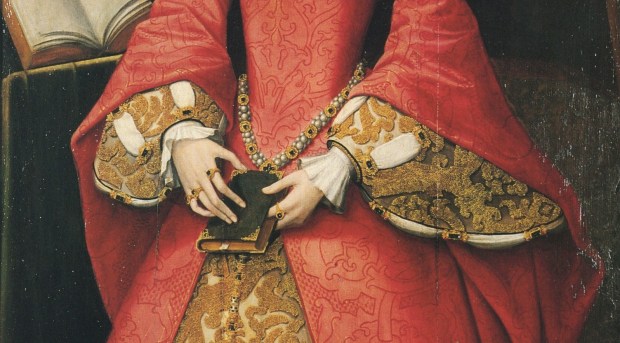
Before we begin, let’s get one thing clear: if you have any interest in historical costume, the Tudor and Stuart courts, or textiles, then you absolutely must see this new exhibition at the Queen’s Gallery. It’s visually glorious, with a collection of splendid portraits from the Royal Collection displayed alongside surviving examples of costume from the period; and it’s also intellectually absorbing, because it takes very familiar images and, in switching the focus from the sitter to what they’re wearing, encourages you to think about portraits in an entirely new way.

Continue reading

Treasures of the Royal Courts (2013)

van Herwijck: Elizabeth I: The Hampden Portrait

Tudors, Stuarts and the Russian Tsars

(Victoria and Albert Museum, London, until 14 July 2013)

Along with my Murillo adventures last weekend, I also visited the V&A, to see their  exhibition about the early years of diplomacy between the English court and the Tsars of Russia. This has a (rather tenuous) Lymond connection, as it opens with the expedition of the adventurer Richard Chancellor, who my fellow Dunnetteers will remember from The Ringed Castle. Naturally, considering my enthusiasm for all things Tudor and Stuart, I would have gone to the exhibition anyway, but the Dunnett angle offered a welcome little extra dose of piquancy.

Continue reading

At Drake’s Command (2012): David Wesley Hill

★★★

David Wesley Hill’s novel is the first in a planned series, which follows Francis Drake’s circumnavigation of the world through the eyes of the young cook and crew-member Peregrine James. We first meet Perry in Plymouth in November 1577, where he is being publicly whipped for a theft he didn’t commit. Determined to make a better life for himself, he talks his way onto the crew of the Pelican, which under the command of Francis Drake is said to be heading off on a trading voyage to Alexandria.

Continue reading