Mendelssohn is on the Roof (1960): Jiří Weil

★★★½

In his bestselling HHhH, Laurent Binet referenced this novel about Nazi-occupied Prague, published posthumously in 1960. I assumed it was an obscure book, long out of print; so imagine my surprise when I spotted a copy in Oxfam a few months ago. I should say a few words about Jiří Weil himself as a kind of introduction (and, if you want to find out more, there is the ubiquitous Wikipedia page).

Continue reading

Knowledge of Angels (1994): Jill Paton Walsh

★★★★★

This year I’m trying to reread some of the books I already own, as well as discovering new ones. It was only a matter of time before I returned to this brilliant novel, which I’ve adored ever since I read it in the Lower Sixth. Of course, opinions on books are very subjective, because the way we respond is affected so deeply by our own beliefs, memories and interests. For me, very few books come close to perfection. This is one of them. Brace yourselves for superlatives.

Continue reading

1Q84 (2009): Haruki Murakami

★★★½

Back when I first moved to London, and was even smaller and more daunted by it than I am now, I found a room in a flat owned by a successful lawyer, who also happened to have a select but very admirable collection of books which she didn’t mind sharing. Thanks to her, I became acquainted with two writers who impressed me with the clever way they deal with myths and ideas: the first was Borges; the second Murakami. Kafka on the Shore is one of my favourite books and, although I’ve only read a few of Murakami’s novels, I’ve had my eye on 1Q84 ever since it came out.

Continue reading

The Snow Child (2012): Eowyn Ivey

★★★★

I took a little time to get around to Eowyn Ivey’s The Snow Child: I downloaded the ebook from Amazon a couple of months ago, when it was on sale, without knowing very much about the story, save that it was set in 1920s Alaska. That’s from a later period than the historical fiction I usually read, so I put the book aside as something to try in a quiet moment. That moment came in the last few days, and I’m kicking myself that I didn’t read it sooner: I’ve been captivated by this charming blend of historical novel and fairy tale. I suspect that many of my fellow book-lovers will already have read this, so I’m looking forward to hearing what you felt about it.

Continue reading

Life and Death in Pompeii and Herculaneum (2013)

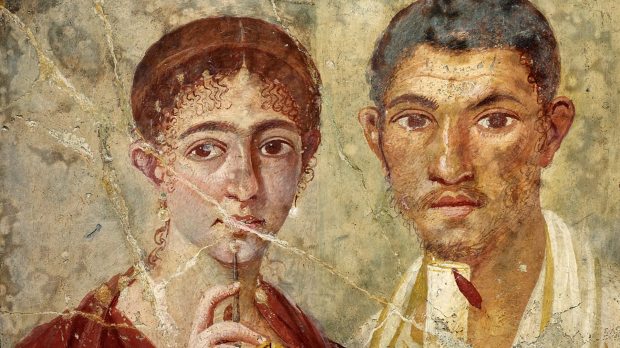
Roman fresco of a couple: Terentius Neo and his wife

(British Museum, London, until 29 September 2013)

If last year’s blockbuster exhibition was Leonardo at the National Gallery, this year’s is Pompeii at the British Museum. Both names have the kind of pulling-power that make it virtually impossible to get tickets, although I’m happy to say that there is still availability for some of the less appealing slots (we visited at 9am on a Sunday morning). Besides, 300 tickets are released by the British Museum every day, so you can always queue before opening time in the hope of getting one. Do try to see it. You won’t be disappointed.

Continue reading

River of Stars (2013): Guy Gavriel Kay

★★★★

Looking back now, it’s hard to believe that I only became aware of Guy Gavriel Kay’s books two years ago. In that time I’ve devoured several of them and two shot immediately to the top of my ‘favourites’ list. This means, however, that River of Stars is the first book that Kay has released since I became an aficionado; and the anticipation has been almost unbearable. Hard copies of the book haven’t yet been released in the UK – the British release date is in the summer – but Harper Collins have compassionately made the e-book available at the same time as those in other territories, so that we don’t all go completely mad. Looking on the bright side, this means that we Britishers get double the excitement of the release, first in e-book form and then in hard copy.

Continue reading

Dr Copernicus (1976): John Banville

★★★

Goodness, it’s been a while! Sorry about that; the Easter holidays are mainly to blame. I went home to the country for a long weekend to see my parents and other relatives, and didn’t get much reading done, although it was nevertheless a very productive break: I came back with thirteen new books and a costume for the Goodwood Revival in September. I had taken this book with me as something to read in the quieter moments, but it turned out to require a severe effort of concentration, and I’ve taken longer to get through it than I expected, given that it’s less than 250 pages long.

Continue reading

Gigi and The Cat (1942-44): Colette

★★★½

When reading a book that’s been translated from another language, I don’t often think too much about the act of translation. Indeed, I usually think the mark of a good translator is that he or she should be almost self-effacing: you shouldn’t notice that there’s a degree of separation between you as the reader and the original author. However, I couldn’t help but notice the translation in this book: in a good way. As you might remember, I’ve only read one book by Colette before, and that was Chéri, translated by Roger Senhouse. My French isn’t good enough to be able to judge it against the original, but in English Chéri was entirely successful, giving the story an elegiac and slightly satirical tone which worked perfectly. And so I began specifically to look out for other translations by Senhouse.

Continue reading

Lady of the Forest (1992): Jennifer Roberson

★★★½

A Novel of Sherwood

When I reread The Golden Key some months ago, and realised that Jennifer Roberson had written my favourite section of the novel, I asked for recommendations of her other books. Elaine kindly suggested Lady of the Forest which, by complete chance, I found in my local charity shop last weekend (despite the fact it currently exists only in an out-of-print American edition).

Continue reading

Captain Alatriste (1996): Arturo Pérez-Reverte

★★★★

For the elite, Spain in the 1620s is a world of stately protocol, fine poetry and all the trappings of a great empire: the sun may be setting on Spanish dominance in the New World, but there’s still enough light to enjoy it while it lasts. Outside the insulated world of the court, however, things are very different. For the man on the street, it’s a world of living hand-to-mouth, gossip on street corners and scurrilous sonnets, where every insult is met with steel and where the appearance of gentility (bearing arms, getting good seats at the theatre) is more important than the reality. Into this roistering world of old soldiers, literary priests and jobbing poets comes young, wide-eyed Íñigo, whose mother has sent him to live with his late father’s comrade-in-arms, Captain Alatriste.

Continue reading