The Audience (2013)

The Audience: Peter Morgan

(Gielgud Theatre, London, currently booking until 15 June 2013)

Every Tuesday evening the Queen meets with her Prime Minister to discuss the events of the previous week and to be apprised of plans for the coming week. No minutes are kept of these meetings and so they offer a unique opportunity for sovereign and minister to hold conversations in perfect confidence, allowing a frankness of exchange that is impossible elsewhere. In short it encapsulates the principles of our constitutional monarchy. The Queen benefits from the Prime Minister’s honest opinion of the present situation, while the Prime Minister benefits from the advice and experience the Queen has amassed during her sixty years on the throne.

Continue reading

Slammerkin (2001): Emma Donoghue

★★★½

From isolated nuns in medieval Norfolk to the harlots of late Georgian London… an interesting progression. This, the first book by Donoghue that I’ve read, is the tale of Mary Saunders, who goes to ruin for want of a red satin ribbon. Living with her mother, her hated stepfather and her infant stepbrother in a basement room on Charing Cross Road, Mary is troubled by ambition. She is bright and curious and romantic, and wants more from her future than to become a seamstress like her mother and fade into obscurity, poverty and bitterness. Her education at the Charity School has only whetted her appetite for knowledge and her dreams are full of fine clothes and balls and all the stuff of 18th-century romance. Fans, fine carriages and gentlemen might be impossibly remote from Mary’s humble life, but bright colours and billowing skirts are there to be had… at a price.

Continue reading

The Corner That Held Them (1948): Sylvia Townsend Warner

★★★

There are great pools of ignorance in my knowledge of literature, and one of these pools is in the region of early 20th century novels by female authors – which is why I so much enjoy the Stuck In A Book blog, because it introduces me to books and writers I simply haven’t come across before. It was there that I first heard about Sylvia Townsend Warner, not in the context of her novels but because Simon was reading a memoir about her. When I stumbled across The Corner That Held Them in my local library, I recognised her name and thought I’d give it a go.

Continue reading

Barocci: Brilliance and Grace (2013)

Barocci: Madonna and Child with a Cat

(National Gallery, London, 27 February-19 May 2013)

What a difference a name makes. Just over a year ago, it was virtually impossible to get into the National Gallery’s Leonardo da Vinci exhibition (and even when you were in, you could hardly see anything for the crowds). When I popped over to the National Gallery this lunchtime, however, to see their new Barocci show, I didn’t even have to queue for a ticket. In one way, this is marvellous: it’s so much more pleasurable to visit an exhibition that you can actually see; but at the same time my heart sinks a little. It’s a depressing indication that exhibition attendance isn’t really anything to do with the quality of the show or the beauty of the exhibits, but on how famous the ‘brand’ of the artist is. And in this particular case, if people decide not to bother because they haven’t heard of Barocci (which, you might think, is the perfect reason to see an exhibition), they’ll miss out on a stunning and superlatively well-organised show.

Continue reading

The Volcano Lover (1992): Susan Sontag

★★★★

The man known as the Cavaliere is the British Ambassador in Naples. Refined and courtly, he is a connoisseur of the beautiful, the antique and the imposing. He collects whatever he can – paintings, statues, vases, antiquities acquired legally and illegally from the newly-discovered sites at Pompeii and Herculaneum – and he interests himself in all that is methodical, scientific and educational. But nothing fascinates him as much as the volcano, Vesuvius, which towers over the colourful city which has become his home.

Continue reading

Assassin’s Quest (1997): Robin Hobb

★★★★ ½

The Farseer Trilogy: Book III

This third and final volume of The Farseer trilogy opens with a situation in which, frankly, things can only get better. If you haven’t read the preceding books and think you might like to do so, I warn you to tread carefully here. A great deal happens in this final novel and much of it grows out of events in the earlier books, so I might be giving away spoilers without even realising it.

Continue reading

Masquerade (Carnival in Venice)

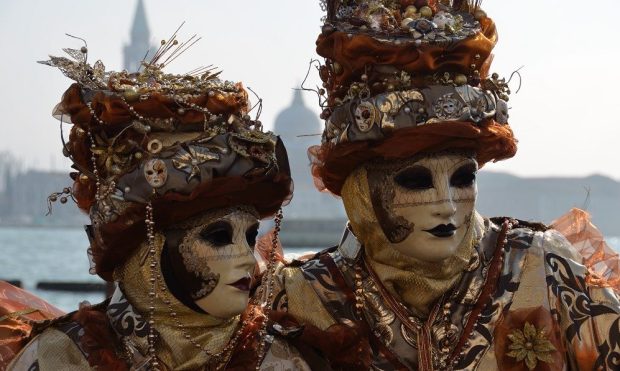
Two masked figures on the Riva degli Schiavoni

Even on an ordinary day Venice feels unreal, suspended between sea and sky, a jumble of bridges and alleyways and damp brick walls, porphyry and gold mosaic, ogee arches and pinnacles of blindingly white marble. I’ve been there twice before, but had always dreamed of going to the carnival and so couldn’t have been more excited when my parents decided to make their first trip to Venice and asked me to come along as translator and guide.

Continue reading

Stradella (1909): Francis Marion Crawford

★★★

There are many good reasons to choose a book, but doing so because the author shares his name with one of my favourite fictional characters is probably not one of them. Nevertheless, in this case it had a happy outcome. I stumbled across Stradella (1909) about a week ago, while looking for historical novels set in Venice to complement my visit to the Carnevale. I knew nothing about Francis Marion Crawford (although he was evidently very distinguished in his day) and so wasn’t expecting much. What I discovered was a charming historical romance which proved to be perfect material for holiday reading: undemanding, easy to dip into, and full of Baroque swashbuckling, love and intrigue.

Continue reading

Looking for Richard (1996)

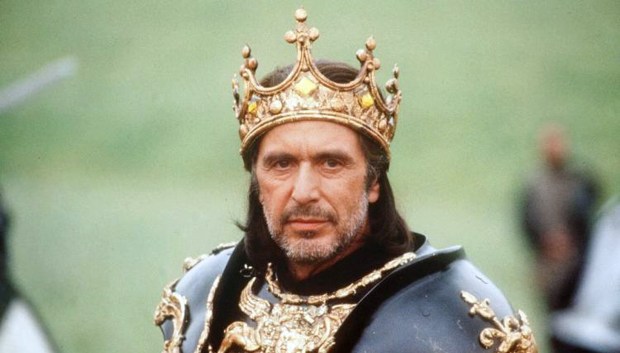
Looking for Richard

★★★

(directed by Al Pacino, 1996)

This documentary has been on my wishlist for some years, but I only bought it a couple of weeks ago. Little did I know at the time that Richard III was about to become national news. As we all know by now, the University of Leicester announced on Tuesday that the bones found in September beneath a car park, on the site of the city’s medieval Grey Friars church, were almost certainly those of Richard, buried hastily and irreverently after the Battle of Bosworth.

Continue reading