Fool’s Fate (2003): Robin Hobb

★★★★½

The Tawny Man Trilogy: Book III

I was in no position to even think about writing a post immediately after finishing this (the tears would have been in the way) and, even after a night’s sleep, I feel emotionally crushed and somehow hollow. Yes, I’ve read it before, but that was ten years ago and I scarcely remembered any of it: the essence, rather than the detail, of the end. No doubt I’m going to lose my equanimity at some point during this post and start talking about fictional characters as if they’re real… I apologise in advance for that, but it can’t be helped.

Continue reading

The Golden Fool (2002): Robin Hobb

★★★★½

The Tawny Man Trilogy: Book II

I take back what I said at the beginning of my post on Fool’s Errand: actually, you should read The Liveship Traders before embarking on The Tawny Man, otherwise there are going to be vast swathes of this book that don’t make any sense to you. Until I reread these books, I’d always thought of them as a continuation of The Farseer, but now I’m beginning to realise that actually they blend and merge and continue threads from both of the earlier trilogies, weaving them together into a rich story with a flavour all of its own.

Continue reading

Fool’s Errand (2001): Robin Hobb

★★★★★

The Tawny Man Trilogy: Book I

Following on from my rereads of the previous two Robin Hobb trilogies, I’m now on to the third: The Tawny Man. After the wider scope of The Liveship Traders trilogy, with its large cast of characters, Fool’s Errand feels tighter, more focused and more intimate. Even on a second reading, I was gripped: this easily measures up to the best of The Farseer trilogy.

Continue reading

Peter and Alice (2013): John Logan

Peter and Alice: John Logan

★★★

(Noël Coward Theatre, London, until 1 June 2013)

One of four plays in the Michael Grandage Season at the Noël Coward Theatre, Peter and Alice was already virtually sold out in January when I booked my ticket. Last Tuesday night, I found myself in my customary spot up in the back of the balcony, opera glasses at the ready. I hadn’t read any reviews of the play (I try not to, until after I’ve made up my own mind about things) and I’d been really looking forward to it.

Continue reading

Ship of Destiny (2000): Robin Hobb

★★★½

The Liveship Traders Trilogy: Book III

In this final instalment in the Liveship Traders trilogy, we rejoin the people of Bingtown and the Rain Wilds in the aftermath of the hatching of the dragon Tintaglia, whose existence calls for a complete change of attitude. That change is required not just in the minds of the Rain Wild Traders, who will become so intrinsically linked to her iron will, but more generally in the minds of those waging war, who come to realise that, no matter how powerful they are in human terms, there are some forces they can never overcome.

Continue reading

The Mad Ship (1999): Robin Hobb

★★★★

The Liveship Traders Trilogy: Book II 

The second volume of The Liveship Traders trilogy kicks off with a bloody amateur amputation on board ship; and the drama barely lets up until the climax 800 pages later. Along the way, Hobb eventually allows us to see the Rain Wild Traders at first hand and begins to reveal their secrets. These offer some answers to questions arising from the first book, about serpents and dragons and wizardwood; and these answers in turn give rise to questions of their own.

Continue reading

Treasures of the Royal Courts (2013)

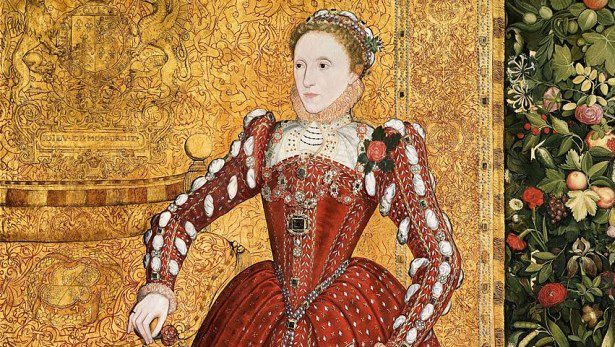
van Herwijck: Elizabeth I: The Hampden Portrait

Tudors, Stuarts and the Russian Tsars

(Victoria and Albert Museum, London, until 14 July 2013)

Along with my Murillo adventures last weekend, I also visited the V&A, to see their  exhibition about the early years of diplomacy between the English court and the Tsars of Russia. This has a (rather tenuous) Lymond connection, as it opens with the expedition of the adventurer Richard Chancellor, who my fellow Dunnetteers will remember from The Ringed Castle. Naturally, considering my enthusiasm for all things Tudor and Stuart, I would have gone to the exhibition anyway, but the Dunnett angle offered a welcome little extra dose of piquancy.

Continue reading

Murillo at the Wallace Collection (2013)

Murillo: Adoration of the Shepherds

Painting of the Spanish Golden Age

(Wallace Collection, London, until 12 May 2013)

Fresh from Dulwich on Sunday afternoon, I headed up to the Wallace Collection for the second instalment of my Murillo adventure. Here the exhibition is very small and, as at Dulwich, precisely focused. With one exception, it contains only pictures that were bought by the 4th Marquess of Hertford (1800-1870) in the mid-19th century and form part of the Collection. It therefore acts not only as an introduction to Murillo, but it shows us Murillo through the eyes of the 19th century, when Lord Hertford was buying his pictures at auction.

Continue reading

Murillo and Justino de Neve: The Art of Friendship (2013)

Murillo: Triumph of Faith

(Dulwich Picture Gallery, London, until 19 May 2013)

London is the place to be for Murillo at the moment. This exhibition at Dulwich is complemented and echoed by a similar small show at the Wallace Collection, both of which will be ending soon. Yesterday I took the chance to visit both in one day, an experience which forced me to think a little more deeply about Murillo as an artist and which offered two different, but complementary perspectives on his painting. While the Wallace Collection looks at how the Marquess of Hertford assembled his collection of Murillos in the 19th century, Dulwich goes further back in time and homes in on the artist’s relationship with his key patron in Seville, the cathedral canon Justino de Neve (1625-1685).

Continue reading

Ship of Magic (1998): Robin Hobb

The Liveship Traders Trilogy: Book I 

Time to return to Robin Hobb. I’m now onto the first book of her second trilogy, The Liveship Traders. These books are set in the same world as The Farseer, a long way further south, where the trading community of Bingtown lies between Chalced and Jamaillia. Bingtown could belong to an entirely different age than the Six Duchies. Here, rather than the medievalism of The Farseer trilogy, we have  trade and shipping and merchants’ colonies, with a distinctly seventeenth-century feel. The Six Duchies are mentioned occasionally, but mainly as a bitterly cold backwater (both in location and civilisation) that no one particularly wants to visit. The two trilogies aren’t completely separate, of course, but that’s something that doesn’t become obvious until a little later on, so I’m going to hold off until the next book.

Continue reading