The Cardinal’s Man (2017): M.G. Sinclair

★★½

This, like Girl with a Pearl Earring, is a novel born from a painting, from a striking face that seems to look out at us across centuries and to spark a shock of fellow-feeling. While Tracey Chevalier’s famous book took its inspiration from the coy glance of a Dutch teenager, Sinclair’s story is inspired by a much more direct confrontation: Diego Velazquez’s Portrait of Don Sebastián Morra, in the Prado, dating from 1645. Using this powerful image as a starting point, Sinclair reimagines Morra’s life in a fictional biography that carries us from the bleak shores of Normandy to the glitter of Paris in the time of Louis XIII and Cardinal Richelieu. Spain, oddly enough, features less than you might expect. It is an ambitious book, and its championship of this fascinating but obscure figure is to be celebrated; but ultimately the novel is a fantasy, which makes no reference to the few known facts of Morra’s life. Moreover, it never quite manages to overcome some stylistic and compositional shortcomings.

Continue reading

The Roanoke Girls (2017): Amy Engel

★★★★

It’s every girl’s dream. When Lane’s reclusive mother dies, she assumes she’ll be alone in the world, but to her astonishment her mother’s estranged parents seek her out. Moving back to her mother’s childhood home, Roanoke in Kansas, fifteen-year-old Lane is suddenly no longer an orphan but part of a wealthy, loving family presided over by her charismatic grandfather. She even has a new best friend in the form of her lively cousin Allegra. And so, as Lane adjusts to the life of a Roanoke girl – one of the golden few, the object of fascination, desire and envy for the rest of the folk in town – she begins to wonder what on earth drove her mother away. There’s just one strange coincidence that troubles her. As Allegra puts it herself, ‘Roanoke girls never last long around here. We either run or we die.’

Continue reading

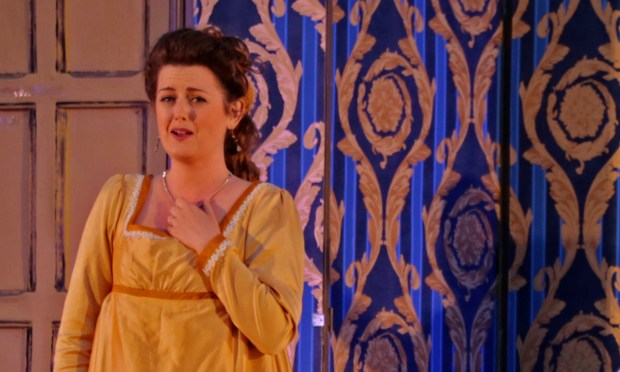
The School of Jealousy (1778): Antonio Salieri

Salieri: The School of Jealousy

★★★★

(Bampton Classical Opera at St John’s Smith Square, 12 September 2017)

Full of wit, farce and playfulness, The School of Jealousy was an instant hit, becoming one of the best-loved operas in Europe within a decade of its premiere in 1778. It told a story that was immediately accessible: a jealous, bourgeois buffoon locks away his pretty wife, only to bring her to the attention of a philandering nobleman. It’s a tale of love, lust and forgiveness, scripted by the poet Caterino Mazzolà and tweaked here and there by the young Lorenzo da Ponte. Musically, it sparkles: vivacious, ironic and colourful, it shows that Salieri in his prime was already a master of the comic idiom that would become indelibly associated with a certain younger contemporary of his.

Continue reading

Assassin’s Fate (2016): Robin Hobb

★★★½

My relationship with this final trilogy of the Farseer series hasn’t always been a happy one and this concluding book continued in much the same vein. I’ve been reading it on and off since May and have only now spurred myself to go back to the beginning and read the whole thing cover to cover. It’s an ambitious novel which synthesises storylines from all three of Hobb’s different series set within this world, meaning we encounter many familiar faces and old friends, as they join forces for the final showdown. There is much to enjoy in its action, but I couldn’t help feeling – as I’ve felt through this trilogy – that the tale sacrifices the emotional intensity of the earlier books. A warning now, before we begin. This post contains spoilers for the Farseer, Liveship Traders and Tawny Man trilogies, as well as for the Rain Wild Chronicles and the earlier books in this trilogy.

Continue reading

The Aviary Gate (2008): Katie Hickman

★★★

The Pindar Trilogy: Book I

This appealed for two reasons. You may remember that some months ago I read the third book in this trilogy, The House at Bishopsgate (not realising at the time that it was a third book). Impressed by its quality, I was keen to read the earlier novels. Secondly, Hickman’s insight into the world of 16th-century Constantinople promised to reveal the answer to a question that intrigues me. What exactly happens in a harem? Yes, that, obviously, but what about the rest of the time? Surely it can’t be all about lying on a chaise longue while eunuchs fan you and feed you grapes? Well, according to this book, it’s also about poison, vaunting ambition, intrigue and the gradual erosion of everything you know beyond the walls of the ironically-named House of Felicity.

Continue reading

A Morbid Taste for Bones (1977): Ellis Peters

★★★★

The Brother Cadfael Chronicles: Book I

In 1977, forty years ago, Edith Pargeter published the first book in her Cadfael series, which combined her talents as historical novelist (under her real name) and mystery writer (under the nom de plume Ellis Peters). Set in her native Shropshire, the story features the eponymous worldly-wise monk, whose adventurous youth has given way to a comfortable middle age at Shrewsbury Abbey. Here he finds himself solving a series of crimes in and around his foundation. Those who grew up in the 1990s, like me, will remember the cuddly Sunday-night ITV adaptation with Derek Jacobi as the sleuthing monk. Cadfael was almost certainly my introduction to murder mysteries and I know that I read some of the books as a teenager, though I don’t remember them now. I was delighted to find the first seven novels in the series during a recent tip to the Book Barn, and decided it was time to refamiliarise myself with them.

Continue reading

The Lie (2014): Helen Dunmore

★★★★

I haven’t read any books by Helen Dunmore before because, somehow, I’d got it into my head that she only wrote time-slip romantic fiction. Goodness knows why I thought that, but I suppose I’d heard vaguely about The Greatcoat and extrapolated widely to come up with a completely mistaken idea. The Lie has put me right. A poignant, gut-wrenching tale of love, loss, and survivor’s guilt, it tells the story of the young Cornishman Daniel Branwell as he returns home after the horrors of the First World War.

Continue reading

Friendly Fire (2005): Patrick Gale

★★★★

After reading Facing the Tank, I was keen to try some of Patrick Gale’s other novels. By chance, I stumbled across Friendly Fire, which is set in the same town and focuses on the grand old boarding school, Tatham’s, at its heart. Gale admits in his author’s note that the school is a thinly-disguised version of his own alma mater at Winchester, and perhaps that’s why the story shimmers with a kind of nostalgia. Like an adolescent version of The Lessons crossed with The Secret History, it follows the formidably bright Sophie and her friendship with the fascinating, flamboyant Lucas across the course of three tempestuous years. It’s a tribute to intense adolescent friendship, a tale of trying to find one’s place in a confusing world, and – perhaps above all – a love-letter to what happens when a thirsty mind meets a classical education.

Continue reading

The Tropic of Serpents (2014): Marie Brennan

★★★★

A Memoir by Lady Trent: Book II

The irrepressible naturalist and explorer Isabella Camhurst is back for a new adventure. This time she and her fellow researcher Thomas Wilker are planning to set off for the exotic continent of Eriga, funded by their ever-generous patron Lord Hilford, in order to research the draconic fauna of the country of Bayembe. Their aims are, as always, purely scientific, but Isabella is to find herself drawn into a veritable jungle of complications, both diplomatic and political. For Bayembe is a country on the brink of war and, if Isabella is to fulfill her scientific ambitions, she is going to have to make some hard choices about where her loyalties lie. Told in Brennan’s pitch-perfect narrative voice, this is a spirited romp best described as a Victorian Indiana Jones with dragons.

Continue reading

First Class Murder (2014): Robin Stevens

★★★★

A Murder Most Unladylike Mystery: Book III

When I spotted this in a second-hand bookshop the other day, it felt like Destiny. It was high time for another tale of jolly japes, cream buns and shocking murders. But this time, Daisy and Hazel aren’t looking for trouble at all. Quite the contrary. As Daisy’s family gather in London for the trial that follows the terrible events at Fallingford, Daisy herself sets off with Hazel and Hazel’s father on a magical holiday on the Orient Express. They have been warned to behave themselves and to stop ‘playing’ at being detectives. But that is easier said than done in a sleeper coach where there are so many fascinating people – especially when the girls learn that one of their fellow travellers is a spy going to pass secrets to the Germans, and another – as becomes clear – must be a murderer. Without a doubt, the Detective Society can’t let this lie! And so Daisy and Hazel become involved in their most thrilling and dangerous case yet.

Continue reading