Beyond Caravaggio (2016-17)

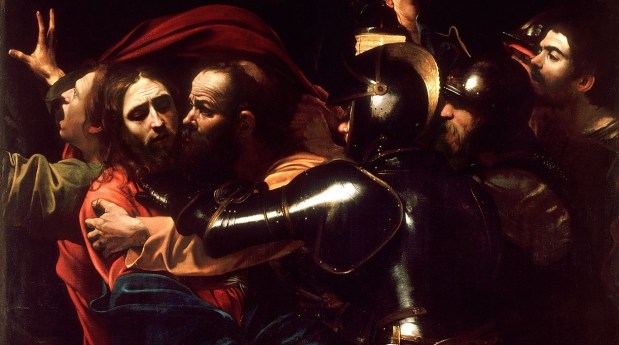
Caravaggio: The Taking of Christ

(National Gallery, until 15 January 2017)

Dark black shadows are split by waterfalls of cloth, dyed in deepest blood-red crimson. Light falls starkly on white flesh from an divine source, or peeps warmly through the fingers of a hand that shields a candle. Saints become brooding youths or old greybeards with seamed, unidealised faces and dirty feet. Musicians and cardsharps preen in fancy brocades, carrying a rogue ace tucked into the backs of their belts. This exhibition at the National Gallery leads us into the underbelly of Baroque Rome and Naples, to explore the works of Caravaggio’s followers. It’s an absorbing journey, which emphasises just how good Caravaggio himself was, and how hard it was to equal him.

Continue reading

Let’s Kill Uncle (1963): Rohan O’Grady

★★★ ½

One warm summer, a little boy and a little girl come to a remote Canadian island for their holidays. Initially things don’t look promising. The orphaned Barnaby Gaunt, who has spent his life shuttling from boarding school to boarding school, is a foul-mouthed little heathen; while Christie McNab, who lives with her single mother in the city, is sullen, prim and spoiled. The children hate each other on first sight, of course. But, as time passes, the peace of the island and the gentleness of the inhabitants soften their spirits. There are all sorts of wonderful adventures for two children to enjoy in this paradise. In fact, there’s only one tiny, teeny dark cloud on the horizon. Barnaby’s uncle is due on the island any day now. And Barnaby knows perfectly well that his uncle is planning to kill him.

Continue reading

An Accidental King (2013): Mark Patton

★★

In 79 AD, an old man looks back over his life and prepares to write his memoirs for his granddaughter. He is Tiberius Claudius Cogidubnus, born and bred in the British southlands of the Regenses. Trained as a priest, he was then crowned an unwilling king, first of his own tribe and then as Great King of all the Britons, with the weight of the emperor’s authority behind him. As he remembers his experiences across three decades – from a visit to Rome with the then-general Vespasian, to the horror and fire of Boudica’s revolt – Cogidubnus meditates on the tightrope he has had to walk throughout his life: defending his people, while remaining loyal to a vast and unpredictable foreign power.

Continue reading

The Liars’ Gospel (2012): Naomi Alderman

★★★★

As a writer, Naomi Alderman is a veritable chameleon. First I read The Lessons, a tale of a fall from grace among the dreaming spires, in the manner of a modern Brideshead. Then it was The Power, a Margaret-Atwoodesque novel that veered between dystopia and sci-fi: a feminist, egalitarian cry of rage. And now, the third of her novels that I’ve read, The Liars’ Gospel is a raw and rugged historical novel. Brave, too, because it dares to confront one of the world’s seminal figures: in life, a controversial and provocative young preacher in 1st-century AD Judea; and, in death, the begetter of a cult that would become one of the dominant religions of the world. But who exactly was this teacher?

Continue reading

Xerxes (1738): George Frideric Handel

Anna Stéphany

★★★★ ½

(Early Opera Company at St John’s Smith Square, 18 November 2016)

With only one production so far this year, I’ve had Xerxes withdrawal symptoms, but fortunately the Early Opera Company and Christian Curnyn were there to save the day with a concert performance at St John’s Smith Square last Friday. This was billed as a concert version of their truly excellent studio recording from 2013, but in fact the entire cast is different, with one crucial exception: Anna Stéphany as the brat-prince himself. The change of cast didn’t matter, however, as EOC drafted in some of the brightest young things around, and the result was classy, perfectly-paced and probably (on balance) the best-sounding Xerxes I’ve yet heard live. Coming from me, that’s high praise.

Continue reading

The Midwich Cuckoos (1957): John Wyndham

★★★½

This is one of the books, like The Stepford Wives or Rosemary’s Baby, that has become an icon of popular culture: even if you haven’t read it, or seen the related films, you know the basic premise. I spotted it in the library today and, because I have another of Wyndham’s books lined up waiting to be read (Triffids, no less), I thought this would make an interesting comparison. For some reason I’d always imagined that Midwich would be a horror story, but it’s something far more subtle and sophisticated: a creeping, chilling sci-fi thriller which places its characters in the ultimate moral dilemma.

Continue reading

The Magic Flute (1791): Wolfgang Amadeus Mozart

Mozart: The Magic Flute

★★★½

(Hampstead Garden Opera at Jackson’s Lane, 15 November 2016)

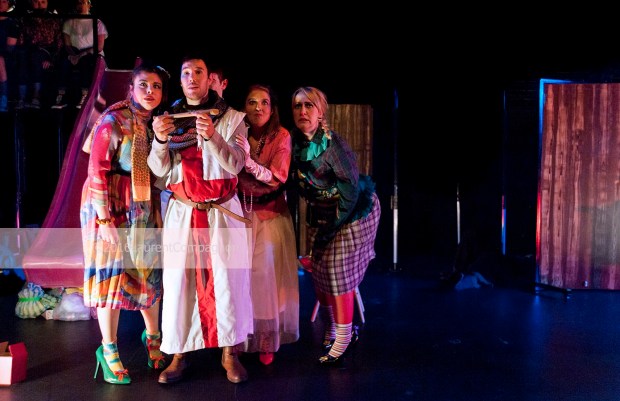
Tuesday night saw an exciting milestone: my first Flute. I get the feeling the Flute is a bit like the Nutcracker, in that many people first encounter it as children, as a magical way into its art form. However, having waited until adulthood to take the plunge, I was less concerned about the magic and more about whether I’d be able to follow its complicated allegories of Masonic enlightenment. Fortunately, Hampstead Garden Opera’s production told a delightfully clear story which emphasised the narrative at its heart: a mother struggling to do her best for her child, and the transformative effects of first love.

Continue reading

De Vouet à Watteau (2016)

Le Brun: Flora

Un siècle de dessin français: Chefs-d’oeuvre du musée des Beaux-Arts et d’Archéologie de Besançon

(Musée du Domaine départemental de Sceaux, until 12 February 2017)

I should have written about this some weeks ago, but the exhibition is still on for about a month and I’d love to flag this to anyone who might have a chance to see it. While the museum at Besançon is closed for restoration, some of its treasures have gone on tour, including a portion of its superb collection of works on paper.

Continue reading

The Devil You Know (2016): K.J. Parker

★★★★

This is the first story I’ve read by K.J. Parker; or rather, the first I’ve read under that name. For K.J. Parker, as everyone now knows, is a pseudonym of Tom Holt, the author of gleeful comic novels set in Ancient Greece, and (as Thomas Holt) the slightly less successful Viking epic Meadowland. I’ve enjoyed Holt’s work under his own name and so was tempted to dip my toe into his fantasy efforts, courtesy of this short novel published by Tor. I absolutely couldn’t resist the blurb. This is a novella of wit, good, evil, ambition and sheer outright nerve; despite its brevity it reads like a mashup of Faust and Good Omens. And you should know me well enough to know that I think that’s a very good thing.

Continue reading

Victory of Eagles (2008): Naomi Novik

★★★★

Temeraire: Book V

Last weekend, at the Dorothy Dunnett Day meeting in London, I was chatting to Janet about Temeraire. She mentioned the central ‘moral dilemma’ of the series, which would have an effect on all the books that followed and, at the time, I couldn’t quite remember whether or not I’d reached this point. After all, I read the fourth Temeraire book in April 2014 and quite a lot has happened since then. However, I’d only read the first few pages of Victory of Eagles before I realised, with a jolt, what Janet had been talking about. Of course. The cure…

Continue reading