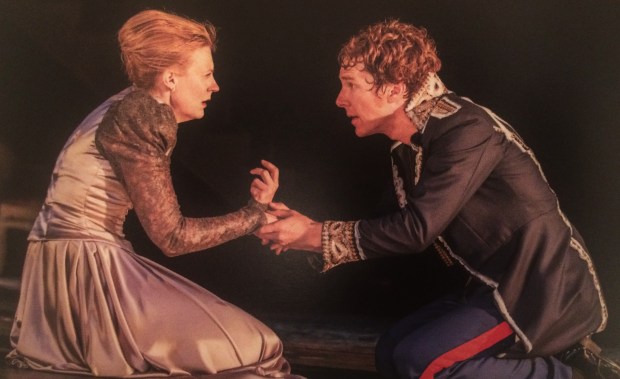
Hamlet (c1600): William Shakespeare

Hamlet

★★★★ ½

(Barbican Theatre, London, 5 September 2015)

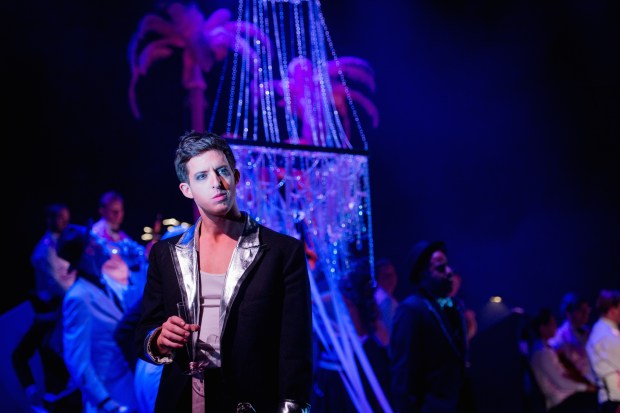
Whatever your feelings about celebrity casting or, indeed, Benedict Cumberbatch, there’s no doubt that the Barbican’s Hamlet is the hottest ticket of the year here in London. I failed to get a ticket when they initially went on sale. The only reason I managed to get there at all is because a friend won two tickets in a lottery: a lottery I’d also entered, and in which I lost out. To my enormous gratitude, she invited me to come with her (as far as I recall there was no sustained guilt-tripping involved).

Continue reading

To Be A King (1976): Robert DeMaria

★★★★

A Novel about Christopher Marlowe

I have a peculiar fascination with Kit Marlowe as an historical figure, although I’ve only ever sat through one of his plays (a student production of Doctor Faustus). To Be A King follows close on the heels of several other fictional encounters I’ve had with him, including the strikingly original Marlowe Papers. However, the most pertinent comparison for this book is Anthony Burgess’s famous novel A Dead Man in Deptford, which has a close kinship with To Be A King both in its reading of events and in its characterisation.

Continue reading

The Abduction from the Seraglio (1782): Wolfgang Amadeus Mozart

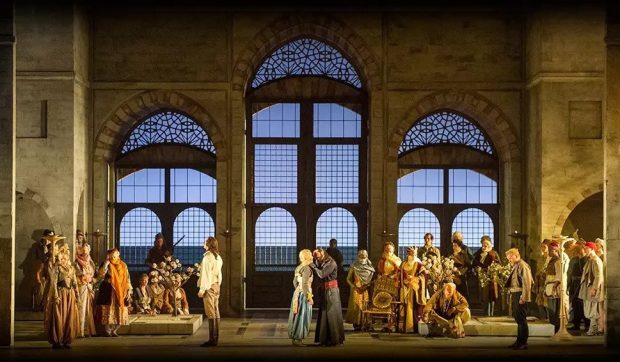
Mozart: The Abduction from the Seraglio

★★★★

Die Entführung aus dem Serail 

(Glyndebourne, directed by Sir David McVicar, seen at the Proms, 14 August 2015)

This post draws on two encounters with the same production: the live broadcast from Glyndebourne earlier this summer, and the pared down staged version presented at the Proms on 14 August. As has happened so often in recent months, I’d gone to see Seraglio without really knowing very much about it at all. I knew it was by Mozart and I knew it was about someone being rescued from a harem, but that was about it. It turned out to be rather different from what I’d imagined, and I’m delighted to say that I adored the production, largely due to its aesthetic beauty and the sheer verve with which the story was told.

Continue reading

Henry V (1599): William Shakespeare

Henry V

★★★★★

(Antic Disposition at Temple Church, 25 August 2015)

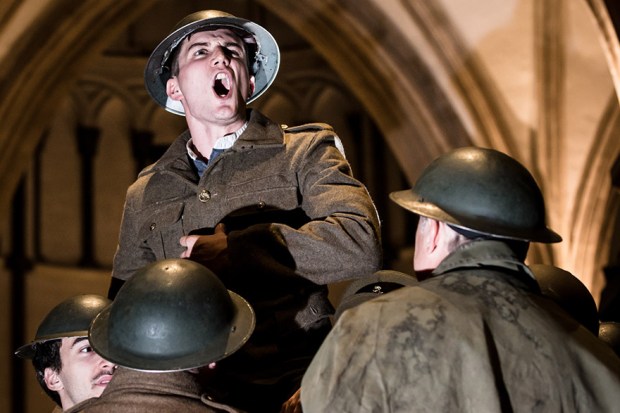
One of the great things about living in London is the chance to see smaller theatre companies putting on plays in unusual spaces, and this was a great example. I’ve been on Antic Disposition’s mailing list since I was bowled over by their magnificent Tempest in Middle Temple Hall some years ago, and when I heard they were taking on Henry V in the evocative spaces of Temple Church, I couldn’t resist.

Continue reading

My Brilliant Friend (2011): Elena Ferrante

★★★★

About a month ago, several people recommended that I should read Elena Ferrante’s Neapolitan Novels. Then my local bookshop devoted a window display to her, so it seemed a good time to plunge in. The novels follow the friendship between two women, the narrator Elena and Raffaella, whom Elena calls Lila. Throughout the course of the series I imagine we’ll cover most of the second half of the 20th century, but this first book sets the scene with the story of their childhood and adolescence in a modest, run-down suburb of Naples.

Continue reading

All the Angels: Handel and the First Messiah (2015): Nick Drake

All the Angels: Handel and the First Messiah

★★★

(Sam Wanamaker Playhouse, directed by Jonathan Munby, 3 July 2015)

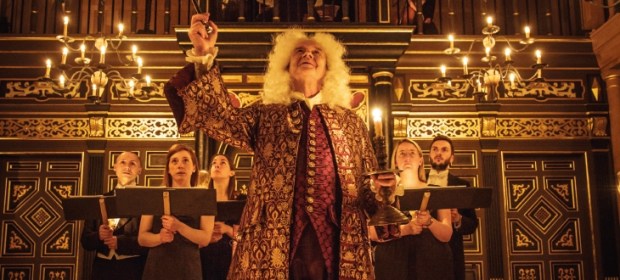
The Globe’s increasing involvement with early music has been one of the unforeseen consequences (for me) of the Sam Wanamaker Playhouse. As I’ve said before, its intimate atmosphere and warm acoustics have encouraged some truly exciting developments over in Southwark. There’s the exciting collaboration with the Royal Opera House to produce lesser-known early Baroque operas; there are concerts; and, least foreseen of all, new plays which explore the history of music. Last season we had Farinelli and the King, which will transfer to the West End this autumn and which has done so much to introduce a general audience to countertenors (and hopefully, for Iestyn Davies’s sake, to the difference between a countertenor and a castrato).

Continue reading

The Testament of Mary (2012): Colm Tóibín

★★★★

A woman sits in an empty house, waiting for the men who come to interrogate her. They claim to be protecting her, but she knows that they are also dangerous in their own way. They’re gripped by the urgency of an idea that needs corroboration: a story that in their own minds has taken on a different reality which they now intend to present to the world. But the woman resists. For the story that these men are trying to change is the story of her son; and the more she hears them speak, the more she realises that her own past, as she remembers it, is bearing less and less resemblance to what will become ‘fact’.

Continue reading

Samuel Pepys: The Unequalled Self (2002): Claire Tomalin

★★★★½

On 1 January 1660, a young clerk in the Exchequer in London began to keep a diary. He wasn’t the first diarist in history, far from it; but he was the first to find such potential in the form, and to make of his diary more than a dry chronicle of the times, or a self-examination of sins. This diary was different. From its very first page it showed an almost shocking candour as the young clerk recorded not only his work and social life, but also the most frank and intimate details about his marriage and his own turbulent sexual desires. This honesty sat alongside a lively intelligence which drank in all the events of the world around him. This clerk was Samuel Pepys and, from a historical point of view, he couldn’t have chosen a better moment to start such a detailed account of his life.

Continue reading