My Cousin Rachel (1951): Daphne du Maurier

★★★★

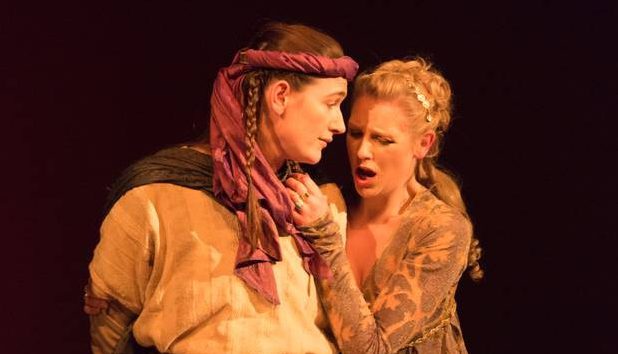
Spring cleaning is happening later than usual this year, in both blog and household terms, but I thought it was time to polish off some of the posts which have been lurking in my drafts folder. This, for example, is a book I read last summer, and I’ve no idea why I didn’t post about it at the time, because the draft was virtually finished. However, better late than never. I’m aware that I am probably preaching to the converted here: My Cousin Rachel is a modern classic and I should think that many of you bookish types will have already read it. However, if there’s anyone vacillating and waiting for a little bit more of a push, I’ll be happy to add my voice to its advocates.
Continue reading

Research in Action: Performing Gender on the Indoor Stage

Performing Gender: Shakespeare's Globe

(Sam Wanamaker Playhouse, 7 May 2015)

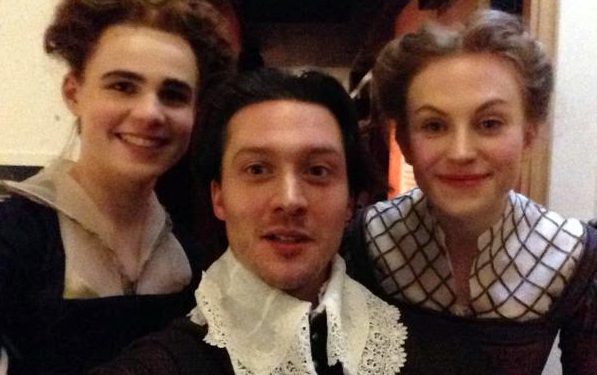
We all know that in Shakespeare’s day women weren’t allowed on the stage. Recently several productions have tried to recreate the flavour of those original performances: Mark Rylance’s Twelfth Night and Richard III productions come to mind. But even these don’t give an accurate flavour of what Elizabethan and Jacobean audiences would have seen. Female roles were played by young boys aged between 12 and 22 years old, highly skilled actors who would specialise in playing women until at a certain stage they were no longer able to convince with the illusion (many ended up transitioning across the gender divide and took on male roles within the company).

Continue reading

Antigono (1756): Christoph Willibald Gluck

Metastasio: Antigono

★★★

(Ensemble Serse, Grosvenor Chapel, London, 25 April 2015)

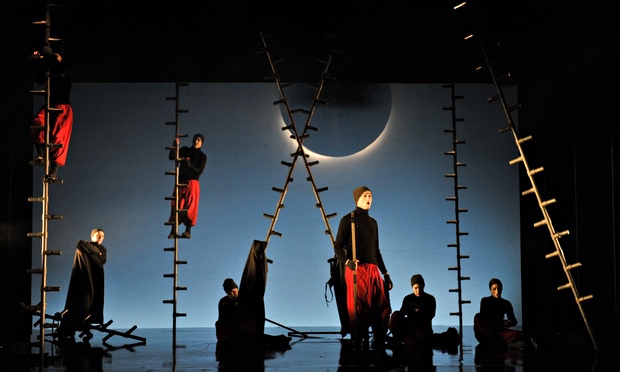
I know what you’re thinking. Serse again?! But no: fear not. No Xerxes today: instead I’m rather belatedly posting about Ensemble Serse, a London-based company of young musicians and singers who specialise in ambitious resurrections of Baroque opera. Their mission statement is to offer a musical experience that’s as close as possible to what an 18th-century audience might have heard. That means no cuts, all possible cadenzas and a take-no-prisoners attitude to singing.

Continue reading

Pompeii (2014)

Pompeii (the film)

(directed by Paul W.S. Anderson, 2014)

And now for something completely different. I do like taking a break now and then to indulge myself with a spot of cheerful ranting. I wasn’t even sure whether to write a post on Pompeii or not. I don’t like being overly critical and that’s doubly the case when a film doesn’t even have the courage to be as wildly barking mad as Anonymous was; but is simply duff. In the end, however, I decided it was my duty to prevent anyone else wasting one-and-three-quarter hours of their life on this. (That’s the equivalent of half a Baroque opera, two episodes of Game of Thrones or almost four episodes of Blackadder. Judge wisely.)

Continue reading

Xerxes (1738): George Frideric Handel

Handel: Xerxes

½

(Oper am Rhein, Düsseldorf, 2 May 2015)

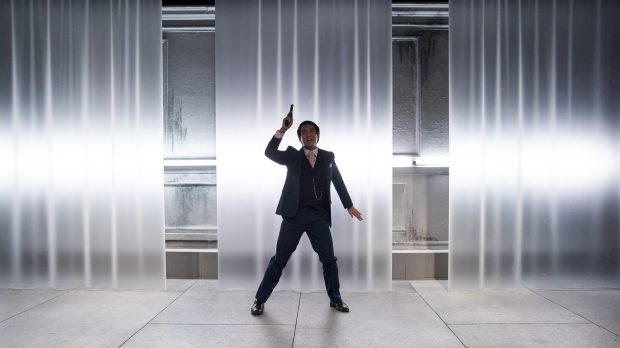
When my friends joined me at the interval of Oper am Rhein’s Xerxes, they found me clutching my prosecco glass with a slightly wild look in my eyes. “I haven’t the faintest idea what’s going on!” I whimpered. Since I’d spent three hours watching another production of Xerxes only two days beforehand, this might sound surprising; but Stefan Herheim’s interpretation of Handel’s opera is an entirely different beast from Hampstead Garden Opera’s offering. Anarchic, exuberant and splendidly insane, this was more Carry On than Covent Garden.

Continue reading

Xerxes (1738): George Frideric Handel

Handel: Xerxes

★★★½

(Hampstead Garden Opera at Upstairs at the Gatehouse, 30 April 2015)

Those who follow me on Twitter will be aware of my Xerxes Project. As I’ve booked to see three live productions of Handel’s Xerxes this year, each of which promises to have its own very distinct flavour, I thought I’d make a theme of it. (I’m also doing some broader historical reading on Achaemenid Persia, so I’ve been examining our favourite brat-prince from several different perspectives.) I kicked things off in style this last weekend by taking in two productions, in two countries, in two languages, in three days. Things got underway in Highgate on Thursday, where Hampstead Garden Opera was holding court at Upstairs at the Gatehouse, one of London’s leading pub-theatres.

Continue reading

Adriano in Siria (1765): Johann Christian Bach

Bach: Adriano in Siria

★★★★

(Classical Opera, conducted by Ian Page, Britten Theatre, 18 April 2015)

As Hadrian is one of my historical favourites, I was amused to discover that he’s the subject of a Metastasio libretto, set to music by more than sixty composers between 1732 and 1828. Classical Opera’s production is, rather remarkably, the first staging of the version by J.C. Bach (son of the Bach) since it opened in London in 1765. It’s been making waves in the press: the dominant reaction is amazement that we don’t hear more of J.C., especially since he spent most of his career in London* and was much admired.

Continue reading

Giove in Argo (1739): George Frideric Handel

Giove in Argo

★★★½

(Britten Theatre, Royal College of Music, 26 March 2015)

The final event of this year’s London Handel Festival for me was this staged version of the pasticcio opera Giove in Argo. Although Catone in Utica was also a pasticcio, the two differ because Giove is made up of arias and choruses from Handel’s own earlier operas rather than those of other composers. (However, as I’m still very much a Handel beginner, most of them felt new anyway!) It dates from 1739, the year after Xerxes, and represents one of Handel’s very last forays into Italian-language productions in London.

Continue reading

Randall Scotting: A Year in the Life of Handel: 1738

Randall Scotting

A recital by Randall Scotting and Marie van Rhijn

(Handel House Museum, 22 March 2015)

Back in October, on visiting Handel House for the first time, I wrote about their exhibition, A Year in the Life of Handel. This focused on the works produced by Handel in 1738 and the challenges he faced at the time. Not least of these was the growing indifference of the English public to Italian opera seria: audiences were thinning out and there was barely enough interest to sustain one Italian opera company, let alone Handel’s team at Covent Garden and the rival Opera of the Nobility. As if that wasn’t enough, Italian opera was also being satirised in English-language burlesques, most famously The Dragon of Wantley.

Continue reading

Catone in Utica (1732): George Frideric Handel

Handel: Catone in Utica

★★★★

(Opera Settecento at St George’s, Hanover Square, 17 March 2015)

We’re all going to be hearing rather a lot about Catone in Utica this year, so let’s get things off to a roaring start with a performance I saw last night at St George’s, Hanover Square, formerly Handel’s parish church, as part of the London Handel Festival. Although the opera was put together by Handel for his 1732 season, it’s stretching the truth a bit to say that it’s by him. Handel had to fill out his programmes somehow and so, at this stage of his career, he often produced one or two pasticcio operas each season alongside his own works. These pasticci were assembled from arias by several other composers and tailored by Handel to meet the taste of his demanding British public.

Continue reading