The Indian Queen (1695): Henry Purcell

Purcell: The Indian Queen

★★

(English National Opera, 6 March 2015)

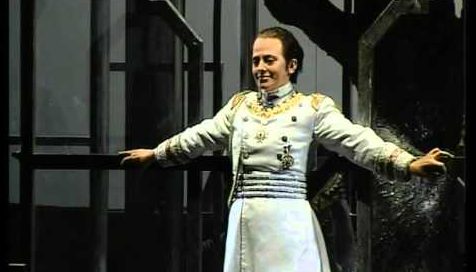
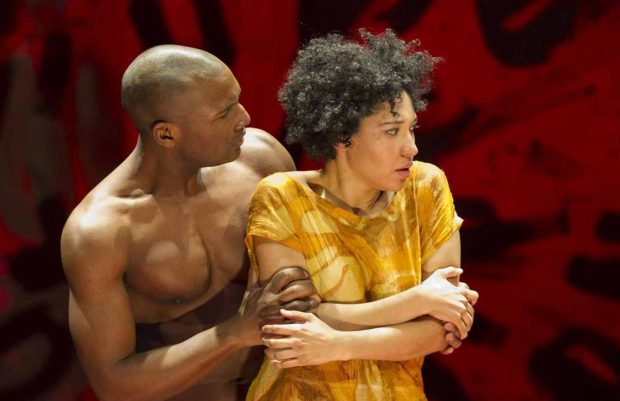
Reactions to English National Opera’s new production of The Indian Queen have been mixed. Some critics have praised it as a creative and courageous reworking of Purcell’s opera, which dares to acknowledge the atrocities carried out during the colonisation of the New World. Other people (friends and colleagues, thus, ordinary theatre-goers, not critics) have expressed bafflement and rising irritation. Apparently audience members have vanished during the intervals in a number of performances. It was clearly going to be a challenging experience but, when I went last Friday, I was nevertheless determined to enjoy it. But it didn’t quite work out like that.
Continue reading

Semele (1744): George Frideric Handel

Handel: Semele

★★★½

(Queen Elizabeth Hall, London, 10 March 2015)

Let the London Handel Festival commence! Things got underway in suitably regal style at the Queen Elizabeth Hall, with a tale of divine seduction and boundless ambition that bore a moralistic coda: be careful what you wish for.

Nature to each allots his proper sphere, But that forsaken,
we like meteors err: 
Toss’d through the void, by some rude
shock we’re broke, 
And all our boasted fire is lost in smoke.

(Chorus: Act 3, Scene 7)

Continue reading

Goya: The Witches and Old Women Album (2015)

Goya: The Witches and Old Women Album

(Courtauld Gallery, London, until 25 May 2015)

A man slumps at a table, his head buried in his arms. As he dreams, the dark creatures of his imagination rise out of the shadows behind him: a lynx, which looks up with wide eyes; bats, flocking in the darkness, and owls which mob the sleeping figure with their wings and steal his artist’s tools. This etching, made in 1799, forms part of Goya’s print series Los Caprichos and was originally conceived as an allegorical self-portrait. Its title is The Sleep of Reason Produces Monsters. For all of mankind’s pretensions to reason and rationality in this Enlightened age, Goya seems to say, we only have to sleep for our primal nightmares to come crawling out of the woodwork.

Continue reading

Hercules (1745): George Frideric Handel

Alice Coote

★★★

(The English Concert directed by Harry Bicket at the Barbican, 4 March 2015)

Six months into my Baroque voyage of discovery, it’ll soon be time to jump in at the deep end for the London Handel Festival. From fully-staged operas to concerts, solo recitals and pasticci, the next month will offer a veritable banquet of Handel in all his forms. Before the Festival proper gets underway, we had an aperitif to enjoy: something of an oddity.

Continue reading

Ormindo (1644): Francesco Cavalli

Cavalli: Ormindo

★★★★★

(Royal Opera House at the Sam Wanamaker Playhouse, February-March 2015)

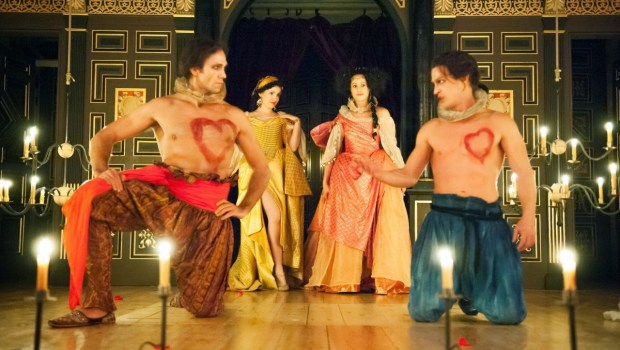
In writing about Cavalli’s Ormindo, it’s hard not to feel that everything has already been said. (But I’m going to say it again anyway.) This production made its immensely successful debut in the Sam Wanamaker Playhouse last year, blending the musical expertise of the Royal Opera House with the theatrical immediacy of the Globe. It is, quite simply, a match made in heaven: Cavalli’s operas, which predate the swaggering show-off arias of the high Baroque, feel like exuberant plays that just happen to be set to music. Naturally there’s nowhere in London more skilled at bringing such things to life than the Globe.

Continue reading

L’Oracolo in Messenia (1737): Antonio Vivaldi

Marianne Beate Kielland

★★★★

(Europa Galante, directed by Fabio Biondi, at the Barbican, 20 February 2015)

In late 1737 the composer Antonio Vivaldi found himself in dire straits. He’d been planning to put on a series of operas in Ferrara for the Carnival, but all his plans had gone wrong when the religious authorities refused him permission to enter the city. (They took exception to the fact he was a priest who never performed Mass and was known to travel in the company of a female singer.) Faced with the prospect of losing an entire season’s income, Vivaldi pulled some strings and managed to get hold of the Teatro S Angelo in Venice. With less than a month to prepare, he needed to get together a programme.

Continue reading

Bernini’s Beloved (2012): Sarah McPhee

★★★★½

 A Portrait of Costanza Piccolomini

Now here is a love story with a sting in the tail for Valentine’s Day. Written with novelistic verve by Sarah McPhee, a professor at Emory University, it is an example of how art history can be brought to scintillating, pulsing life when done well. McPhee’s point of departure is a striking marble bust of a woman, carved by Bernini in 1637 and traditionally believed to record the features of a woman named Costanza with whom he was passionately in love. Her husband was one of Bernini’s assistants.

Continue reading

A Victorian Obsession: The Pérez Simón Collection (2014-15)

Alma-Tadema: The Roses of Heliogabalus

(Leighton House, London, until 29 March 2015)

Tucked away in a quiet street near Holland Park, Leighton House is worth visiting at any time of year, but at the moment it offers more than just the usual dose of elegant Victoriana. The pictures that usually hang on the walls have given way to a selection of paintings from the collection of Juan Antonio Pérez Simón, a Mexican businessman with a particular fondness for British 19th-century painting. Many of the great Victorian pictures are still in private hands, and despite some renewed interest in the field, it’s still a comparatively uncommercial part of the art market. Pérez Simón has been able to build up a simply staggering collection in a relatively short period of time.

Continue reading

Xerxes (1738): George Frideric Handel

Xerxes: Handel

★★★★

(Les Talens Lyriques, with Christophe Rousset, Dresden, 2000)

You might remember that Xerxes at the ENO was the first opera I saw after the Baroque revelations of the summer and, although there was much to enjoy in that production, I itched to hear it performed in the original Italian. There isn’t a huge amount of choice on DVD at the moment so I ended up with this 2000 performance from Dresden. I held off watching it for a while, as it had an entirely female cast of principals and a visual aesthetic which looked bleak, to say the least. Then, one day I happened to see a clip of the opening scene on YouTube. Paula Rasmussen’s Ombra mai fù stopped me in my tracks.

Continue reading