Master and Commander (1969): Patrick O’Brian

★★★★½

An Aubrey & Maturin Adventure: Book I

This encounter with Jack Aubrey and Stephen Maturin was long overdue: people have been recommending O’Brian’s books to me for years and he clearly inspires the same kind of fervent affection in his readers as Dorothy Dunnett does in hers. I’ve no good reason to explain why I haven’t read them before: it’s true that Napoleonic Europe isn’t my first port of call for a historical novel, but I grew up watching Hornblower, I’ve recently enjoyed the Temeraire novels (which are naval in spirit if not in detail), and the film of Master & Commander has been one of my favourites for over a decade (I still can’t imagine Stephen as anyone but Paul Bettany). It was time to see what all the fuss was about; and I’m very glad I did.
Continue reading

Anything Goes (1934): Cole Porter

Anything Goes

★★★★

(New Wimbledon Theatre, January-February 2015)

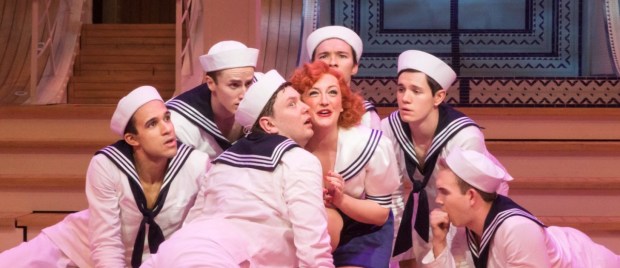
Reno (Debbie Kurup) loves Billy (Matt Rawle). They’re old friends and he indulges her in a bantering kind of way but doesn’t take her seriously; because he loves Hope Harcourt (Zoë Rainey), the pretty débutante. But Hope is engaged to be married to Lord Evelyn Oakleigh (Stephen Matthews) and the happy couple are due to weigh anchor any moment on the SS American, which will carry them off to London for their glittering wedding at St Paul’s. Reno and her team of nightclub dancers are making the same voyage, bound for some London engagements; and it just so happens that Billy’s boss, Elisha Whitney, is also travelling on board. Realising that his beloved Hope will soon be out of his reach forever, Billy decides there’s only one thing for it: to pursue her.

Continue reading

Black Opera (2012): Mary Gentle

★★★

Conrad Scalese is in trouble. It’s around the year 1830 and we meet him in Naples on the morning after he’s watched his new opera Il terrore di Parigi enjoy a stellar success at the Teatro Nuovo. Until just a few hours ago, security, fame and fortune as a librettist beckoned. But since he’s woken up everything has gone wrong. He has a crippling migraine. It turns out that the Teatro Nuovo has been struck by a freak blast of lightning and burned to the ground. People are blaming him for calling down the wrath of God. And the Inquisition are at the door. But all this is just the beginning.

Continue reading

Orfeo (1607): Claudio Monteverdi

★★★★

(Royal Opera House in collaboration with the Roundhouse, January 2014)

In 1607 Vincenzo Gonzaga, Duke of Mantua, came up with a rather original way to celebrate Carnival at his court. It was inspired by something he’d seen in Florence a few years earlier in 1600, when he’d been a guest at the wedding of Maria de’ Medici and Henry IV of France. He’d been deeply impressed by the main entertainment offered at the festivities: a new kind of play, set to music by Jacopo Peri and Giulio Caccini (who’d already produced a similar work called Dafne in 1597).

Continue reading

Pope Joan (1996): Donna Woolfolk Cross

★★★

I’d been keen to read this novel for over a year, so it felt like destiny when I spotted it in my local second-hand bookshop. The shadowy figure of Pope Joan has intrigued me ever since I first heard about her at university: the woman who disguised herself as a man and rose to the highest, most sacred position early medieval Europe could offer, before being unmasked when she gave birth to a child. Cross’s novel, set in the 9th century when Europe was still being forged out of a struggling mass of tiny princedoms and counties, takes in the wild snowy forests of the north, Rome’s faded glory, battles, Viking attacks and a protagonist who had the potential to be one of the most gripping characters I’ve read about for a long time. But unfortunately it never quite gelled into a satisfying whole.

Continue reading

Partenope (1725): Leonardo Vinci

Vinci: Partenope

★★★★

(I Turchini with Antonio Florio; recorded at Murcia in 2011)

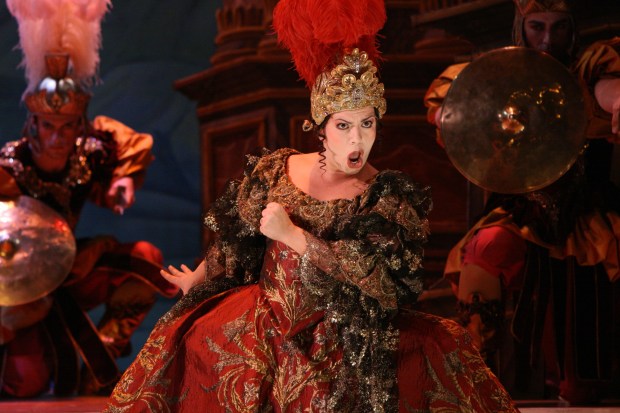
Partenope (Sonia Prina) is queen and founder of Naples: powerful, majestic… and single. Rather like Elizabeth I of England, she has attracted a swarm of hopeful suitors. For the time being she plays one off against the other while weighing up their comparative merits. There’s Armindo (Stefano Ferrari), prince of Rhodes, who has brought a host of warriors to fight under Partenope’s banner and who languishes in the hope that one day she’ll deign to return his love. But Partenope has a soft spot for his rival, the dashing Arsace of Corinth (Maria Ercolano). As the opera opens, a third suitor arrives: Emilio of Capua (Eufemia Tufano), who crosses Partenope’s borders with his Cumaean army. He helpfully tells her that she has a choice: marry him or fight. Showing satisfying gumption, Partenope disdainfully sends him away and readies her troops for battle.

Continue reading

The Hound in the Left-Hand Corner (2002): Giles Waterfield

★★★

This was one of my Christmas presents and my mother confessed to having had qualms about buying it. It came strongly recommended by a family friend who thought it’d be just up my street, but, “It’s just not the kind of book you read,” said Mum, evidently concerned at the lack of a historical setting, duels, court intrigue, vast battle scenes or Vikings of any form. Fortunately I thought it was great fun. (Thanks Mum and Dad!)

Continue reading

La Clemenza di Tito (1791): Wolfgang Amadeus Mozart

Mozart: Clemenza di Tito

★★★★

(Salzburg Festival 2003; Wiener Philharmoniker conducted by Nikolaus Harnoncourt)

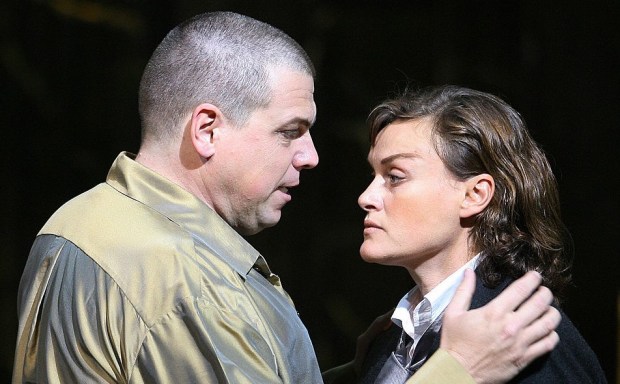
For my first opera DVD of the new year, I decided it was time to make the acquaintance of Mozart’s Clemenza. This is one of the most popular and frequently filmed operas out there and it can be hard to know where to start; but fortunately there was help on hand in the form of Dehggial, who writes the knowledgeable and deliciously irreverent blog Opera, innit. Dehggial has a particular fondness for Clemenza and recommended this production from the 2003 Salzburg Festival. It’s a rather austere, dark take on the opera with some splendid singing and powerful acting. It was only after buying it that I realised it had been designed by none other than Martin Kušej, which meant there were some interesting links with motifs from the Royal Opera House’s recent Idomeneo.

Continue reading

The Knight of the Burning Pestle (1607): Francis Beaumont

The Knight of the Burning Pestle: Francis Beaumont (1607)

★★★★½

(Sam Wanamaker Playhouse, 2 January 2015)

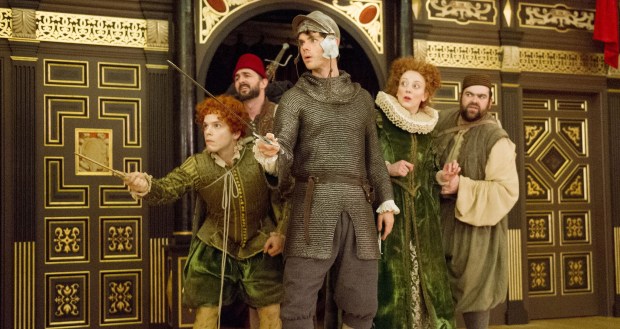
First of all, a very happy New Year to all of you! My first outing of 2015 was to the wooden galleries of the Sam Wanamaker Playhouse, to see Francis Beaumont’s exuberantly experimental play The Knight of the Burning Pestle. This was such a success last year that it’s been revived and it’s simply perfect for the lighthearted Christmas season. Anarchic, raucous and full of music, it calls for audience interaction, conjures up plays within plays within plays, and offers a strikingly postmodern comment on the act of theatrical performance. It reduced me to tears of laughter by the interval.

Continue reading

Merry Christmas!

Ghirlandaio: Adoration of the Shepherds

Domenico Ghirlandaio, The Adoration of the Shepherds c. 1483, S. Trinità, Florence

It’s that time of year again and I wanted to take a moment to wish you all an extremely happy Christmas and all the very best for next year. Just think: 2015 is already on the horizon: I can hardly believe it! Thank you all for your continued support of the Idle Woman and a special thank you to the loyal band who leave comments and send links and emails and all sorts of wonderful extras for me to follow up. You’re all fab.

Continue reading