Giulio Cesare (1724): George Frideric Handel

Handel: Giulio Cesare

(directed by David McVicar, Glyndebourne, 20 July 2018)

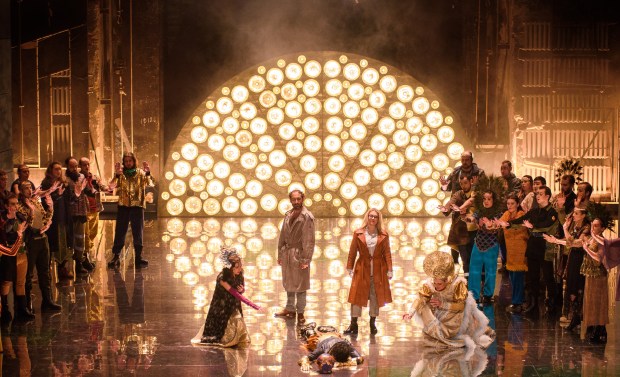
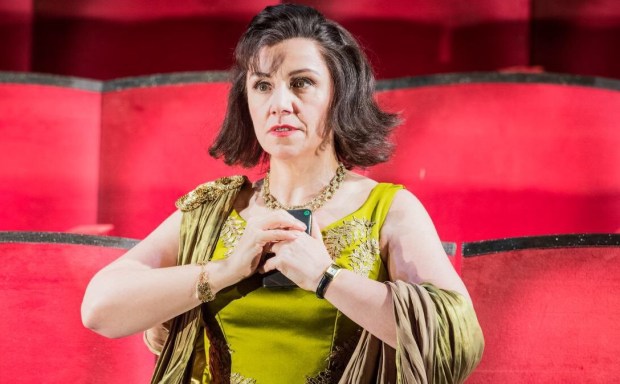
It’s always nerve-racking when you go to see something you love live for the first time. What if it doesn’t live up to expectations? What if one of the cast has a sore throat? What if, horror of horrors, the manager comes onstage to announce a substitution? But at the same time, how can you resist? My opera buddy H and I had decided that we would pay virtually anything to see the revival of David McVicar’s marvellous Giulio Cesare at Glyndebourne, and our resolution was put to the test when the more affordable seats were snapped up within seconds after going on sale. However, our budget-stretching seats in row B were absolutely worth the cost. Many of the cast from the 2005 production returned, with Sarah Connolly triumphant in the title role, and we could admire every little detail. Coupled with a lavish picnic and a gang of equally excited friends (inevitably christened Team Giulio), it made for a perfect day out, and I can promise you that it did live up to all those months of anticipation.
Continue reading

Agrippina (1709): George Frideric Handel

Handel: Agrippina

★★★★

(Grange Festival, Hampshire, 8 June 2018)

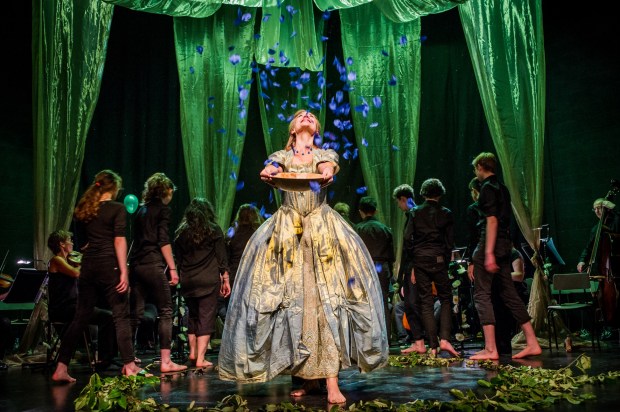
Last weekend, on a balmy Hampshire afternoon, H and I donned our cocktail dresses and set off for the first of our two country-house operas this summer. It was time for the Grange Festival near Winchester (not to be confused with Grange Park Opera in West Horsley in Kent, who split from the Grange Festival two years ago in less than amicable circumstances). The Grange Festival have dusted themselves off, and are kicking off their second summer season in stunning style with Handel’s Agrippina. Full of maternal ambition, political intrigue and lustful shenanigans, this opera follows the Roman matriarch as she schemes to manoeuvre her son Nero onto the imperial throne. A dose of plotting makes me a very happy girl, but I was rendered even happier by the quality of the cast, headed by the redoubtable Anna Bonitatibus as Agrippina herself. Truly, an evening fit for an emperor.

Continue reading

Franco Fagioli Sings Vivaldi and Handel

Franco

(Barbican Hall, with Venice Baroque Orchestra, 4 June 2018)

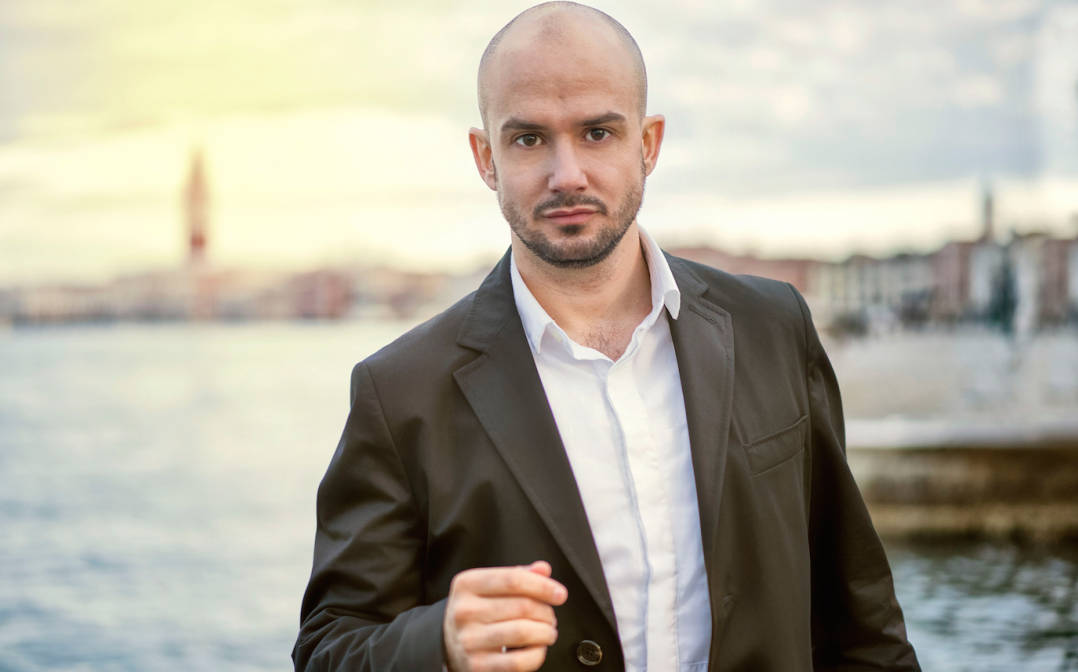
It’s two and a half years since Franco Fagioli last sang in London, and a year and a half  since I saw him as the eponymous Eliogabalo at the Opéra de Paris. Would time have wrought any changes on that distinctive voice? I came to his latest concert full of curiosity. This time his programme was devoted to music by Vivaldi and Handel, with the accompaniment of the Venice Baroque Orchestra, led by Gianpiero Zanocco. Part of the evening’s success must be attributed to their deft and zestful performance of the music, but – as I said to Dehggial – they are the Venice Baroque Orchestra after all and, if they hadn’t been able to play Vivaldi properly, it would have been a sorry state of affairs. And Fagioli himself? A very pleasant surprise. He’s stripped away some of the affectations that have irritated me before; his voice seems stronger than ever; and he turned in a performance that left the Barbican’s rafters shaking with applause.

Continue reading

Phaéton (1683): Jean-Baptiste Lully

Lully: Phaéton

★★★½

(Opéra Royal de Versailles, 30 May 2018)

When business took me to Versailles this week, I just happened to arrive on the first night of the Opéra Royal’s new production of Lully’s Phaéton. As you know, French Baroque opera is still something of a terra incognita for me, so I decided to see if there were tickets available, and discovered a last-minute return. It would’ve been rude not to. That evening, perched in a velvet-lined box, with gold and glittering crystal overhead, I settled in for an epic four-hour tale of ambition, love and hubris. It was a steep learning curve, with marked differences from the Italian operas that I know and love, but I can’t think of a better place to experience the Sun King’s composer for the first time, and the production was blessed with a terrific performance in the title role by Mathias Vidal. So join me, as I bumble my way through this first extended encounter with Monsieur Lully…

Continue reading

The Judgement of Paris (1742): Thomas Arne

Bernstein: The Judgement of Paris

(Brook Street Band at St George’s Hanover Square, 6 April 2018)

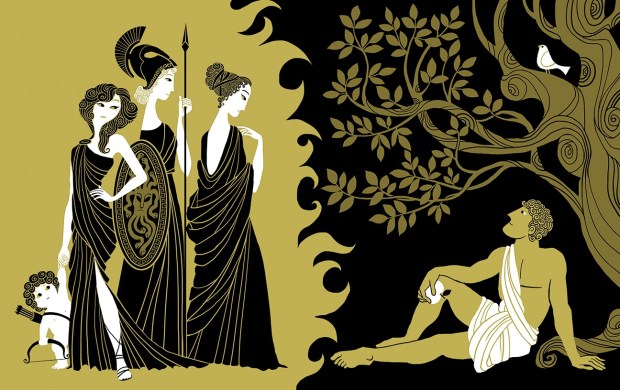
Some of you may remember that I saw Thomas Arne’s pastoral comedy The Judgement of Paris two summers ago, in the beautiful rectory garden at Bampton. This production for the London Handel Festival may have lacked the bucolic surroundings, but it made up for it in the quality of the cast, which marshalled a real dream team of young British singers. Yet the evening had a surprise in store: a bit of audience interaction, which pitted Arne directly against Handel and treated us to some highlights from the older composer’s Semele. Both The Judgement of Paris and Semele were based on libretti by William Congreve, whose sprightly, slightly rakish poetry still raises smiles.

Continue reading

Amadigi di Gaula (1715): George Frideric Handel

Dossi: Melissa

★★★★

(Opera Settecento at St George’s Hanover Square, 24 March 2018)

Opera Settecento’s contribution to this year’s London Handel Festival was a concert performance of this early work based on the bestselling 16th-century chivalric romance Amadis of Gaul. Despite his name, this parfait knight was in fact half-English (the illegitimate fruit of a union between the King of Gaul and an English princess) and was brought up in Scotland. He kept up tradition by conceiving a great amour for Oriana, heiress to the English throne (charmingly described in the libretto as ‘daughter of the King of the Fortunate Islands’). And it’s this element of the story, rather than the knightly escapades, monsters and other adventures, that Handel is concerned with here. In fact, the whole thing takes place within the bounds of an enchanted palace and its gardens. That was the excuse for some truly staggering stage effects in the original production and, although we didn’t have those at St George’s the other night, we did still get to enjoy the beautiful music; not to mention some excellent performances.

Continue reading

Acis and Galatea (1718): George Frideric Handel

Handel: Acis and Galatea

★★★★

(London Handel Orchestra at St John’s Smith Square, 19 March 2018)

This year’s London Handel Festival kicked off with this pastoral drama from 1718 which, described in the programme as ‘Handel’s most perfect work’, had a lot to live up to. It was commissioned by the Earl of Carnarvon, who was also the patron of Handel’s Chandos Anthems and his Esther, and its genesis as a pastoral masque is reflected in its brevity – a mere ninety minutes – and its plot stuffed with nymphs, shepherdess and happy rustics. I’m slightly allergic to pastoral operas, which I can’t take seriously, but I have to admit that the music in Acis and Galatea is beautiful – no matter how many times the English libretto made me wince. Charmingly staged in St John’s Smith Square, and performed by a strong young cast, this was a very Baroque evening out.

Continue reading

Songs for Nancy: A concert to celebrate Nancy Storace

Anna Selina ('Nancy') Storace

(Bampton Classical Opera with Chroma at St John’s Smith Square, 7 March 2018)

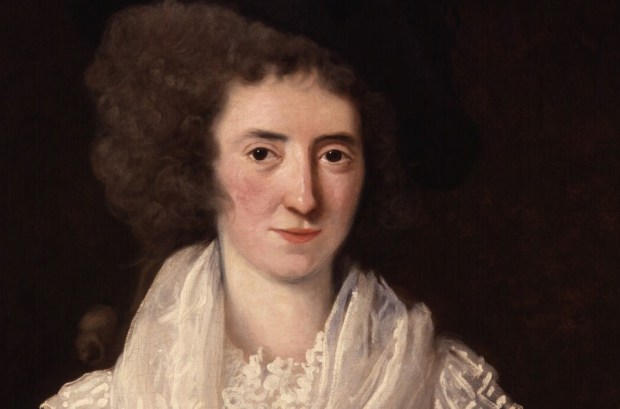
This portrait isn’t immediately arresting, it’s true. The sitter, for all her charm, is no great beauty and she’s dressed with tasteful understatement. Her chief attraction is that pair of searching, intelligent black eyes. But, if you’d lived in the late 18th century, you’d have instantly recognised her as one of the most popular singers of the age. She made her debut at the age of seven and became the toast of opera houses throughout Italy, before being invited to Vienna by the Emperor himself. Here she became a favourite of Mozart and Salieri, both of whom composed music for her. She created the role of the Countess in Salieri’s School of Jealousy and was Mozart’s first Susanna in Figaro. And, amazingly, she was a Londoner: born and bred in Marylebone. On the eve of International Women’s Day, Bampton Classical Opera turned the spotlight firmly onto Anna Selina Storace (1765-1817), known as ‘Nancy’, focusing on music written especially for her.

Continue reading

Giasone (1649): Francesco Cavalli

Cavalli: Giasone

★★★½

(Opéra Royal de Versailles, 9 March 2018)

The dauntless Argonauts came to the shores of Colchis in search of the Golden Fleece, but their heroism has been put on hold. For the last year they’ve been kept kicking their heels while their leader, Jason, diverts himself with a mysterious woman. He might be thoroughly enjoying himself but, as his fellow Argonaut Hercules tells him, it’s time to move on. But Jason’s romantic adventures prove harder to shake off than he anticipates, when it transpires that his secret lover is none other than Medea, Queen of Colchis. To make matters worse, his fiancee Hypsipyle, Queen of Lemnos, has grown tired of waiting for him and is coming to fetch him home. Did I mention that Jason has also given each woman twin sons? Amidst the glitz and glitter of Versailles’s Opéra Royal, everything was about to hit the fan in a very, very Baroque fashion.

Continue reading

Love and Death in Venice

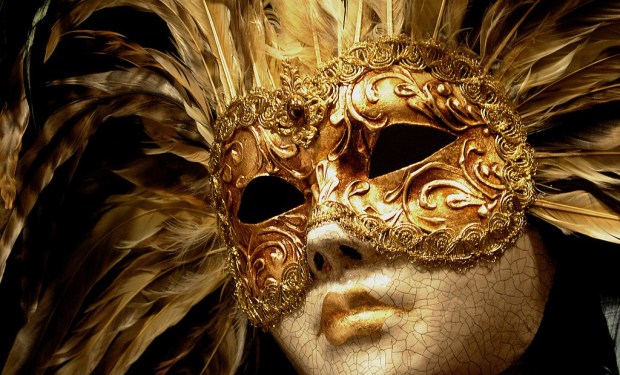
Venetian Mask

(Les Talens Lyriques with Christophe Rousset, Wigmore Hall, 26 February 2018)

As the city shivered in winter’s grip on Monday evening, those of us at the Wigmore Hall could imagine ourselves among the campi and canals of 17th-century Venice. The brilliant French ensemble Les Talens Lyriques were back for another London concert under the baton of their director Christophe Rousset. You may remember that I thoroughly enjoyed their recital with Emiliano Gonzalez Toro and Anders Dahlin at St John’s Smith Square last year. This concert was very similar in spirit, including three of the same pieces, but it rang the changes by swapping the tenors for two talented sopranos: the Dutch Judith van Wanroij and the Belgian Jodie Davos. Through the music of Rossi, Cavalli and maestro Monteverdi himself, they carried us deep into timeless tales of fateful passion, all-consuming love and grand anguish.

Continue reading