Giovanni Battista Moroni (2014-15)

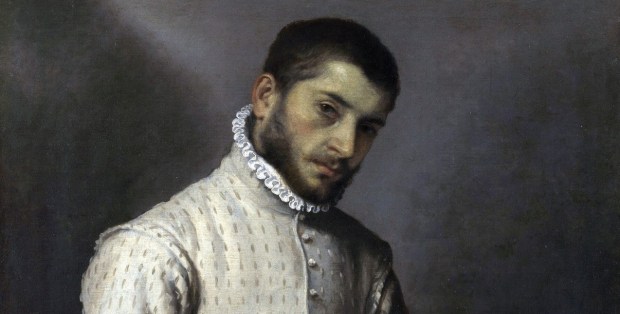
Moroni: Portrait of a Tailor

(Royal Academy, London, until 25 January 2015)

He’s a familiar sight in the National Gallery. A young tailor has been distracted in the middle of his work. Resting his scissors on the table for a moment he glances up, as if you’ve just wandered into his workroom, half-inquisitive, half-challenging. His clothes are simple but well-made, showing off his craft: his cream doublet is elaborately pinked and finely-detailed lace peeks out at collar and cuffs. In a moment his assessing gaze will shade into something more specific: a frown at being disturbed, perhaps, or a welcoming smile, but for now he’s captured in that split second where everything is still possible: a moment of infinite potential.
Continue reading

Idling in Italy (Florence)

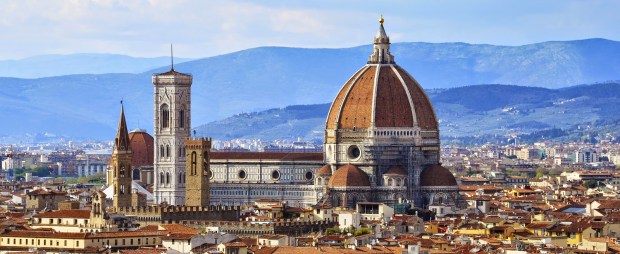
The Duomo, Florence

Last week, in a spirit of spontaneity that’s entirely uncharacteristic, I went on a last-minute trip to Florence. Work has been very intense this year, and that looks set to continue, so I was in desperate need of sunshine, gelati and the scent of pine, the chatter of cicadas and the quiet grace of frescoed churches. Fortunately I had a marvellous excuse. This summer everyone has been talking about the exhibition on Pontormo and Rosso Fiorentino, subtitled Diverging Paths of Mannerism, at the Palazzo Strozzi. Not that I needed much of an excuse to return. Florence has been a very important place for me ever since I first went there with my parents at the age of fifteen, my head full of A Room with a View and the Medici, Leonardo and Michelangelo. I managed to get there three more times in my student days, but it’s been eight years since I was last there at the age of twenty-one. It was time to go back.

Continue reading

Bosch to Bloemaert (2014)

Bloemaert: Studies of a girl's head

Early Netherlandish Drawings in Museum Boijmans van Beuningen, Rotterdam

(Fondation Custodia, Paris, until 22 June 2014)

Every spring, Paris goes a little bit crazy for drawings. The dealers’ galleries put on displays; there’s an art fair at the Bourse; and the museums and libraries hold exhibitions giving us a glimpse of the beautiful things which spend most of the year tucked away in print rooms. This year, the Fondation Custodia triumphs with a real treat of a show.

Continue reading

Veronese: Magnificence in Renaissance Venice (2014)

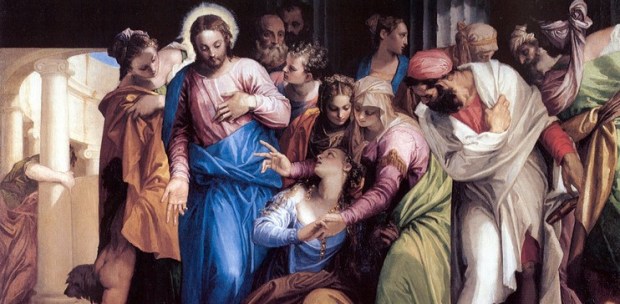
Veronese: Conversion of the Magdalen

(National Gallery, London, until 15 June 2014)

The National Gallery’s Veronese exhibition is already being described as the one show that you have to see this year and glowing opinions have proliferated: from The Times’s five-star review to the enthusiastic post by the exacting Grumpy Art Historian. Needless to say, I’d been very much looking forward to it. And I was especially excited because, a couple of weeks ago, I went to a very enjoyable lecture by Matthias Wivel, one of the curators, who’d suggested a way of ‘reading’ Veronese’s pictures that I was keen to put to the test.

Continue reading

Strange Beauty: Masters of the German Renaissance (2014)

Cranach: Cupid complaining to Venus

(National Gallery, London, until 11 May 2014)

If forewarned is forearmed, then I went to this exhibition fully armed with the mixed (and sometimes frankly baffled) reactions of friends and colleagues. The National Gallery are clearly trying to do something slightly different in this show, and the ambition itself is commendable, but they just don’t quite pull it off. The key distinction I’m going to have to make in this post is between the works on show, which were indeed beautiful, and the concept of the exhibition itself, which seems to skip confusingly between several different driving themes.

Continue reading

Turner and the Sea (2013-14)

Turner: The Fighting Temeraire

(National Maritime Museum, Greenwich, until 21 April 2014)

J.M.W. Turner grew up with water always close to hand: his childhood was divided between London, on the banks of the Thames, and Margate, on the Kentish coast. In the last quarter of the 18th century, this was a world of sail power, where fishing, travel or warfare depended on a good wind. By the time he died in the mid-19th century, however, that world had vanished, replaced by steamships, ironclads and roaring coal furnaces. The sea remained central to British life, though, and it found a similarly enduring place at the centre of Turner’s art.

Continue reading

Masterpieces of Chinese Painting: 700-1900 (2013-14)

Emperor Huizong: Ladies preparing silk

(Victoria & Albert Museum, London, closed on 19 January 2014)

This exhibition was the hit of the autumn in London. Many people told me how wonderful it was, but for various reasons I only managed to get there on the final weekend, when a friend and I realised that we were in danger of missing it altogether. How I wish I’d managed to go a little sooner! It would have been great to read the catalogue and then go back again to savour it all from a more informed perspective. As it was, I was almost completely ignorant of what to expect, and found myself bowled over.

Continue reading

Daumier: Visions of Paris (2013-14)

Daumier: The Sideshow

(Royal Academy, London, until 26 January 2014)

The Royal Academy’s autumn exhibition, nestled up in the Sackler Wing, turns the focus onto Daumier, one of the liveliest and most irrepressible artists of the 19th century. He has always fallen slightly outside my comfort zone and, when I first began looking at his art some years ago, I had the impression that there was something rather hard and cutting about it. That’s probably because I was most familiar with his lithographs, laced with political satire, whereas this show presents a survey of his whole career, deliberately looking beyond the caricatures to bring to light the vein of human sympathy running through his art.

Continue reading

The Young Dürer: Drawing the Figure (2013-14)

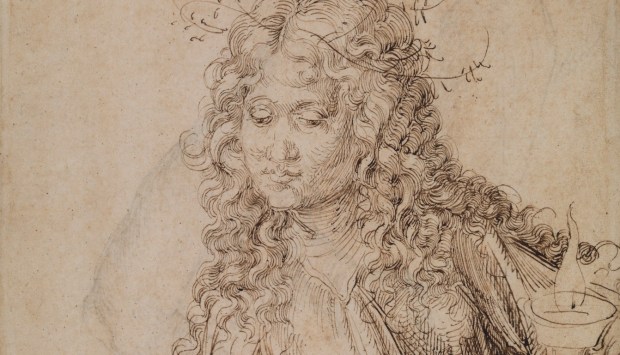
Dürer: A Wise Virgin

(Courtauld Gallery, London, until 12 January 2013)

In 1490 the nineteen-year-old Albrecht Dürer left his native Nuremberg and set off on his Wanderjahre, effectively the equivalent of an extended gap year for a Renaissance German artist. He had completed his apprenticeship with the painter Michael Wolgemut but, before setting up as a master in his own right, he wanted to spend some time travelling in Germany and studying in artistic centres other than Nuremberg. His trip would turn into a four-year journey, during which he even made a pilgrimage to Colmar in the hope of learning at the feet of his hero Martin Schongauer; only to find that Schongauer had died the previous year.

Continue reading