L’Incoronazione di Dario (1717): Antonio Vivaldi

Dario 20

★★★★

(Teatro Regio Torino, directed by Ottavio Dantone, 2017)

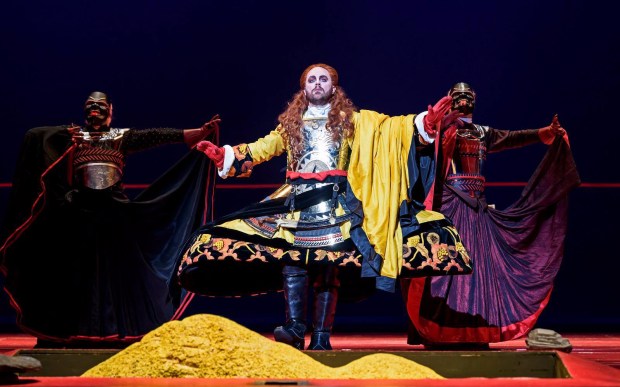
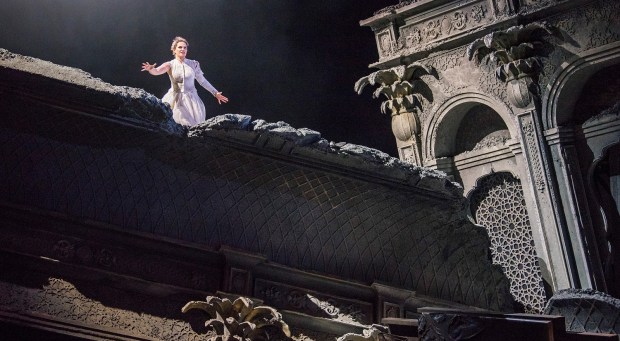
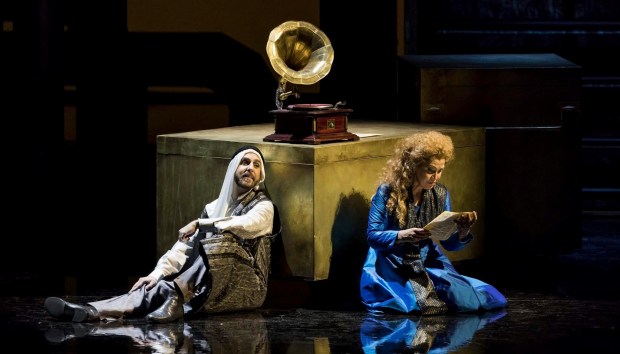
My New Year’s Day treat was this opera, staged at the Teatro Regio in Turin earlier this year and now released on DVD. I already knew the CD recording, conducted by Dantone with a slightly different cast, but I always find it difficult to truly appreciate an opera until I’ve seen it staged. The adventurous Dehggial and Thả Diều actually went to Turin to see it in the flesh, and their posts whetted my appetite; not that it needed much whetting. How could I resist an opera about Darius I, which neatly forms the third instalment of a Baroque Persian trilogy, alongside Xerxes and Artaserse? Served up with intrigue, romance and a very, very silly princess, this proved to be a deft comedy, well worth the wait.
Continue reading

L’Incoronazione di Poppea (1643): Claudio Monteverdi

Monteverdi: L'Incoronazione di Poppea (Berlin)

★★★★

(Berlin Staatsoper, conducted by Diego Fasolis, 13 December 2017)

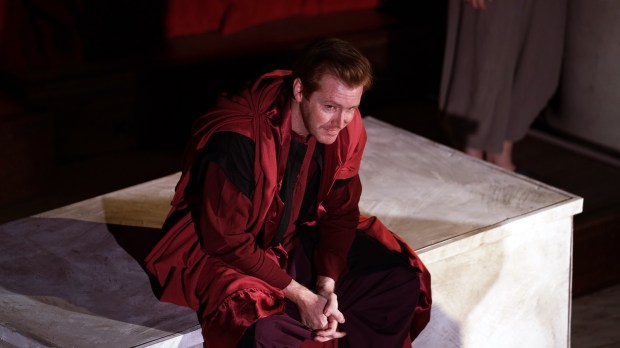
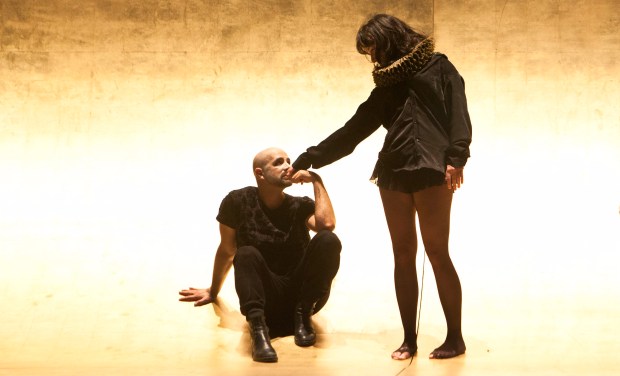
Berlin’s Staatsoper has just reopened after a seven-year refurbishment. On Wednesday, the house was sold out as people gathered to celebrate its freshly gilded finery. And what was on the menu for the grand reopening? Not a safe and predictable opera – a Tosca or a Bohème – but a dose of Roman passion and psychosis from the 17th century. With only three performances (this was the last, until its projected revival next summer), this Poppea felt intense, fresh and daring. It wasn’t without its wobbles, but it featured some very strong casting and offered a compelling picture of a court in thrall to an egotistical, unpredictable sun king. Unsurprisingly, I’ve got slightly carried away with the length of this post, so you may wish to furnish yourself with a cup of tea before starting. There are, however, some very pretty pictures.

Continue reading

The School of Jealousy (1778): Antonio Salieri

Salieri: The School of Jealousy

★★★★

(Bampton Classical Opera at St John’s Smith Square, 12 September 2017)

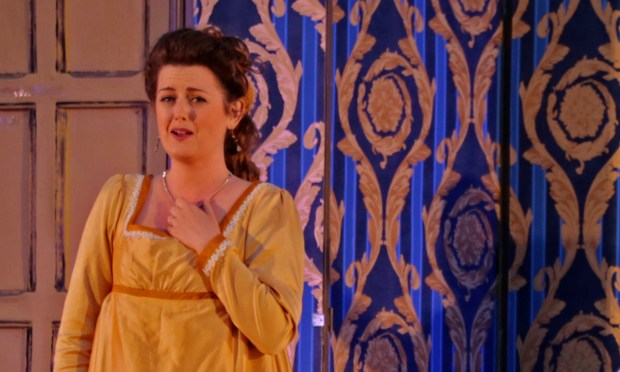
Full of wit, farce and playfulness, The School of Jealousy was an instant hit, becoming one of the best-loved operas in Europe within a decade of its premiere in 1778. It told a story that was immediately accessible: a jealous, bourgeois buffoon locks away his pretty wife, only to bring her to the attention of a philandering nobleman. It’s a tale of love, lust and forgiveness, scripted by the poet Caterino Mazzolà and tweaked here and there by the young Lorenzo da Ponte. Musically, it sparkles: vivacious, ironic and colourful, it shows that Salieri in his prime was already a master of the comic idiom that would become indelibly associated with a certain younger contemporary of his.

Continue reading

Mitridate Re di Ponto (1770): Wolfgang Amadeus Mozart

michael-spyres-as-mitridate-c2a9-roh-photo-by-bill-cooper.jpg

★★★★

(Royal Opera House, 7 July 2017)

Mitridate, king of Pontus, is missing, presumed dead. His two sons, Farnace and Sifare, have returned from the battlefield to skulk around their father’s palace and engage in the traditional pastime of operatic royalty: viz. each scheming to beat the other to the throne. Farnace, billed as the ‘evil’ son, is considering an alliance with the wicked Romans. Sifare, the ‘good’ son, is deeply in love with his father’s intended bride, the beautiful princess Aspasia. Plots are well underway when – shock horror! – it turns out that Mitridate isn’t actually dead at all, but has allowed such rumours to spread in the hope of testing his sons’ loyalty. When he returns to Pontus, the scene is set for a right royal show-down. One of Mozart’s first operas, written when he was only fourteen, this has its issues – numerous issues – as a piece of work, but it’s presented in the Royal Opera House’s classic and extravagant production, with a really splendid cast.

Continue reading

Apollo and Hyacinthus (1767): Wolfgang Amadeus Mozart

Mozart: Apollo et Hyacinthus

(Classical Opera at St John’s Smith Square, 12 June 2017)

When I was eleven, I was obsessed with ponies and still spent an unconscionable amount of time playing with dolls. When Mozart was eleven, he wrote his first opera. Such is life. In this concert, Classical Opera presented three pieces written by the precocious composer between 1766 and 1767, which predictably sounded as rich and sophisticated as many a work by any other mature composer. Staged simply and effectively, with some impressive performances from the crack team of singers, these pieces were the ‘Lambach’ Symphony in G major (K45a), the sombre Grabmusik (K42) and the little opera Apollo et Hyacinthus. As there were three different pieces, I’ve treated this as a recital, which is why I haven’t given it the usual star rating.

Continue reading

Zefiro Torna: Les Talens Lyriques

Botticelli: The Birth of Venus

(St John’s Smith Square, 7 June 2017)

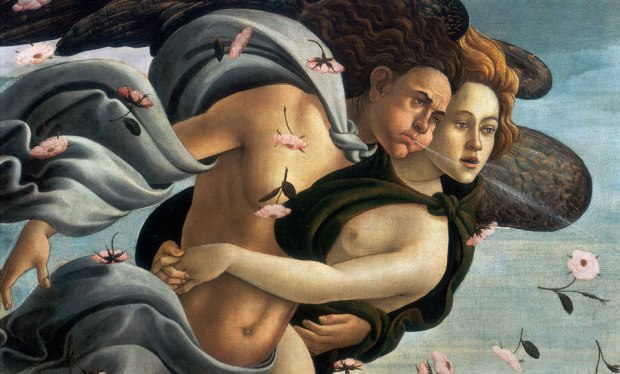
As part of their celebrations for the 450th anniversary of Monteverdi’s birth, the French ensemble Les Talens Lyriques were on stage in London for one night only, for a selection of madrigals and operatic scenes written by the great composer. I’d never seen them perform live, although I have many of their recordings, and was eager to see them at last under the baton of Christophe Rousset. The recital was made even more irresistible by the singers: two tenors whom I like very much: the Swiss Emiliano Gonzalez Toro, whom I’ve seen in several other roles, and the Swedish haute contre Anders J. Dahlin, who sings Dario in my much-loved recording of Vivaldi’s Incoronazione di Dario. My expectations were high and yet, remarkably, they were exceeded by this elegant concert which blended heartfelt grace with dramatic verve.

Continue reading

In Search of Hipermestra

Stefano della Bella: Apollo

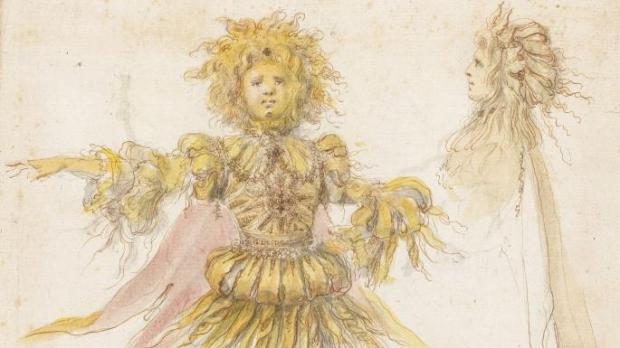
Glyndebourne’s current production of Francesco Cavalli’s Hipermestra brings an ancient tale of love and duty up to date, with a powerful contemporary setting. Being a historian, however, I always wonder what it would’ve been like to experience these operas as they were originally performed. What would we have seen if we’d been in the audience for Hipermestra’s premiere in 1658? Fortunately, we don’t have to leave it to the imagination. Extensive visual and written documentation records the costumes and sets. Even more excitingly, the theatre where the opera was first performed still exists and is still functioning. During a recent business trip to Florence, I took some time out to visit the Teatro della Pergola and its remarkable archives, in search of Hipermestra…

Continue reading

Hipermestra (1658): Francesco Cavalli

Cavalli: Hipermestra

★★★★½

(Glyndebourne, conducted by William Christie, 17 May 2017)

King Danao of Argos is troubled. His brother’s Egyptian troops have gathered on his border, forcing him to suggest a diplomatic match to avoid conflict. His fifty daughters will marry his brother’s fifty sons in a mass ceremony, cementing a peace treaty between the two nations. But Danao has given his daughters secret instructions. The Oracle at Delphi has warned him that one of his nephews will rob him of his life and kingdom. And so each of the fifty girls has been ordered to murder her husband on their wedding night. Each of them obeys. Except one: Hipermestra, who loves her new husband, her cousin Linceo, and urges him to escape. Her compassion will be rewarded by a tide of blood. In this thrilling premiere of an all-but-forgotten opera by Francesco Cavalli, Glyndebourne have updated an ancient story to a setting in the modern Middle East, giving it a punch that lingers long after the final curtain comes down.

Continue reading

L’Incoronazione di Poppea (1643): Claudio Monteverdi

Monteverdi: L'Incoronazione di Poppea

★★★½

(Hampstead Garden Opera at Jackson’s Lane Theatre, 12-21 May 2017)

This spring, Hampstead Garden Opera are trying something new: their first Italian opera staged in the original language rather than English translation. The opera in question is Poppea, a perennial favourite of mine. Who could resist this blend of scheming, sexual abandon, murder and imperial arrogance? Certainly not me. Presented on a stripped-back set, this production focuses the attention firmly on the two women, Ottavia and Poppea, competing for the heart of Rome’s indolent, decadent emperor. With sterling support from Musica Poetica, under the baton of Oliver John Ruthven, and a number of exciting voices to add to my watchlist, it was a thoroughly enjoyable afternoon out.

Continue reading

The Four Seasons (2008): Laurel Corona

★★★½

When two young sisters are abandoned on the doorstep of the Pietà in Venice in 1695, they enter the care of an extraordinary institution: part foundling hospital, part secular convent, and part conservatorio. The girls of the Pietà learn to love God through the medium of music, whether by playing an instrument or by singing in the weekly Masses, which draw admiring crowds to the chapel beyond the grille that prevents any of the performers being seen. And the soloists of the Pietà become stars, their talents as well-known as any opera singer’s, even though they must remain screened away. Of these two abandoned sisters, one, the playful and exuberant Chiaretta, will turn out to have a voice that wins her legions of admirers. The other, Maddalena, looks in vain for an instrument that sparks the inner core of her being. But then she discovers the violin, at around the time that the Pietà hires a young priest to help with giving lessons: a virtuoso violinist and budding composer with flaming red hair, named Antonio Vivaldi.

Continue reading