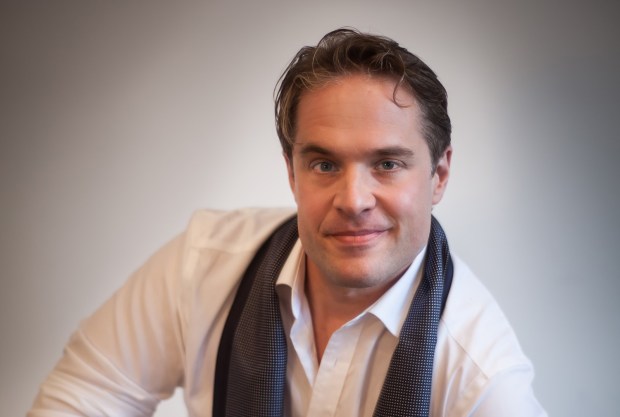
Lawrence Zazzo: Weeping Philosophers

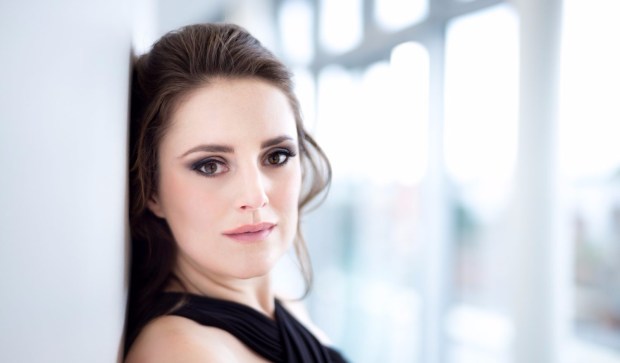
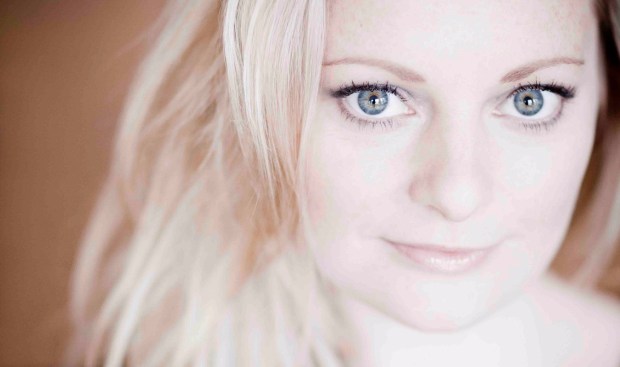
Lawrence Zazzo

(BBC Radio 3 Lunchtime Concert, at the Wigmore Hall, 1 May 2017)

I’ve been waiting for two-and-a-half years to see Lawrence Zazzo in the flesh. In the first flush of my Baroque obsession, back in October 2014, I bought his album A Royal Trio and fell in love with his rendition of Handel’s Va tacito e nascosto. Ever since, I’ve longed to see him live and finally got my wish in this BBC Radio 3 Lunchtime Concert at the Wigmore Hall. Languishing in the realms of the early Baroque, this recital presented a cornucopia of lute-songs and cantatas by Caccini, Frescobaldi, Strozzi and Durante. Zazzo was accompanied by three gifted musicians: Silas Wollston on organ and harpsichord; Daniele Caminiti on archlute and baroque guitar; and Jonathan Rees on bass viol and viola da gamba. By heaven, it was worth the wait.
Continue reading

Joseph and his Brethren (1743): George Frideric Handel

Malm: Joseph and his Brothers

★★★★

(London Handel Orchestra and Singers at St George’s Hanover Square, 20 April 2017)

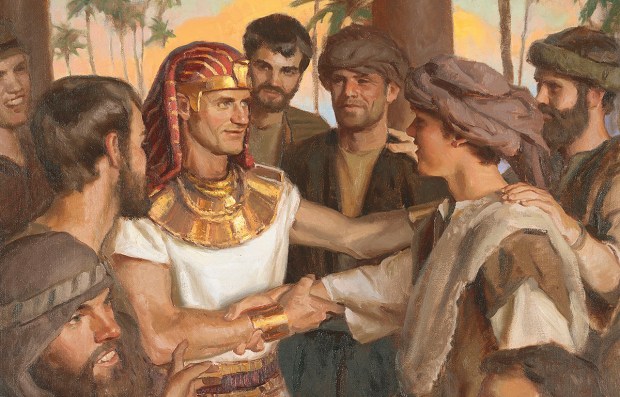
Andrew Lloyd Webber wasn’t the first to realise that a good musical could be made from the story of Joseph in Egypt. 224 years before Joseph and the Technicolor Dreamcoat was premiered, Handel chose the same subject for the second of two oratorios performed in his 1743 season (the first, a month before Joseph, was Semele). With a libretto by the radical clergyman James Miller, adapted in part from an earlier work by Apostolo Zeno, Handel’s oratorio throws us straight into the action, midway through the story. We first meet Joseph in prison in Egypt, and the tale follows his rise to power, his love for the beautiful Asenath, and his eventual reconciliation with his brothers. This was my final outing for this year’s Handel Festival and it proved a great conclusion, overseen by the ever-admirable Laurence Cummings with the London Handel Orchestra and Singers.

Continue reading

Shakespeare within the Abbey (2017)

Shakespeare within the Abbey: Mark Rylance

★★★★★

All Places that the Eye of Heaven Visits 

(The Globe at Westminster Abbey, 22 April 2017)

Waiting outside Westminster Abbey with mounting excitement, my mum said that she really didn’t mind what this evening involved as long as she got to see Mark Rylance. We were about to experience his brainchild: an extraordinary promenade performance which brought a company of Globe actors over the river for a magical evening among the pillars and monuments of this splendid church. For two nights only, you could wander in the Abbey and be surprised at every turn by an actor ready to share a soliloquy in front of a tomb, or to stare into your eyes and declaim a sonnet. It’s entirely thanks to my parents’ efficiency that we’d been able to get tickets and so I was keen that Mum should have her moment. And she did, though not as any of us had expected.

Continue reading

Il Duello Amoroso: Louise Alder and Emilie Renard

Louise Alder

(David Bates and La Nuova Musica at St George’s Hanover Square, 20 April 2017)

Thanks to work travel, I haven’t been able to see all that much of the London Handel Festival this year, but I’d been looking forward to this event: a programme of duets performed by two of our most talented young singers, Louise Alder and Emilie Renard. These duets were chamber pieces written by Handel during his early period in Italy and the most famous of them was the cantata Amarilli vezzosa, composed in 1708. It was a rare chance to hear these early works: I only wish La Nuova Musica’s music director, David Bates, had kept a more sympathetic balance between orchestra and singers.

Continue reading

Faramondo (1737): George Frideric Handel

Handel: Faramondo

★★★

(Britten Theatre, 25 March 2017)

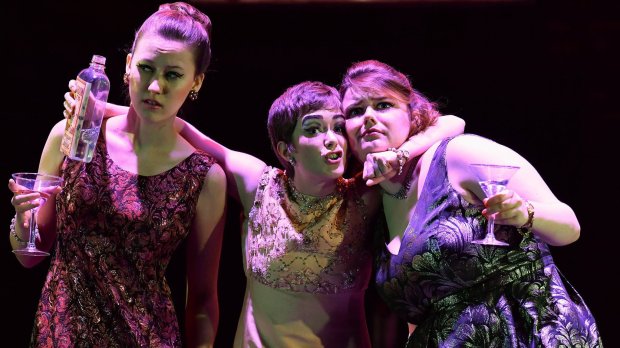
You can’t accuse Handel of not being productive. He wrote Faramondo while recovering from a stroke and, having finished it on Christmas Eve, began his next opera on Boxing Day. That would become Xerxes, one of his most enduringly popular scores, but Faramondo itself has never enjoyed the same acclaim as its younger sibling. There are perfectly good reasons for this, namely that the opera itself is a bit of a mess, but the students of the Royal College of Music have gamely taken up the gauntlet in this staged production, performed as part of the London Handel Festival. They’re accompanied by the London Handel Orchestra, with Laurence Cummings directing from the harpsichord; I also spotted Leo Duarte tucked in at the back with his trusty oboe.

Continue reading

Le Baroque des Lumières (2017)

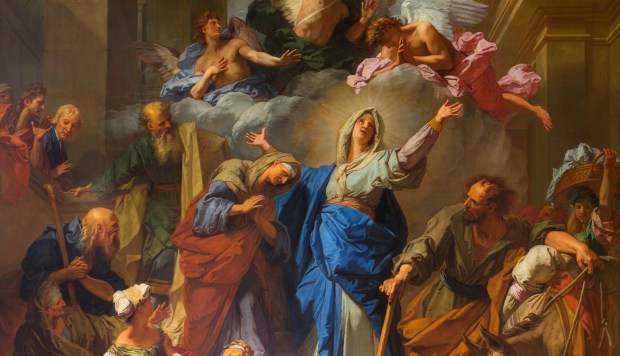
Jouvenet: The Magnificat (The Visitation)

Chefs-d’œuvre des églises parisiennes au XVIIIe siècle

(Petit Palais, Paris, 21 March-16 July 2017)

Spare a thought for French history painters of the 18th century. They’re overshadowed on one side by their glamorous 17th-century predecessors, bathed in the reflected glory of the Sun King and, on the other side, by the tousled, poetic 19th-century Romantics. If people associate anything with the 18th century, it’s frills, furbelows, plump putti and simpering shepherdesses. But this isn’t actually representative of what people would have seen at the time. The concept of the public national gallery hadn’t yet taken hold, but the French could still admire splendid works by the leading artists of the day – not in the secular cathedral of the museum, but in the literally hallowed spaces of Paris’s churches. This splendid show reunites some of the period’s great religious canvases, many of which have been restored. Vibrant colours shimmer on the walls, dismantled schemes are reunited, and a generation of virtually forgotten artists is brought back to the public eye.

Continue reading

Valentin de Boulogne: Beyond Caravaggio (2017)

Valentin: David with the Head of Goliath

(Musée du Louvre, Paris, 20 February-22 May 2017)

Around 1610, a French teenager arrived in Rome, hoping to study as a painter. His name was Valentin. Although he was just too late to meet Caravaggio, his artistic formation took place in a community beholden to the sharp contrasts and uncompromising realism of the older artist. Valentin would become known as one of the most gifted of the ‘Caravaggisti’, but this exhibition gives him credit as someone who was able to develop and transcend his sources. We move from rowdy Roman taverns, full of cardsharps, fortune tellers and impromptu concerts, to face-to-face encounters with brooding saints. Every room testifies to this underrated painter’s flair and intensity.

Continue reading

Philippe Jaroussky: Bach and Telemann

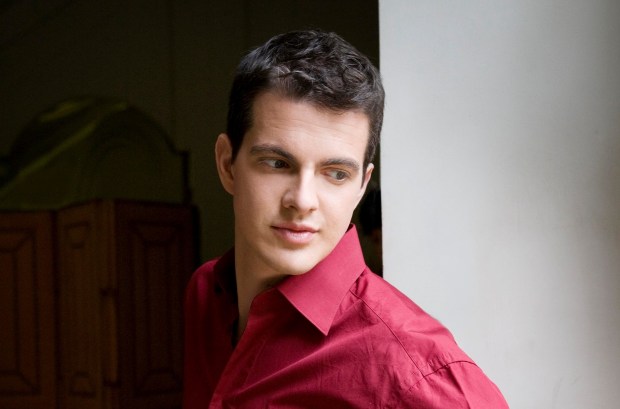
Philippe Jaroussky

(with Le Concert de la Loge, at the Wigmore Hall, 1 December 2016)

In June 2015, when we met Philippe Jaroussky after his Festival Concert in Halle, we asked when he’d next be coming to London. His answer was non-committal and typically modest: he wasn’t sure; he didn’t know if the English were all that fond of what he did. But I hope Thursday’s concert at the Wigmore Hall showed that there’s hope for us yet. The recital had sold out months ago and my brilliant friend only managed to secure tickets by incessantly badgering the box office for returns. The hall was stuffed to the gunwales; the atmosphere was palpable; and yet there were times you could have heard the smallest of pins drop. Refined, elegiac and utterly professional, Jaroussky showed us all once again why he remains the hottest countertenor ticket of all.

Continue reading

Calisto (1651): Francesco Cavalli

Lucy Crowe

★★★★

(La Nuova Musica at Wigmore Hall, 28 November 2016)

Calistos are like London buses: you wait for months and then two come along at once. Mere weeks after English Touring Opera’s vivacious production, David Bates and La Nuova Musica presented their own version of Cavalli’s tale of lust, disguise and confusion. Conceived as a semi-staged performance, to make maximum use of the Wigmore’s limited space, this Calisto boasted a cast to die for and delivered some great voices; yet it didn’t eclipse ETO quite as thoroughly as I’d expected.

Continue reading

Beyond Caravaggio (2016-17)

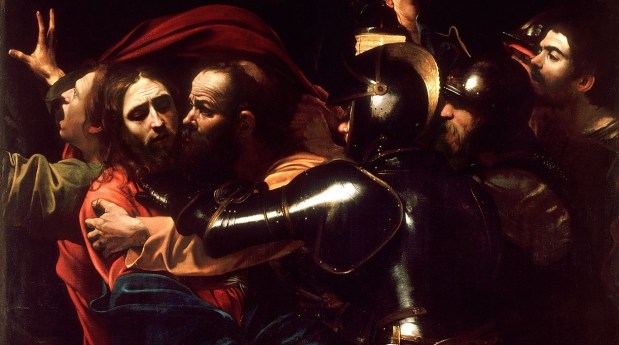
Caravaggio: The Taking of Christ

(National Gallery, until 15 January 2017)

Dark black shadows are split by waterfalls of cloth, dyed in deepest blood-red crimson. Light falls starkly on white flesh from an divine source, or peeps warmly through the fingers of a hand that shields a candle. Saints become brooding youths or old greybeards with seamed, unidealised faces and dirty feet. Musicians and cardsharps preen in fancy brocades, carrying a rogue ace tucked into the backs of their belts. This exhibition at the National Gallery leads us into the underbelly of Baroque Rome and Naples, to explore the works of Caravaggio’s followers. It’s an absorbing journey, which emphasises just how good Caravaggio himself was, and how hard it was to equal him.

Continue reading