Vindolanda (2017): Adrian Goldsworthy

★★★★

One of my forthcoming scheduled reviews questions the current trend for historians to write historical fiction. It’s become something of a fashion but it doesn’t always work: good historians may tell stories with novelistic flair, and good historical fiction writers have to get their facts right, but the two genres do demand a different skill-set. Not everyone can make the transition from one to the other. So I was amused to see that Adrian Goldsworthy, the celebrated historian of the Roman Empire, has decided to try his hand at a novel. Naturally, I couldn’t resist; and I’m pleased to report that Goldsworthy is one of the rare breed who can make the leap. Focusing on the men based at the forts along the northernmost frontier of Roman Britain, he tells a story full of battles, diplomacy and honour, with a very enjoyable ‘odd couple’ pairing at its heart.

Continue reading

Oswiu: King of Kings (2016): Edoardo Albert

★★★★

The Northumbrian Thrones: Book III

In this third and (currently) last instalment in The Northumbrian Thrones, the ramifications of Oswald‘s untimely death spread across the feuding kingdoms of Britain. It is now 642 AD and the unification that seemed within reach during the reign of Edwin has crumbled away. Even Northumbria is no longer united. Oswald’s younger brother Oswiu faces a long, hard battle to secure his kingship against the mightiest ruler in the land: Penda, ambitious and ruthless king of Merica. But Oswiu has one advantage that Penda lacks: the posthumous, miracle-working reputation of the murdered Oswald.

Continue reading

The Ladies of Llangollen (1971): Elizabeth Mavor

★★★★

Like the Chevalier d’Eon, the Ladies of Llangollen came my way thanks to a work project. When trying to find an introduction to their lives, I judged that Elizabeth Mavor’s book seemed the best option, despite now coming across as slightly dated (it was published in 1971). Yet, for all that, it presents a thorough and sensitive discussion of these two remarkable women, who created an idyllic lifestyle together on their own terms and in defiance of social convention. Drawing on the Ladies’ own journals and correspondence, along with the letters of their immediate circle, newspaper reports and other documents, Mavor’s book isn’t just the sound introduction I was looking for, but an admirably unbiased and scrupulously fair double biography.

Continue reading

Oswald: Return of the King (2015): Edoardo Albert

★★★★

The Northumbrian Thrones: Book II

Having warmed to Albert’s Edwin in its second half, I was keen to follow the struggle for Northumbria into its next generation. Oswald opens in 633, with High King Edwin’s death in battle against Penda of Mercia, and Cadwallon of Gwynned. His fall throws his kingdom’s future into the balance as predators circle the vacant throne. Cadwallon would have Northumbria as a client kingdom, but there are still men living who have the right to rule as independent kings. These come from two rival families: the Yffings (descendants of Edwin) and the Idings (descendants of Edwin’s predecessor, Aethelfrith). And whoever becomes king must now face up to this new power that has grown, unchecked, in the west. Northumbria desperately needs a worthy leader, but the one who can best answer that call is, ironically, the one claimant who wants nothing less than to be a king.

Continue reading

Edwin: High King of Britain (2014): Edoardo Albert

★★★½

The Northumbrian Thrones: Book I

There’s a bit of a thrill in reading a story whose exact dates are lost in the mists of time. In this first novel of Albert’s series, we are in the early years of the 7th century, perhaps in 616 or thereabouts. The Romans are long gone, leaving their ruins and their roads behind them; the raiders from the east have yet to come over the grey whale-road. Britain is split into kingdoms, roughly following the lines of the old tribal lands from the days of Boudica. But times are changing. A man who has moved from host to host, keeping one step ahead of the king who wants to kill him, has a dream of a united country, its petty kings subject to one overarching High King. It’s a grand dream, for a man who doesn’t even have a single kingdom to his name yet, but Edwin is shrewd and brave and has loyal men. As he inches his way back to power, his own rise is mirrored by that of a new religion, brought over from the Franks: a religion which will change the face of Britain forever.

Continue reading

Thomas More (2017): John Guy

★★★★

A Very Brief History

I’ve always wanted to like Thomas More, largely thanks to Hans Holbein’s magnificent portrait. It offers such an appealingly naturalistic image of the man. More is intense, slightly homely with that overlarge nose, his eyes crinkling at the corners and his mouth quirked benevolently at the corner. He hasn’t shaved: his jaw is scattered with soft grey bristles. The red velvet and fur-trimmed cloak look incongruous: you get the impression he’s indifferent to worldly finery, his mind resolutely fixed on higher things. We almost forget the artist’s craft: we treat the portrait as a photograph, a direct record of the man. But art isn’t like that. And nor is history. The problem is that history has left us so many Mores – the principled objector; the humanist; the saint; the idealistic author of Utopia; the burner of heretics. How can we find our way through the mire? Fortunately this short, lucid and lively book offers a crash course in all things More – and our guide is one of the world’s foremost Tudor historians.

Continue reading

Four Princes (2017): John Julius Norwich

★★★★

Henry VIII, Francis I, Charles V, Suleiman the Magnificent and the Obsessions that Forged Modern Europe

Over the years I’ve assembled a variety of John Julius Norwich’s history books, because he conveniently writes on precisely the topics that fascinate me: Byzantium; Sicily; the Normans in Italy; and so forth. However, although I’ve dipped into all of these books, I’ve rather shamefully never finished any of them, having been distracted for various reasons from savouring Norwich’s sublimely elegant prose. This new history, shorter than the others and full of a delightful liveliness, has the honour of being the first Norwich that I’ve read cover to cover. Taking the unusual format of a group biography, it focuses on the dazzling first half of the 16th century, when four men between them bestrode Europe like colossi. It’s an extremely accessible introduction to the period and the men in question.

Continue reading

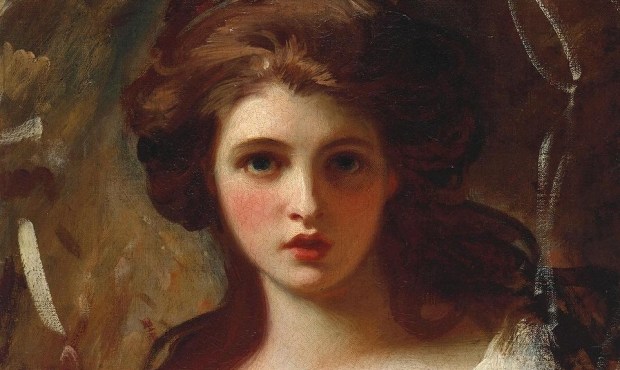
Emma Hamilton: Seduction & Celebrity (2016-17)

Romney: Emma as Circle

(National Maritime Museum, Greenwich, until 17 April 2017)

If you aspired to be anyone in the 1790s, one of the mandatory stops on your Grand Tour would be the villa of Sir William Hamilton, British envoy in Naples. You would enjoy Hamilton’s learned conversation, admire his remarkable collection of antiquities and, perhaps, take a trip up Vesuvius to admire the steaming crater. And, if you were especially fortunate, you might have the chance to see Lady Hamilton perform her famous Attitudes, a series of tableaux vivants representing famous women from the Classical world. Yet the appeal was as much due to Lady Hamilton’s notoriety as her talents.

Continue reading

The Wolf in the Attic (2016): Paul Kearney

★★★★

This was an extraordinary read: a real shapeshifter of a book. It began like a children’s story, full of the innocent fancies of an isolated little girl, but then morphed into an eerie fantasy full of symbolism and old magic. The most frustrating thing about the whole novel is that its final pages introduce a whole new potential canvas and then, with so many questions unanswered, and so much backstory unexplained, it simply finishes. I assumed that it must surely be the first part of a series but, so far, I haven’t found any mention of a planned sequel. And so I’ve been left feeling strangely short-changed because, for the most part, this is a genuinely gripping world and so much more could have been said.

Continue reading

Boudica: Dreaming the Serpent Spear (2006): Manda Scott

★★★★

Boudica: Book IV

I’ve been saving the fourth and final Boudica novel until the Christmas holidays, because the epic sweep of these books demands a bit of focus. Besides, I’ve grown deeply fond of Scott’s characters, who blend courage and nobility with a profound self-knowledge, and I wanted to savour the conclusion properly. I’ve followed their stories across four books and three decades, but all things must end.

Continue reading