The Four Seasons (2008): Laurel Corona

★★★½

When two young sisters are abandoned on the doorstep of the Pietà in Venice in 1695, they enter the care of an extraordinary institution: part foundling hospital, part secular convent, and part conservatorio. The girls of the Pietà learn to love God through the medium of music, whether by playing an instrument or by singing in the weekly Masses, which draw admiring crowds to the chapel beyond the grille that prevents any of the performers being seen. And the soloists of the Pietà become stars, their talents as well-known as any opera singer’s, even though they must remain screened away. Of these two abandoned sisters, one, the playful and exuberant Chiaretta, will turn out to have a voice that wins her legions of admirers. The other, Maddalena, looks in vain for an instrument that sparks the inner core of her being. But then she discovers the violin, at around the time that the Pietà hires a young priest to help with giving lessons: a virtuoso violinist and budding composer with flaming red hair, named Antonio Vivaldi.

Continue reading

The Malice of Fortune (2012): Michael Ennis

★★

It’s 1502. Women are being murdered in the Romagna, and their deaths may hold the secret to a mystery that has plagued Pope Alexander VI: the brutal murder of his beloved son Juan, Duke of Gandia. Eager for revenge, he sends an agent north to find out more. The former courtesan Damiata arrives in the town of Imola, the headquarters of the Pope’s second son Cesare, with a powerful motivation to succeed: her infant son is being kept as a hostage at the Borgia court. Yet she isn’t the only one seeking the truth about these murders. Two others are also trying to identify the killer: one is the put-upon Florentine envoy, Niccolò Machiavelli; the other is Cesare’s engineer-general, the Tuscan polymath Leonardo da Vinci.

Continue reading

Valentin de Boulogne: Beyond Caravaggio (2017)

Valentin: David with the Head of Goliath

(Musée du Louvre, Paris, 20 February-22 May 2017)

Around 1610, a French teenager arrived in Rome, hoping to study as a painter. His name was Valentin. Although he was just too late to meet Caravaggio, his artistic formation took place in a community beholden to the sharp contrasts and uncompromising realism of the older artist. Valentin would become known as one of the most gifted of the ‘Caravaggisti’, but this exhibition gives him credit as someone who was able to develop and transcend his sources. We move from rowdy Roman taverns, full of cardsharps, fortune tellers and impromptu concerts, to face-to-face encounters with brooding saints. Every room testifies to this underrated painter’s flair and intensity.

Continue reading

In the Name of the Family (2017): Sarah Dunant

★★★★

A Novel of Machiavelli and the Borgias

This is the long-awaited sequel to Sarah Dunant’s wonderful Blood and Beauty, which takes up the story of the Borgias once again in the final years of their dominance in Italy. At the beginning of 1502, it seems that nothing can stand in the way of the family’s influence, which creeps its way across Italy, subduing its rivals with a blend of charm and violence. Charm comes courtesy of Pope Alexander VI’s lovely daughter Lucrezia, who is making her way cross-country to be married to her third husband, Alfonso d’Este of Ferrara, and using her journey as a way to captivate the Papal States with her elegance, grace and sweetness. Violence, predictably, sits in the hands of her dangerous brother Cesare who prowls around the borders of their state, ears pricked for dissent or weakness. And, while this remarkable family strengthens their grip on Italy, a young diplomat in the Florentine Second Chancery follows their progress with quiet admiration.

Continue reading

City of God (1979): Cecelia Holland

★★

A Novel of the Borgias

I’m on a bit of a Borgia kick at the moment. Having just finished Sarah Dunant’s new book In the Name of the Family (the post will go live on the 18th, nearer its publication date), I moved on to Cecelia Holland’s vision of 16th-century Rome. The Borgias are at the apex of their power, with Alexander VI on the Papal throne, his daughter Lucrezia being offered in marriage to the d’Este in Ferrara, and his son Cesare driving the fear of God into the Romagna at the point of a sword. As Italy shifts under the weight of their dominance, a sharp-eyed envoy at the Florentine embassy begins to wonder whether he can use the Borgias as a stepping stone to his own fortune. As a roistering story of the Roman underbelly, full of dark alleyways, abductions and subterfuge, this should have been an absolute stunner… and yet it’s oddly stilted and unsatisfying.

Continue reading

Defacing the Past (2017)

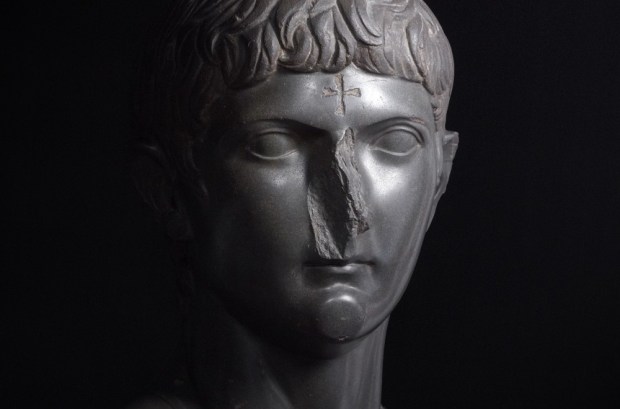
Head of Germanicus

Damnation and Desecration in Imperial Rome

(British Museum, London, until 7 May 2017, Room 69a)

We all know what it means to deface something, but pause a moment and think about the word in greater detail: to de-face, to erase identity, to obliterate the memory of a person. It is one of the most profound punishments that history can inflict, for it either condemns a man to oblivion or associates him eternally with the shame of his downfall. This small but carefully curated show, focusing on coins and medals with some pieces of sculpture, looks at how defacement was used as a political punishment in Ancient Rome, and how it grew out of preexisting traditions of damnatio memoriae that have continued in various forms right up to the present day.

Continue reading

Rome: The Emperor’s Spy (2009): M.C. Scott

★★★★

The Rome Novels: Book I

Manda Scott; the Emperor Nero; chariot-racing; mystery cults; a love triangle; and an imperial spy fighting against time to prevent disaster: it’s a formidably tempting combination. Needless to say, I’ve been itching to read this ever since I finished the last of the Boudica novels and was finally able to wait no longer. And it thoroughly lived up to expectations, as I tore breathlessly through an audacious, fast-paced story, plotted with an almost Dunnettian dexterity.

Continue reading

In Calabria (2017): Peter S. Beagle

★★★½

This charming little fable is a tale of what can happen when the miraculous imposes on the ordinary. It tells the story of the cantankerous Calabrian farmer Claudio Bianchi, who lives alone on a remote farm with his half-wild cats, his dog Garibaldi, his cows and his goat Cherubino. He shuns company and can go weeks at a time without seeing anyone but the cheery young postman Romano. All he wants is peace and quiet, to till his earth and write his poetry. But then, one day, he sees a unicorn in his vineyard.

Continue reading

Emma Hamilton: Seduction & Celebrity (2016-17)

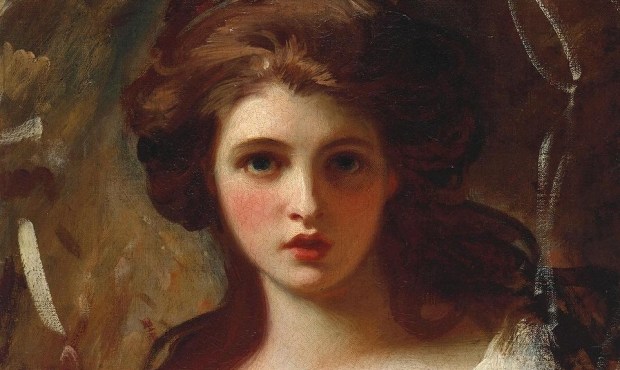
Romney: Emma as Circle

(National Maritime Museum, Greenwich, until 17 April 2017)

If you aspired to be anyone in the 1790s, one of the mandatory stops on your Grand Tour would be the villa of Sir William Hamilton, British envoy in Naples. You would enjoy Hamilton’s learned conversation, admire his remarkable collection of antiquities and, perhaps, take a trip up Vesuvius to admire the steaming crater. And, if you were especially fortunate, you might have the chance to see Lady Hamilton perform her famous Attitudes, a series of tableaux vivants representing famous women from the Classical world. Yet the appeal was as much due to Lady Hamilton’s notoriety as her talents.

Continue reading

Beyond Caravaggio (2016-17)

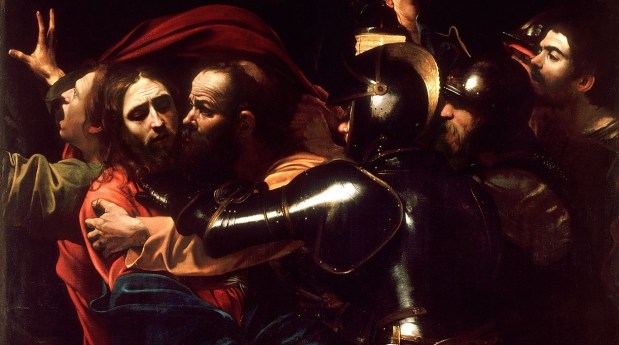
Caravaggio: The Taking of Christ

(National Gallery, until 15 January 2017)

Dark black shadows are split by waterfalls of cloth, dyed in deepest blood-red crimson. Light falls starkly on white flesh from an divine source, or peeps warmly through the fingers of a hand that shields a candle. Saints become brooding youths or old greybeards with seamed, unidealised faces and dirty feet. Musicians and cardsharps preen in fancy brocades, carrying a rogue ace tucked into the backs of their belts. This exhibition at the National Gallery leads us into the underbelly of Baroque Rome and Naples, to explore the works of Caravaggio’s followers. It’s an absorbing journey, which emphasises just how good Caravaggio himself was, and how hard it was to equal him.

Continue reading