The Enchanted April (1922): Elizabeth von Arnim

★★★★

As London wallows in an almost Mediterranean heatwave, it seemed the perfect time to embark on this book, first published in 1922. It’s the first thing I’ve read by Elizabeth von Arnim, and it’s so established a modern classic that I really should have read it years ago. Despite its fame, I had no idea what to expect, but the novel captured me with its opening scenes in a wet, grey, almost monochrome London, and carried me off (genuinely enchanted) to its sun-kissed Italian shores.

Continue reading

Temptations to Devotion (2013)

Attributed to Ligozzi: The Body of Christ

Creating the Italian Altarpiece in the Renaissance and Baroque

(Christ Church Picture Gallery, Oxford, until 14 October 2013)

Since I was in Oxford to see the Ashmolean exhibition, I took the opportunity to pop in to see the current display at Christ Church Picture Gallery. I’m very fond of the gallery because, despite their limited resources, they make a real effort to keep the College’s drawings accessible through a frequently changing programme of displays. The collection isn’t digitised (which is something it would be great to change, if any Oxford students are looking for a bit of volunteering for their CV?), and James Byam Shaw’s famous catalogue doesn’t illustrate all the sheets, so these displays are the only practical way to see the lesser-known drawings.

Continue reading

Cry to Heaven (1982): Anne Rice

★★★★

First things first: just in case you jump to conclusions on seeing Anne Rice’s name, or the design of the current book cover on Amazon, this is not about vampires. This is one of her earlier books, published after Interview with the Vampire but before the rest of the Vampire Chronicles, and it is pure historical fiction. Moreover, it deals with a subject that (as far as I know) has been very rarely covered in fiction, with the one notable exception of de Balzac’s Sarrasine: the tragic and breathtaking phenomenon of the castrati.

Continue reading

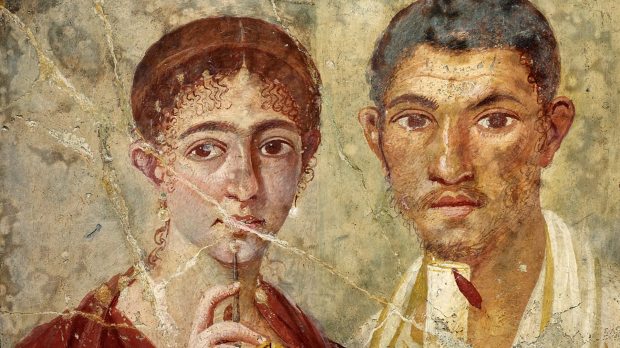
Life and Death in Pompeii and Herculaneum (2013)

Roman fresco of a couple: Terentius Neo and his wife

(British Museum, London, until 29 September 2013)

If last year’s blockbuster exhibition was Leonardo at the National Gallery, this year’s is Pompeii at the British Museum. Both names have the kind of pulling-power that make it virtually impossible to get tickets, although I’m happy to say that there is still availability for some of the less appealing slots (we visited at 9am on a Sunday morning). Besides, 300 tickets are released by the British Museum every day, so you can always queue before opening time in the hope of getting one. Do try to see it. You won’t be disappointed.

Continue reading

Barocci: Brilliance and Grace (2013)

Barocci: Madonna and Child with a Cat

(National Gallery, London, 27 February-19 May 2013)

What a difference a name makes. Just over a year ago, it was virtually impossible to get into the National Gallery’s Leonardo da Vinci exhibition (and even when you were in, you could hardly see anything for the crowds). When I popped over to the National Gallery this lunchtime, however, to see their new Barocci show, I didn’t even have to queue for a ticket. In one way, this is marvellous: it’s so much more pleasurable to visit an exhibition that you can actually see; but at the same time my heart sinks a little. It’s a depressing indication that exhibition attendance isn’t really anything to do with the quality of the show or the beauty of the exhibits, but on how famous the ‘brand’ of the artist is. And in this particular case, if people decide not to bother because they haven’t heard of Barocci (which, you might think, is the perfect reason to see an exhibition), they’ll miss out on a stunning and superlatively well-organised show.

Continue reading

The Volcano Lover (1992): Susan Sontag

★★★★

The man known as the Cavaliere is the British Ambassador in Naples. Refined and courtly, he is a connoisseur of the beautiful, the antique and the imposing. He collects whatever he can – paintings, statues, vases, antiquities acquired legally and illegally from the newly-discovered sites at Pompeii and Herculaneum – and he interests himself in all that is methodical, scientific and educational. But nothing fascinates him as much as the volcano, Vesuvius, which towers over the colourful city which has become his home.

Continue reading

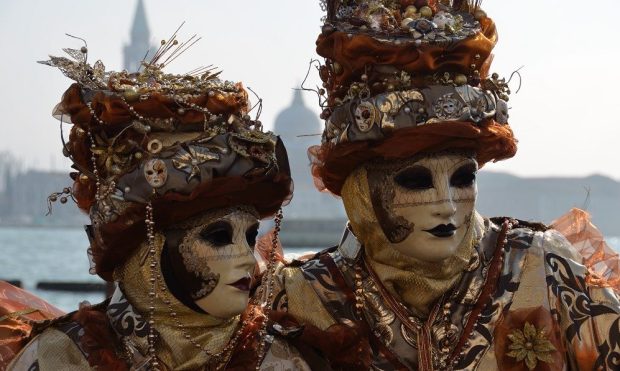
Masquerade (Carnival in Venice)

Two masked figures on the Riva degli Schiavoni

Even on an ordinary day Venice feels unreal, suspended between sea and sky, a jumble of bridges and alleyways and damp brick walls, porphyry and gold mosaic, ogee arches and pinnacles of blindingly white marble. I’ve been there twice before, but had always dreamed of going to the carnival and so couldn’t have been more excited when my parents decided to make their first trip to Venice and asked me to come along as translator and guide.

Continue reading

Stradella (1909): Francis Marion Crawford

★★★

There are many good reasons to choose a book, but doing so because the author shares his name with one of my favourite fictional characters is probably not one of them. Nevertheless, in this case it had a happy outcome. I stumbled across Stradella (1909) about a week ago, while looking for historical novels set in Venice to complement my visit to the Carnevale. I knew nothing about Francis Marion Crawford (although he was evidently very distinguished in his day) and so wasn’t expecting much. What I discovered was a charming historical romance which proved to be perfect material for holiday reading: undemanding, easy to dip into, and full of Baroque swashbuckling, love and intrigue.

Continue reading

Fantasy and Invention (2013)

Vasari: Lorenzo de' Medici

Rosso Fiorentino and Sixteenth-Century Florentine Drawing

(The Morgan Library, New York, until 3 February 2013)

Current service has been temporarily interrupted by a business trip to New York, but even there I did my best to keep up the ‘idle’ spirit. On the afternoon of my arrival, I hotfooted it down Madison Avenue to the Morgan, hoping to keep the jetlag at bay by looking at some wonderful drawings. This January’s crop of exhibitions in New York aren’t as focused on the Old Masters as they were last year, and so the show at the Morgan was the one that bore the brunt of my expectations. I was a little disappointed to find that it took up only one room and there was no catalogue; but, nevertheless, that one room contained some beautiful things, many of which I hadn’t seen before. The purpose of the exhibition was to trace the development of Florentine drawing as it grew out of the Renaissance tradition into the full, eccentric bloom of Mannerism.

Continue reading

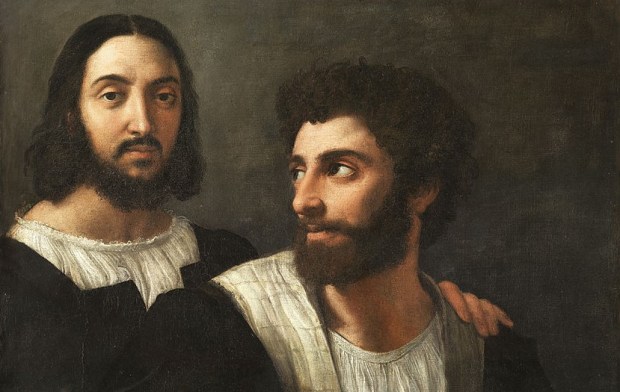
Late Raphael (2012-13)

Raphael: Self Portrait with a friend

(Musée du Louvre, Paris, until 14 January 2013)

The things I do for art! Yesterday I got up horrendously early and went to Paris for the day, to visit the Louvre’s Late Raphael exhibition before it closed (yes, I took the Eurostar from London, went to the Louvre, saw the exhibition and took the train right back home again: there’s something faintly surreal about it). Previously at the Prado, this is the natural successor of the National Gallery’s 2004-5 show Raphael: From Urbino to Rome.

Continue reading