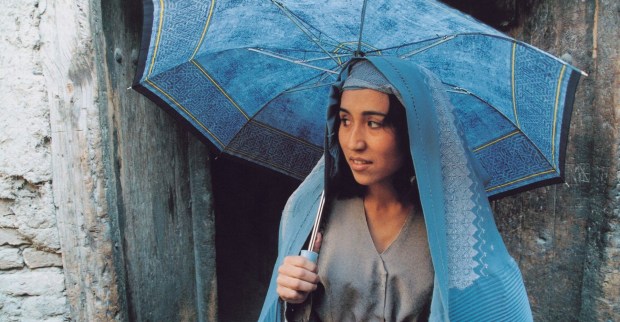
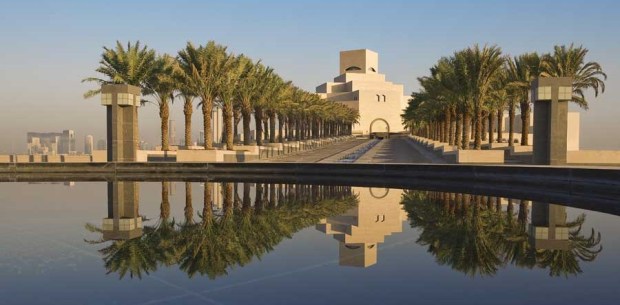
The Underground Girls of Kabul (2014): Jenny Nordberg

★★★★½

The Hidden Lives of Afghan Girls Disguised as Boys

Necessity is the mother of invention. That’s the message of this astonishing work by the Swedish journalist Jenny Nordberg, who worked with women in and around Kabul in Afghanistan between 2009 and 2011. When she was told, discreetly, that a contact’s six-year-old son was actually a cross-dressed girl, Nordberg discovered that this was merely the tip of an iceberg. Her enquiries led her to unearth an open secret in Afghan society: an entire social practice, hitherto  unreported in the wider world, of bacha posh, literally meaning ‘dressed as a boy’. Mixing biography, psychology and anthropology, this is a deeply illuminating journey into the social constructs of an unfamiliar world.

Continue reading

Wadjda (2012)

Wadjda

★★★★

Wadjda is ten years old. She likes sneakers, rock music and making mix tapes for her friends. She sings pop songs with her mum when they’re washing up and wonders why her dad doesn’t spend more time at home. She makes friendship bracelets to sell at school, and dreams of saving up to buy the green bike in the toy shop down the road. In many ways, she’s just like any little girl you know.

Continue reading

The President’s Gardens (2012): Muhsin Al-Ramli

★★★★

For many of us, Iraq as an entity is summed up by the images of air strikes on the news and by the rhetoric of politicians and military leaders. It is a place that for all my life has seemed profoundly ‘other’: my earliest memories of seeing war on television are of the Gulf War, when I was five years old. So I came to this book with curiosity, hoping to learn more about the people who have suffered such an existence. Written by the expatriate Iraqi author Muhsin Al-Ramli, it’s a haunting, often horrific tale of three close friends in a rural community, whose lives intersect with the tragedy and chaos of their country.

Continue reading

Joy of Madness (2003)

Joy of Madness 1

★★★★

A cautionary note before we start. Don’t watch this unless you’ve already seen At Five in the Afternoon. You need that context to understand the events of this remarkable documentary and to appreciate the results of the hard graft we see here. This isn’t just any ‘making-of’ film. Slightly longer than an hour, it records the efforts of a twenty-two-year-old female (Iranian) director to make the first full-length film in Afghanistan, barely a year after the fall of the Taliban. And it’s filmed on a handheld digital video camera by her fourteen-year-old sister. A tale of frustration, determination and lots and lots of shouting, it’s a testament to the sheer force of will that’s necessary to get a film made, and a fascinating glimpse behind the scenes.

Continue reading

At Five in the Afternoon (2003)

At Five in the Afternoon

★★★★

A year after the Taliban fell in Afghanistan, the young Iranian director Samira Makhmalbaf arrived in search of a story. She knew she wanted to make a film about the country, as a way to give a voice to its people. Afghanistan was visible to the wider world only through news broadcasts and politicians’ speeches: it was defined by outsiders who frequently represented themselves as ‘saviours’ who’d gone in to ‘liberate’ its people. Makhmalbaf wanted to tell the story of the people left on the ground: to show, frankly and compassionately, the ruined lives and hopes of the people of Kabul. It’s a very slow film, but beautifully made with an entirely amateur cast, and it gets under the skin of a society on the brink of recovery from horrific trauma, in a way that earnest western journalists never could.

Continue reading

Equal of the Sun (2012): Anita Amirrezvani

★★★

In 1576, when Tahmasb Shah of the Safavid dynasty dies unexpectedly, there is no designated heir to the Iranian throne. Sensing the chance to consolidate their power, factions within the ruling class weigh up the contenders. Pari Khan Khanoom has all the qualities of a brilliant Shah – intelligence, political acuity, generosity and compassion – but one major flaw negates all the rest: she is a woman. And yet she is determined to play a role in the struggle for the succession. As Tahmasb’s beloved daughter and most trusted adviser, she has helped to direct the empire’s policy for fourteen years and resolves to carve out a place for herself under the new Shah. But which of her brothers will succeed in claiming the crown? Based on the true story of Tahmasb’s ambitious, fratricidal sons, Amirrezvani’s novel turns the spotlight on their remarkable sister, as remembered by her loyal vizier, the eunuch Javaher.

Continue reading

Arabian Sands (1959): Wilfred Thesiger

★★★★½

Wilfred Thesiger is one of those intriguing people who seem genuinely to have been born out of their time. The Arabian journeys described in his wonderful book could easily have taken place in the late 19th century or, at the very least, in the golden years of Edwardian exploration. They have a timeless quality: the hard slog across the sands; the knife-edge between life and death; the absence of any luxuries or comforts; and only the company of camels and a few trusted men. And yet these journeys, pressing into one of the last great wildernesses of the world, were undertaken between 1946 and 1950: within living memory. Thesiger only died in 2003, but although he is tantalisingly close in time, his spirit is very much that of another age.

Continue reading

Misadventure in the Middle East (2007): Henry Hemming

★★★★

Travels as Tramp, Artist & Spy

It has taken me a very long time to get around to reading this book: years, rather than months. I first heard about it in rather odd circumstances in my early twenties, when a friend and I bumped into Hemming at a History gaudy at our old college and ended up retreating to the pub with him because it felt as if we were the only three people under fifty. We had no idea who or what he was, of course. As we chatted, it turned out that this very personable young man was an author and, furthermore, had had experiences which practically beggared belief. I promised him that I would read his book and, some years later, I’ve finally kept that promise.

Continue reading

The Valleys of the Assassins (1934): Freya Stark

★★★★

When planning my trip to Qatar, it was hard to decide on reading material.  If I go abroad I always try to find a book which matches the place I’m going, as far as possible: it’s like a game.  I’ve read The Three Musketeers in Paris and The Leopard beside the pool in Sorrento (Sicily itself is still on the ‘to-do’ list).  For the Middle East, the obvious book was Seven Pillars of Wisdom, which is one of the many books I’ve always meant to read. I bought it; but then began to worry that perhaps it might cause offence; I don’t know how T.E. Lawrence is perceived in the Middle East.

Continue reading

Visions of Arabia (Doha, Qatar)

Museum of Islamic Art Doha

I’ve just returned from a week in Qatar, which is certainly the most exotic place I have ever visited and also one of the most fascinating. This is a place of contrasts: the vast, stark, dusty grey emptiness of the desert butts up against glossy new buildings from cutting-edge architects. Qatari men wearing traditional white robes and headdresses drive around in oil-guzzling white Toyota Land Cruisers. The desert is all around and yet Doha nestles at the edge of the Persian Gulf, mirrored in its waters.

Continue reading