L’Oracolo in Messenia (1737): Antonio Vivaldi

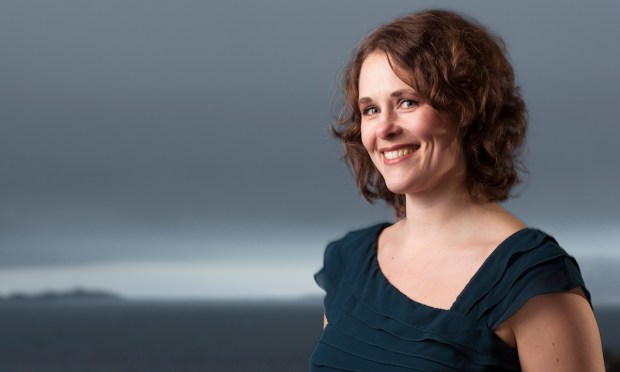
Marianne Beate Kielland

★★★★

(Europa Galante, directed by Fabio Biondi, at the Barbican, 20 February 2015)

In late 1737 the composer Antonio Vivaldi found himself in dire straits. He’d been planning to put on a series of operas in Ferrara for the Carnival, but all his plans had gone wrong when the religious authorities refused him permission to enter the city. (They took exception to the fact he was a priest who never performed Mass and was known to travel in the company of a female singer.) Faced with the prospect of losing an entire season’s income, Vivaldi pulled some strings and managed to get hold of the Teatro S Angelo in Venice. With less than a month to prepare, he needed to get together a programme.
Continue reading

Xerxes (1738): George Frideric Handel

Xerxes: Handel

★★★★

(Les Talens Lyriques, with Christophe Rousset, Dresden, 2000)

You might remember that Xerxes at the ENO was the first opera I saw after the Baroque revelations of the summer and, although there was much to enjoy in that production, I itched to hear it performed in the original Italian. There isn’t a huge amount of choice on DVD at the moment so I ended up with this 2000 performance from Dresden. I held off watching it for a while, as it had an entirely female cast of principals and a visual aesthetic which looked bleak, to say the least. Then, one day I happened to see a clip of the opening scene on YouTube. Paula Rasmussen’s Ombra mai fù stopped me in my tracks.

Continue reading

Black Opera (2012): Mary Gentle

★★★

Conrad Scalese is in trouble. It’s around the year 1830 and we meet him in Naples on the morning after he’s watched his new opera Il terrore di Parigi enjoy a stellar success at the Teatro Nuovo. Until just a few hours ago, security, fame and fortune as a librettist beckoned. But since he’s woken up everything has gone wrong. He has a crippling migraine. It turns out that the Teatro Nuovo has been struck by a freak blast of lightning and burned to the ground. People are blaming him for calling down the wrath of God. And the Inquisition are at the door. But all this is just the beginning.

Continue reading

Orfeo (1607): Claudio Monteverdi

★★★★

(Royal Opera House in collaboration with the Roundhouse, January 2014)

In 1607 Vincenzo Gonzaga, Duke of Mantua, came up with a rather original way to celebrate Carnival at his court. It was inspired by something he’d seen in Florence a few years earlier in 1600, when he’d been a guest at the wedding of Maria de’ Medici and Henry IV of France. He’d been deeply impressed by the main entertainment offered at the festivities: a new kind of play, set to music by Jacopo Peri and Giulio Caccini (who’d already produced a similar work called Dafne in 1597).

Continue reading

Partenope (1725): Leonardo Vinci

Vinci: Partenope

★★★★

(I Turchini with Antonio Florio; recorded at Murcia in 2011)

Partenope (Sonia Prina) is queen and founder of Naples: powerful, majestic… and single. Rather like Elizabeth I of England, she has attracted a swarm of hopeful suitors. For the time being she plays one off against the other while weighing up their comparative merits. There’s Armindo (Stefano Ferrari), prince of Rhodes, who has brought a host of warriors to fight under Partenope’s banner and who languishes in the hope that one day she’ll deign to return his love. But Partenope has a soft spot for his rival, the dashing Arsace of Corinth (Maria Ercolano). As the opera opens, a third suitor arrives: Emilio of Capua (Eufemia Tufano), who crosses Partenope’s borders with his Cumaean army. He helpfully tells her that she has a choice: marry him or fight. Showing satisfying gumption, Partenope disdainfully sends him away and readies her troops for battle.

Continue reading

La Clemenza di Tito (1791): Wolfgang Amadeus Mozart

Mozart: Clemenza di Tito

★★★★

(Salzburg Festival 2003; Wiener Philharmoniker conducted by Nikolaus Harnoncourt)

For my first opera DVD of the new year, I decided it was time to make the acquaintance of Mozart’s Clemenza. This is one of the most popular and frequently filmed operas out there and it can be hard to know where to start; but fortunately there was help on hand in the form of Dehggial, who writes the knowledgeable and deliciously irreverent blog Opera, innit. Dehggial has a particular fondness for Clemenza and recommended this production from the 2003 Salzburg Festival. It’s a rather austere, dark take on the opera with some splendid singing and powerful acting. It was only after buying it that I realised it had been designed by none other than Martin Kušej, which meant there were some interesting links with motifs from the Royal Opera House’s recent Idomeneo.

Continue reading

Tristan und Isolde (1865): Richard Wagner

Wagner: Tristan und Isolde

★★★★

(Royal Opera House, London, 14 December 2014)

I ended up at Tristan by accident, if such a thing is possible. Shortly after I’d seen Poppea at the Barbican and Giulio Cesare on DVD, I was enthusing to my opera buddy about how marvellous Sarah Connolly was. She said that Connolly would be at the Royal Opera House this December. Would I like to go to see her? ‘Hell, yes!’ I said. Then my friend mentioned the catch. Connolly was singing in Wagner’s Tristan. Five hours of psychologically intense angst including a forty-minute love duet. In German.

Continue reading

Idomeneo (1780): Wolfgang Amadeus Mozart

Mozart: Idomeneo

★★★

(Royal Opera House, Covent Garden, 3-24 November 2014)

The one with the shark

There’s something rather exciting about going to see a production which has divided opinion as starkly as this new staging of Mozart’s Idomeneo. There has been at least one one-star review and one five-star review, but most critics seem to come down somewhere in the middle, struggling in a sea of interesting ideas which never quite come together. I sympathise with them. There were certain things I liked very much and some things I found self-indulgent and silly, but my overall impression was that it was a mixture of promising concepts which lacked the Promethean spark to bring them to life.

Continue reading

Giulio Cesare (1724): George Frideric Handel

Handel: Giulio Cesare

(Glyndebourne, 2005, directed by Sir David McVicar, conducted by William Christie)

One thing’s for sure. Handel certainly didn’t imagine anything quite like this. With zeppelins hovering over the Alexandrian harbour in the final act and Bollywood-style dance routines thrown into the arias, this production is joyously exuberant and thoroughly addictive. It was the first time I’d watched or heard the opera and it was the perfect introduction: indeed, I ended up feeling quite jealous of the people who’d been able to see it in the flesh.

Continue reading

L’Incoronazione di Poppea (1643): Claudio Monteverdi

Monteverdi: L'Incoronazione di Poppea

★★★★

(Teatro Real, Madrid, with Les Arts Florissant and William Christie, 2010)

In the wake of the Barbican’s semi-staged Poppea, I decided to have another go at the DVD of this 2010 version from the Teatro Real in Madrid, to see how the two productions compared. It had completely bewildered me first time round. Perhaps unsurprisingly, I enjoyed it much more now that I had a better appreciation of the opera and its context. There are certain elements that I think the Barbican did better, but the Madrid version, with its stellar cast, certainly throws a long shadow. It’s staged, which is a big plus for me; but it completely overshadows the Barbican in one other important way as well.

Continue reading