Vindolanda (2017): Adrian Goldsworthy

★★★★

One of my forthcoming scheduled reviews questions the current trend for historians to write historical fiction. It’s become something of a fashion but it doesn’t always work: good historians may tell stories with novelistic flair, and good historical fiction writers have to get their facts right, but the two genres do demand a different skill-set. Not everyone can make the transition from one to the other. So I was amused to see that Adrian Goldsworthy, the celebrated historian of the Roman Empire, has decided to try his hand at a novel. Naturally, I couldn’t resist; and I’m pleased to report that Goldsworthy is one of the rare breed who can make the leap. Focusing on the men based at the forts along the northernmost frontier of Roman Britain, he tells a story full of battles, diplomacy and honour, with a very enjoyable ‘odd couple’ pairing at its heart.

Continue reading

Feast of Sorrow (2017): Crystal King

★★★½

The young cook Thrasius is purchased for an exorbitant sum of money in 1 BC by the wealthy Roman epicure Marcus Gavius Apicius. It proves to be a match made in heaven. Although he’s only nineteen, Thrasius has already made a name for himself as the inventor of mouthwatering delicacies, and Apicius harbours designs to become gastronomic adviser to Caesar himself. Together, master and slave embark on a quest to create the most dazzling and most delicious banquets that Rome has ever seen. It’s a collaboration that will enter history, making Apicius’ meals a byword for luxury, producing the world’s earliest surviving cookbook, and probably its first cookery school.

Continue reading

Valentin de Boulogne: Beyond Caravaggio (2017)

Valentin: David with the Head of Goliath

(Musée du Louvre, Paris, 20 February-22 May 2017)

Around 1610, a French teenager arrived in Rome, hoping to study as a painter. His name was Valentin. Although he was just too late to meet Caravaggio, his artistic formation took place in a community beholden to the sharp contrasts and uncompromising realism of the older artist. Valentin would become known as one of the most gifted of the ‘Caravaggisti’, but this exhibition gives him credit as someone who was able to develop and transcend his sources. We move from rowdy Roman taverns, full of cardsharps, fortune tellers and impromptu concerts, to face-to-face encounters with brooding saints. Every room testifies to this underrated painter’s flair and intensity.

Continue reading

The Confessions of Young Nero (2017): Margaret George

★★★

The only novel I’d read by Margaret George was Helen of Troysome years ago, which didn’t quite do it for me, but I was keen to try her new book, the first of a pair, about the Emperor Nero. Set in the duplicitous, cutthroat world of the Roman imperial family in the first century AD, this had the scope for plots and psychosis aplenty, an impression encouraged by its titular promise of ‘confessions’. I hoped for something along the lines of I, Claudius, taking the story of the Julio-Claudians into the next generation with the same kind of meaty detail that I enjoyed in Tom Holland’s Dynasty. However, George’s decision to take a revisionist viewpoint, and present Nero as a well-meaning, misunderstand and popularly-beloved emperor, means that much of the story’s dramatic flair is sacrificed.

Continue reading

Eagles in the Storm (2017): Ben Kane

★★★★

The Eagles Trilogy: Book III

I’ve been eagerly awaiting this final book in Ben Kane’s Eagles trilogy, which completes a story that I’ve followed avidly in Eagles at War and Hunting the Eagles. The series follows the military and psychological aftermath of the Battle of the Teutoburg Forest in 9 AD, when three Roman legions under the command of Publius Quinctilius Varus were wiped out by a German tribal army under the aegis of the chieftain Arminius, a former Roman ally. In the first book we watched the tragedy unfold; in the second, set some years later, we saw the young general Germanicus stiffening the Romans’ resolve as Arminius tried to knit the tribes together into a viable force. Now, in 15-16 AD, the moment has come for battle to be joined again, and this time there can be only one victor.

Continue reading

Defacing the Past (2017)

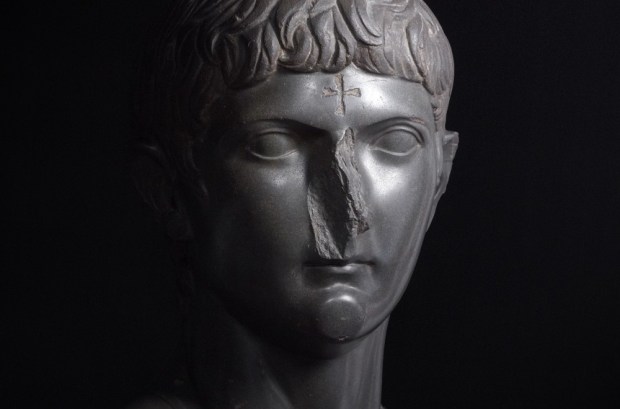
Head of Germanicus

Damnation and Desecration in Imperial Rome

(British Museum, London, until 7 May 2017, Room 69a)

We all know what it means to deface something, but pause a moment and think about the word in greater detail: to de-face, to erase identity, to obliterate the memory of a person. It is one of the most profound punishments that history can inflict, for it either condemns a man to oblivion or associates him eternally with the shame of his downfall. This small but carefully curated show, focusing on coins and medals with some pieces of sculpture, looks at how defacement was used as a political punishment in Ancient Rome, and how it grew out of preexisting traditions of damnatio memoriae that have continued in various forms right up to the present day.

Continue reading

Rome: The Emperor’s Spy (2009): M.C. Scott

★★★★

The Rome Novels: Book I

Manda Scott; the Emperor Nero; chariot-racing; mystery cults; a love triangle; and an imperial spy fighting against time to prevent disaster: it’s a formidably tempting combination. Needless to say, I’ve been itching to read this ever since I finished the last of the Boudica novels and was finally able to wait no longer. And it thoroughly lived up to expectations, as I tore breathlessly through an audacious, fast-paced story, plotted with an almost Dunnettian dexterity.

Continue reading

How Far to Bethlehem? (1964): Norah Lofts

★★★½

I discovered this book during a pre-Christmas exploration of the Book Barn, a few miles from where I live, and decided it was perfect for the festive season. The plan was to finish it last night, on Christmas Day, but what with the Strictly Come Dancing Christmas Special, and the satiety brought on by too much Christmas pudding, I didn’t quite get round to it. It’s a thoughtful, rich rendition of the Nativity story, in which the familiar events of the bible are set within their historical context at the turn of the 1st century AD. Most intriguing is Lofts’s vision of the three wise men, who between them span the three known continents of the ancient world.

Continue reading

Boudica: Dreaming the Serpent Spear (2006): Manda Scott

★★★★

Boudica: Book IV

I’ve been saving the fourth and final Boudica novel until the Christmas holidays, because the epic sweep of these books demands a bit of focus. Besides, I’ve grown deeply fond of Scott’s characters, who blend courage and nobility with a profound self-knowledge, and I wanted to savour the conclusion properly. I’ve followed their stories across four books and three decades, but all things must end.

Continue reading

Beyond Caravaggio (2016-17)

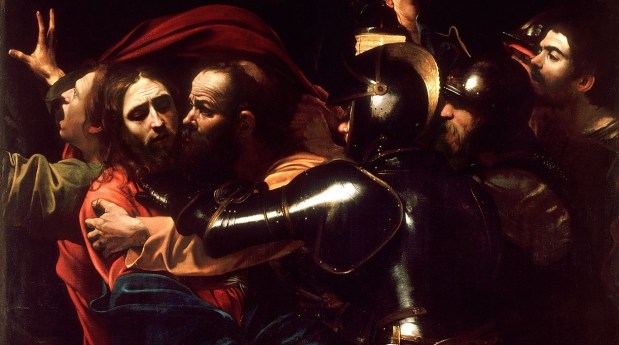
Caravaggio: The Taking of Christ

(National Gallery, until 15 January 2017)

Dark black shadows are split by waterfalls of cloth, dyed in deepest blood-red crimson. Light falls starkly on white flesh from an divine source, or peeps warmly through the fingers of a hand that shields a candle. Saints become brooding youths or old greybeards with seamed, unidealised faces and dirty feet. Musicians and cardsharps preen in fancy brocades, carrying a rogue ace tucked into the backs of their belts. This exhibition at the National Gallery leads us into the underbelly of Baroque Rome and Naples, to explore the works of Caravaggio’s followers. It’s an absorbing journey, which emphasises just how good Caravaggio himself was, and how hard it was to equal him.

Continue reading