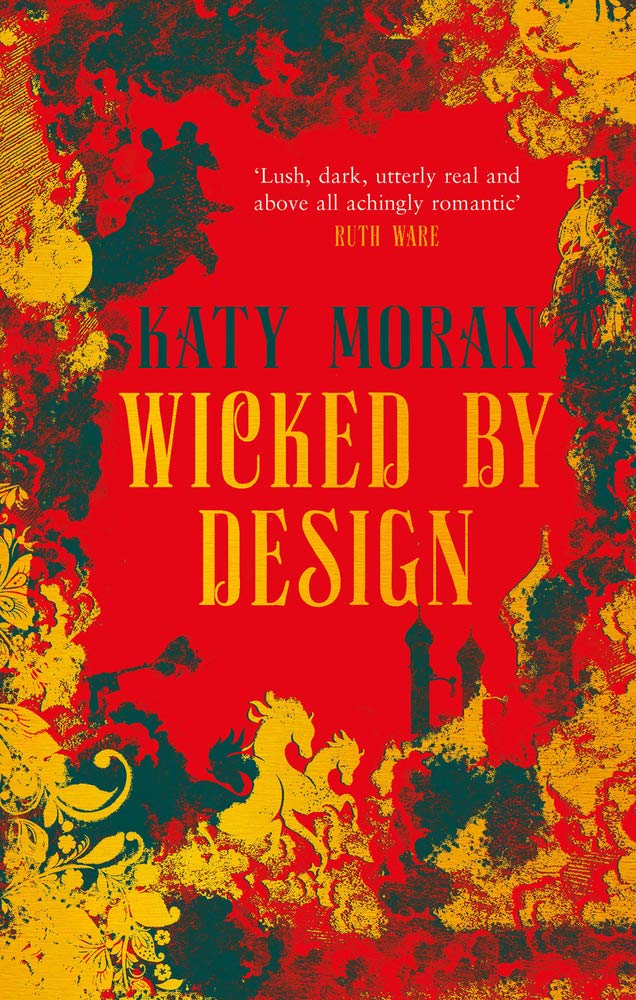

Wicked By Design (2019): Katy Moran

★★★★

Hester & Crow: Book 2

At the sprawling Cornish manor house of Nansmorrow, key members of the British Cabinet gather to discuss their country’s future. It is 1819 and the French forces which have occupied Britain since Napoleon’s victory at Waterloo have finally been driven out; but what kind of government should take their place? Despite the polite veneer, suspicion simmers between the Prime Minister, Lord Castlereagh, and his host, the enigmatic Lord Lamorna (Jack ‘Crow’ Crowlas). Crow has committed the crime of becoming too popular: disaffected Cornishmen rally to his name and threaten the integrity of the new Britain. English troops roam the Cornish lanes, waiting for an excuse to strike. And, when duplicitous and ambitious Lord Castlereagh gives the signal, Crow is torn away from his beloved wife Hester and their young daughter Morwenna. As Hester and the child flee, Crow is offered a mission he can’t refuse. His destination is Russia, where Tsar Alexander dilly-dallies over his allegiances, Napoleon nibbles at the borders, and Crow must – if he wishes to live – find the hidden heir to the British throne.

Continue reading

All Creatures Great & Small (1970-72): James Herriot

★★★★★

My late grandfather spent many years as a farmer, the proud manager of a prizewinning herd of cows. Having spent most of his life outdoors, he wasn’t a great one for reading, but he did have one entire series of books: James Herriot’s (aka James Alfred Wight’s) fictionalised memoirs of his work as a vet in the Yorkshire Dales. These were the 1970s paperback editions, with covers by Norman Thelwell (a childhood favourite of mine, thanks to his pony cartoons). I don’t remember whether I read Granddad’s James Herriot books piecemeal during visits, or whether I borrowed them, but I definitely got through several of the series. Twenty years have passed and I didn’t remember the finer details of the stories, only a general sense that Herriot spent most of his time with his arm up the rear end of a cow. Now I’ve come back to these warm, cosy stories in an omnibus edition, reading them alongside the 2020 TV adaptation (which is wonderful). While cows’ rear ends do feature in abundance, All Creatures Great & Small is also full of wonderful characters, from Siegfried Farnon to Tricki Woo; and yet they aren’t its main appeal. That lies in Herriot’s evocation of the Yorkshire landscape, and his loving record of a world that was, even then, beginning to disappear. Magical, comforting fare.

Continue reading

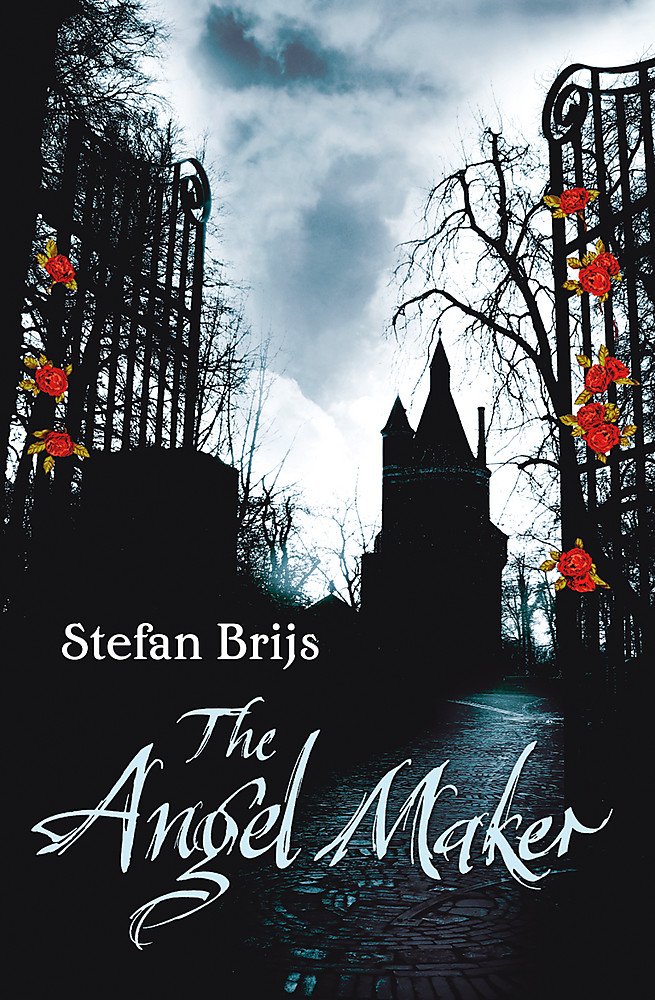
The Angel Maker (2005): Stefan Brijs

★★★½

The tiny Belgian village of Wolfheim is galvanised when Victor Hoppe, son of the late GP, returns home from his medical studies in Bonn. Why has the prodigal suddenly returned to his father’s old house? Does he mean to take up his father’s mantle as the local doctor? Why is he so standoffish with the locals? And, most curious of all, what is the story behind the three motherless infant children he brings with him, each with an identical severe cleft palate? In this disturbing modern morality tale, Stefan Brijs tells the story of a modern Prometheus: a brilliant man fatally undermined by his own lack of empathy. By chance, I came to this soon after reading John Wyndham’s The Chrysalids, which gave it an even stranger flavour: it felt, at times, like a cross between Frankenstein and The Midwich Cuckoos. But Stefan Brijs’s novel is more disturbing than either of these because it is so plausible, and because there is such an ironic contrast between the godlike dreams of its protagonist and the sheltered world in which he tries to bring them about.

Continue reading

Akin (2019): Emma Donoghue

★★★½

When those we love are gone, how do we find out who they really were? Retired scientist Noah Selvaggio has decided to celebrate his eightieth birthday with a trip to Nice, the hometown that he last saw at the age of four, when his mother saw him off on a ship to America. He imagines a comfortable holiday full of good food, art and beautiful views, but his plans are rattled by two intrusions into his orderly life. The first is a pack of strange photographs found among his late sister’s papers: an apparently inconsequential group of images taken by his mother in Nice before she followed Noah and his father to America. What do they mean? And the second intrusion? The arrival of eleven-year-old Michael, Noah’s suspicious and isolated great-nephew, for whom he must act as temporary guardian. This is, at least partly, a heart-warming tale of two people learning to connect, but it’s also a story about connections to the past and how, with only a few shifts of focus, the same pieces of evidence can come to mean very different things.

Continue reading

The Decagon House Murders (1987): Yukito Ayatsuji

★★★★½

Only a few days ago, I wrote about finding it difficult to engage with Japanese fiction. Clearly I only had to wait for the right book, because Yukito Ayatsuji’s cult mystery novel has had me absolutely hooked. Seven students head off to spend a week on a remote island, intrigued by a tragic murder committed there six months before. They believe, as members of the K-University Mystery Club, that they might just have the deductive skills to solve the crime. As a local fishermen ferries them out, they discuss the problem with modern crime fiction. It doesn’t allow enough scope for deduction, one of them complains. ‘What mystery novels need,’ he argues, ‘are… a great detective, a mansion, a shady cast of residents, bloody murders, impossible crimes and never-before-seen tricks played by the murderer.’ Best of all is the ‘chalet in a snowstorm‘ model, where characters are cut off from the outside world. Little do they realise that, soon, they will be in that very same situation, trapped on an island with no means of escape. And then, one by one, they will begin to die. Someone on that island is a murderer. But who? Intricately plotted, this stonking novel challenges the reader to use her ‘little grey cells‘ to solve the mystery before the grand denouement. All the clues are there. But can you work out the solution? (Spoiler: I didn’t!)

Continue reading

The Foundling (2020): Stacey Halls

★★★

When Bess Bright falls pregnant in 1747, she knows there’s no chance of keeping her baby. As an unmarried mother, how could she afford to feed and clothe a child in the cramped apartment she shares with her father and her feckless brother? Bess knows that her daughter’s best chance lies with the Foundling Hospital, where children are well-fed, clothed, and trained for respectable careers in service. Heartbroken at the choice she has to make, she leaves the newborn Clara in the hands of the Hospital officials, along with a token that Bess can later use to prove her identity – for she’s determined to claim Clara as soon as she can afford to keep her. After six long years, she finally returns to the Hospital, life-savings in hand, to collect her little girl. But she’s greeted by shocking news. Clara is no longer there. Six years ago, on the day after Bess dropped her off, she was collected by a woman – a woman who, according to the ledger, gave Bess’s own name and address. What can have happened? Who would have impersonated Bess to steal her daughter? And can she still manage to find Clara, after all these years?

Continue reading

The Belting Inheritance (1965): Julian Symons

★★★

Christopher Barrington has lived at Belting, the sprawling country house belonging to his maternal great-aunt, ever since the age of twelve, when he lost his parents in an air crash. The family is a strange one: the widowed old Lady Wainwright and her two sons, hapless Miles and uptight Stephen, along with Stephen’s wife Clarissa. Two other sons, Hugh and David, were lost in the Second World War and Lady Wainwright has never come to terms with her loss, especially that of David, her bright and charming favourite. In the summer of Christopher’s eighteenth year, we watch through his eyes as the old order at Belting comes under attack. As Lady Wainwright lies dying of cancer, a letter arrives, closely followed by a stranger, who claims that he is the long-lost David Wainwright. Inspired by the famous Tichborne case, this is a highly entertaining – albeit hugely convoluted – story.

Continue reading

Wylder’s Hand (1864): Joseph Sheridan Le Fanu

★★★

Mark Wylder’s marriage to Dorcas Brandon will bring about a truce between their families, after centuries of avaricious squabbling over titles, incomes and the ownership of Brandon Hall itself. But, as Charles De Cresseron travels down from London for the festivities, he can’t help marvelling that Mark has pulled it off. Despite their long acquaintance, Charles has never really liked Mark, and his raffish old acquaintance seems unworthy of a stately and beautiful woman like Dorcas Brandon. She, for her part, maintains an air of queenly indifference to her impending marriage: this is clearly no love match. When Mark unaccountably vanishes, shortly before the wedding, all the evidence suggests that he has cut and run; but what has prompted his disappearance? To make matters worse, his departure leaves a convenient gap on the stage at Brandon Hall, and Dorcas has another admirer waiting in the wings: the devilish Captain Stanley Lake, all too eager to take advantage of his rival’s absence. All the components of Victorian Gothic are present and correct: rambling old houses; dark secrets; ghosts and devilry; dastardly plots; innocence under threat; and an abiding mystery at its heart.

Continue reading

Spring Garden (2014): Tomoka Shibasaki

★★★

You may remember that I have a vaguely vexed relationship with Japanese literature. While I’m fascinated by the culture it describes, I often have difficulty getting into the writing itself, which, at least in English translation, can feel strangely detached or repressed. However, I’m determined to keep at it and, along the way, I’ve found a few books that I’ve enjoyed unconditionally, like the detective novels of Seishi Yokomizo. Spring Garden, which originally caught my attention by virtue of its gorgeous cover, has been on my shelves for a while: now, as the sun grows stronger and the trees burst into blossom, it seems the right time to read it. It falls into the category of ‘evocative but slightly frustrating’: a tale of two lonely people who bond over an old photo-book that records the sky-blue house next door to their block of flats. It’s less a story than a glimpse into someone else’s life – a chance to walk alongside them for a while, without the promise of explanation or catharsis – and it has a bittersweetly nostalgic feel, as Shibasaki explores notions of loss, change and stasis in a world that’s moving too fast.

Continue reading

Piglettes (2015): Clementine Beauvais

★★★★★

It’s that time of year again. Mireille Laplanche logs on to Facebook to find out the results of the annual Pig Pageant competition, awarded to the ugliest girls in the school (run by Malo, her childhood best friend turned nemesis). She can normally rely on getting first prize, but she’s surprised to see that, this year, she has ignominiously dropped to third place: a mere bronze! Who are these two girls who’ve beaten her? Mireille is fascinated. She sets out to meet her fellow Pigs, Astrid Blomvall (Year 11; gold) and Hakima Idriss (Year 8; silver), both of whom are distraught by the news and (in Mireille’s view) need to grow thicker skins. World-weary Mireille does her best to comfort them and, as she gets to know her new friends, she finds herself conceiving a plan. What if they could defang the Pig Pageant, and turn social media to their advantage instead? Funny, inspiring and heartfelt, this is a tale of the underdogs taking control of the narrative: a very modern story of determination, adventure, and sausages. Ladies and gentlemen, prepare yourself to meet your new heroines: the Piglettes.

Continue reading