The Confessions of Young Nero (2017): Margaret George

★★★

The only novel I’d read by Margaret George was Helen of Troysome years ago, which didn’t quite do it for me, but I was keen to try her new book, the first of a pair, about the Emperor Nero. Set in the duplicitous, cutthroat world of the Roman imperial family in the first century AD, this had the scope for plots and psychosis aplenty, an impression encouraged by its titular promise of ‘confessions’. I hoped for something along the lines of I, Claudius, taking the story of the Julio-Claudians into the next generation with the same kind of meaty detail that I enjoyed in Tom Holland’s Dynasty. However, George’s decision to take a revisionist viewpoint, and present Nero as a well-meaning, misunderstand and popularly-beloved emperor, means that much of the story’s dramatic flair is sacrificed.

Continue reading

Wicked Wonders (2017): Ellen Klages

★★★★

Childhood memories are a potent force in our lives, continuing to resonate within us even as we grow older and come to believe that we’ve left the magic of that early age behind. Ellen Klages’s collection of short stories recaptures some of the innocence and enchantment of childhood, in a series of tales by turn evocative, romantic and poignant. Sometimes her stories bring us into the world of children who are on the brink of new lives, new potential and new discoveries; while sometimes we find characters closer to ourselves: adults who have put away childish things, but who find themselves drawn back in various ways to the brink between that age and this. We find children confronted with the cruel realities of the adult world, and fairy tales for adults, with nods to fantasy, science fiction and straightforward fiction. There really is something for everyone.

Continue reading

The Kingdom of Women (2017): Choo WaiHong

★★★

Life, Love and Death in China’s Hidden Mountains

Some time ago, I heard about a book called Leaving Mother Lake, which told the story of a young woman raised in a remarkable tribe in western China near the Tibetan border, and her journey into mainstream Chinese life. I haven’t yet got round to reading that, but it meant that I immediately jumped on this forthcoming book about the same Mosuo tribe, this time told by someone entering, rather than leaving, the community. The Mosuo are remarkable as (apparently) the only remaining matriarchal and matrilineal society in the world, and this book tells the tale of a successful Singaporean lawyer who takes early retirement and finds a spiritual home in this unique community.

Continue reading

Joy of Madness (2003)

Joy of Madness 1

★★★★

A cautionary note before we start. Don’t watch this unless you’ve already seen At Five in the Afternoon. You need that context to understand the events of this remarkable documentary and to appreciate the results of the hard graft we see here. This isn’t just any ‘making-of’ film. Slightly longer than an hour, it records the efforts of a twenty-two-year-old female (Iranian) director to make the first full-length film in Afghanistan, barely a year after the fall of the Taliban. And it’s filmed on a handheld digital video camera by her fourteen-year-old sister. A tale of frustration, determination and lots and lots of shouting, it’s a testament to the sheer force of will that’s necessary to get a film made, and a fascinating glimpse behind the scenes.

Continue reading

Larchfield (2017): Polly Clark

★★★★

Striking and unusual, Polly Clark’s debut novel delves deep into one of the most isolating emotions we can feel: that of being a stranger. Two interwoven storylines unfold in the Scottish spa town of Helensburgh, eighty years apart, and spark unexpected connections between their two characters. One is Dora Fielding, a poet who has left her comfortable liberal world in London to move up north with her husband Kit. The other is also a poet: the young W.H. Auden, fresh from Oxford and trying to settle into a new career teaching at Larchfield boys’ school in Helensburgh.

Continue reading

The End of the Day (2017): Claire North

★★★

Charlie counts himself lucky, in a way. Graduating in a recession is never easy and he’s been fortunate to find a job that offers a good pension and a chance to use his languages. He’s always been a people person and now he gets to travel the world, meeting all sorts of interesting characters. Generally speaking, his boss doesn’t interfere with his work, and the central office in Milton Keynes takes care of insurance, expenses and any niggling little accidents that need strings to be pulled. And Charlie’s job title always attracts people’s attention at parties. How many people can say they’re the Harbinger of Death?

Continue reading

A Natural History of Dragons (2013): Marie Brennan

★★★★

A Memoir by Lady Trent: Book I

Authors have tackled dragons in many ways over the years: Tolkien’s shrewd, gold-hoarding Smaug; Anne McCaffrey’s magnificent bond-beasts; and, more recently, Naomi Novik’s intelligent and well-meaning Temeraire. With the first of Marie Brennan’s delightful fantasy novels, I’ve been introduced to another take on the subject, in which dragons are just another breed of fauna to be studied – albeit long-clawed and lethal – a challenge taken on by the plucky, well-born bluestocking naturalist, Isabella Camherst.

Continue reading

Moving Pictures (1990): Terry Pratchett

★★★

The Discworld Reread: Book 10

This is the first case of a book that I’ve enjoyed less in the reread than I did originally. I’ve always thought that Moving Pictures was one of my favourites: when I first read it, I was tickled by Pratchett’s humorous reworking of Golden-Age Hollywood. Yet now, coming close on the heels of the earlier books in the series, I find that it doesn’t actually live up to the best of Discworld. And now my challenge is to figure out why that is…

Continue reading

Oswald: Return of the King (2015): Edoardo Albert

★★★★

The Northumbrian Thrones: Book II

Having warmed to Albert’s Edwin in its second half, I was keen to follow the struggle for Northumbria into its next generation. Oswald opens in 633, with High King Edwin’s death in battle against Penda of Mercia, and Cadwallon of Gwynned. His fall throws his kingdom’s future into the balance as predators circle the vacant throne. Cadwallon would have Northumbria as a client kingdom, but there are still men living who have the right to rule as independent kings. These come from two rival families: the Yffings (descendants of Edwin) and the Idings (descendants of Edwin’s predecessor, Aethelfrith). And whoever becomes king must now face up to this new power that has grown, unchecked, in the west. Northumbria desperately needs a worthy leader, but the one who can best answer that call is, ironically, the one claimant who wants nothing less than to be a king.

Continue reading

At Five in the Afternoon (2003)

At Five in the Afternoon

★★★★

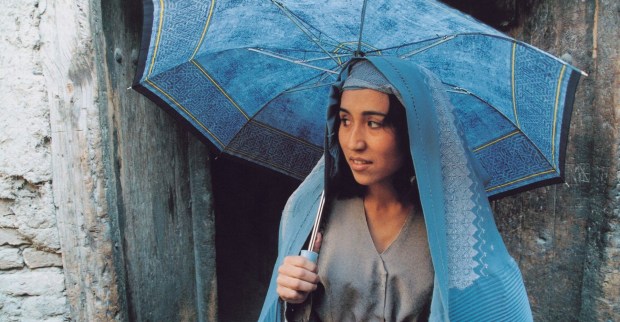
A year after the Taliban fell in Afghanistan, the young Iranian director Samira Makhmalbaf arrived in search of a story. She knew she wanted to make a film about the country, as a way to give a voice to its people. Afghanistan was visible to the wider world only through news broadcasts and politicians’ speeches: it was defined by outsiders who frequently represented themselves as ‘saviours’ who’d gone in to ‘liberate’ its people. Makhmalbaf wanted to tell the story of the people left on the ground: to show, frankly and compassionately, the ruined lives and hopes of the people of Kabul. It’s a very slow film, but beautifully made with an entirely amateur cast, and it gets under the skin of a society on the brink of recovery from horrific trauma, in a way that earnest western journalists never could.

Continue reading