The Beacon at Alexandria (1986): Gillian Bradshaw

★★★★

In one sense, of course, the title refers to the Pharos: that great lighthouse in the harbour of Alexandria which became one of the Wonders of the World. But it has another meaning too. Alexandria is a place of possibility and hope: a vast melting pot in which different cultures and religions have coexisted for centuries. It’s a place of ideas. And Charis of Ephesus hopes it’ll be a place of freedom.
Continue reading

Merry Christmas!

543a0-botticelli_uffizi_37

And news of a brief sabbatical…

So it’s this time of year again! I just wanted to take this opportunity, a little earlier than usual, to wish you all a very merry Christmas or holiday season, and all prosperity, success and happiness for the New Year. Thank you so much for reading and supporting the blog this year; and I propose toasts of sherry to those who take the extra effort to comment and brighten my day: Heloise, Dehggial and Isi, my loyal regulars, I salute you all.

Continue reading

The Best of Everything (1958): Rona Jaffe

★★★★

The easiest way I can describe this book, which follows four young women working in a New York publishing house in the early 1950s, is to ask you to think of Sex and the City crossed with Mad Men. With that description in mind you might be tempted to write it off as sugary vintage froth: a feast of twin-sets, cocktails and giggling bespectacled secretaries called Mary-Jane or Betty-Ann. But you’d be doing it an injustice. First published in 1958, this novel was written before the period had a chance to be romanticised, when the author herself had similar experiences fresh in her mind. It’s darker, shrewder and considerably more rewarding than you might expect.

Continue reading

Don Giovanni (1787): Wolfgang Amadeus Mozart

151105 HGO's Don Giovanni

★★★★

(Hampstead Garden Opera, Upstairs at the Gatehouse, 6 November 2015)

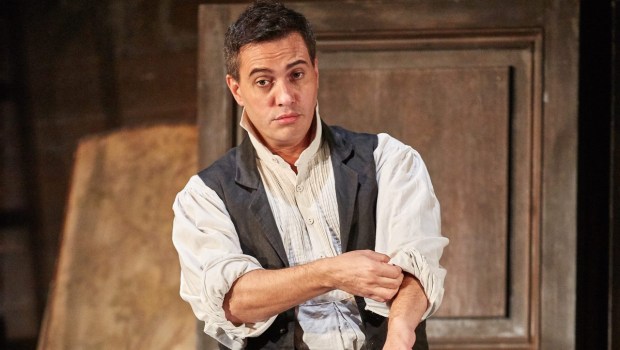
This is well overdue and I hope Hampstead Garden Opera will forgive me, but they can rest assured that my further tentative shuffle out of the Baroque was very enjoyable. Six months after their simple and smart Xerxes, they’ve taken on another heavyweight of the operatic canon and given him their own ineffable twist: none less than the Don himself.

Continue reading

Franco Fagioli: Arias for Caffarelli

98189-franco2b2528facebook2b20152b102b0225292b-2bcopy

(Wigmore Hall, with Il Pomo d’Oro directed by Riccardo Minasi, 13 November 2015)

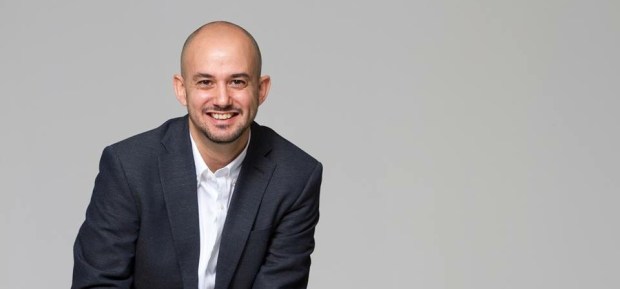
It’s just over a year since Franco Fagioli made his solo London debut at the Wigmore, a night which was memorable for several reasons. It was my first Baroque concert, and it also introduced me to a wonderful circle of friends with whom I’ve since travelled to operas and concerts across Europe. When we were in Halle in June we heard a very similar programme to that offered in Fagioli’s second London recital at the Wigmore last Friday, but his great strength as an artist is that he never sings an aria the same way twice. For me, the London concert was more adventurous and more emotionally engaged than the recital in Halle; and, in any case, there were two mouthwatering new additions to the programme: Se bramate d’amar and Crude furie. Franco Fagioli doing Serse? Now this promised to be seriously good fun.

Continue reading

The Marriage of Figaro (1786): Wolfgang Amadeus Mozart

Mozart: The Marriage of Figaro

★★★★★

(Royal Opera House, via Vue Cinemas, 5 October 2015)

About a month ago I had a spate of ‘firsts’: my first Macbeth, in the striking film version and then, just a couple of days later, my first Figaro, thanks to the Royal Opera House’s excellent live cinema broadcasts. Heloise has been urging me to watch Figaro ever since I first expressed a cautious interest in opera about a year and a half ago. She can feel herself vindicated at last. Of course I would have loved to see the show in person, but thrift is of the essence and so I plumped for the cinema, and three hours of stunning close-ups and lush, intoxicating detail.

Continue reading

Orpheus (1647): Luigi Rossi

a986c-orpheus112b-2bcopy

★★★★

(Sam Wanamaker Playhouse, in collaboration with the Royal Opera, 8 November 2015)

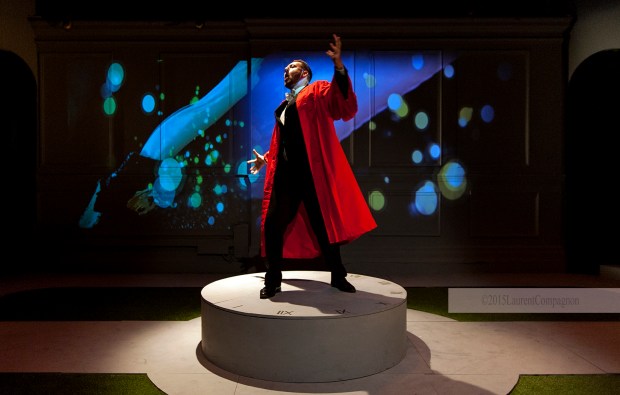
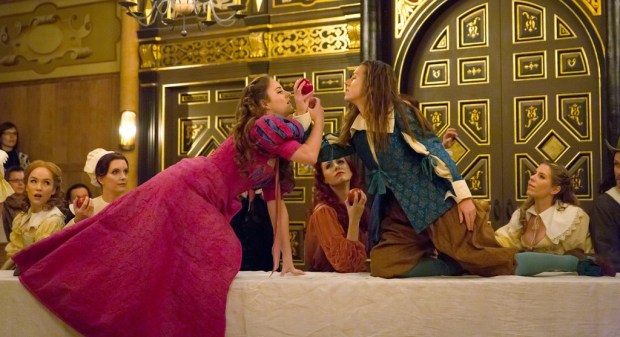
Hot on the heels of Ormindo comes another partnership between the Globe and Covent Garden, which offers another treat of early Baroque opera in the unique ambiance of the Sam Wanamaker Playhouse. This time it’s Orpheus, directed from the gallery by Christian Curnyn with a select force of musicians from Early Opera.

Continue reading

The Creation (1798): Joseph Haydn

CreationHaydn

★★★

(Bath Assembly Rooms, 31 October 2015)

Haydn has rather slipped under my radar so far, partly because his few operas don’t form part of the standard repertoire, and partly because a friend of mine has been a little dismissive of him so I didn’t actively seek him out. But on the basis of The Creation, performed on Saturday at the Assembly Rooms in Bath by the Bath Choral Society and the Bristol Ensemble, I’m going to have to revise that opinion.

Continue reading

Master and God (2012): Lindsey Davis

★★★★

An Epic of Rome, Tyranny and Love

I discovered this novel tucked away near the back of our little lending-library shelf at work. I’m not all that familiar with Lindsey Davis’s Falco books, but I’ve read the one where he goes to Alexandria and remembered enjoying it, so I decided to give this standalone novel a try. Like the Falco series it’s set in ancient Rome, this time roughly covering the period of the emperor Domitian, from 80-96 AD. However it isn’t a mystery and, as far as I know, the characters are entirely different from those in Falco. From the very first line (‘It was a quiet afternoon on the Via Flaminia‘) I was drawn into Davis’s world, and can honestly say that this has been one of the most heartwarming, lovable books I’ve read in a long time.

Continue reading

The Silvered Heart (2015): Katherine Clements

★★★

Aristocrat. Heiress. Highwaywoman

It is 1648 and the fate of England teeters on a knife-edge. Civil war splits the nation into Royalist and Parliamentarian, and the effects are felt far beyond the battlefield. Even as the years pass and Cromwell comes to power, the ravaged land struggles to recover and the great estates which once dominated the country find themselves starved, fragmented and close to collapse. One of these estates is Ware Park, the home of Katherine Ferrers and her husband (and cousin) Thomas Fanshawe.

Continue reading