Goya: The Witches and Old Women Album (2015)

Goya: The Witches and Old Women Album

(Courtauld Gallery, London, until 25 May 2015)

A man slumps at a table, his head buried in his arms. As he dreams, the dark creatures of his imagination rise out of the shadows behind him: a lynx, which looks up with wide eyes; bats, flocking in the darkness, and owls which mob the sleeping figure with their wings and steal his artist’s tools. This etching, made in 1799, forms part of Goya’s print series Los Caprichos and was originally conceived as an allegorical self-portrait. Its title is The Sleep of Reason Produces Monsters. For all of mankind’s pretensions to reason and rationality in this Enlightened age, Goya seems to say, we only have to sleep for our primal nightmares to come crawling out of the woodwork.

Continue reading

A Victorian Obsession: The Pérez Simón Collection (2014-15)

Alma-Tadema: The Roses of Heliogabalus

(Leighton House, London, until 29 March 2015)

Tucked away in a quiet street near Holland Park, Leighton House is worth visiting at any time of year, but at the moment it offers more than just the usual dose of elegant Victoriana. The pictures that usually hang on the walls have given way to a selection of paintings from the collection of Juan Antonio Pérez Simón, a Mexican businessman with a particular fondness for British 19th-century painting. Many of the great Victorian pictures are still in private hands, and despite some renewed interest in the field, it’s still a comparatively uncommercial part of the art market. Pérez Simón has been able to build up a simply staggering collection in a relatively short period of time.

Continue reading

Rembrandt: The Late Works (2014-15)

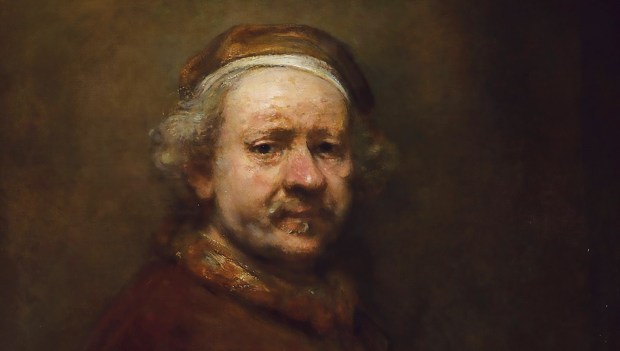
Rembrandt: Self Portrait

(National Gallery, London, until 18 January 2015)

The National Gallery is currently playing host to another winter blockbuster. Rembrandt might not be quite as unbearably crowded as the Leonardo show was a couple of years back, but I’ve heard that queues are still snaking around the building before opening time. A few days ago I was lucky enough to see the exhibition at a relatively quiet time and it made for a gripping and illuminating experience. There’s a lot to see, which isn’t always a good thing when you have to elbow your way past other visitors, but it’s worth a visit for the sheer quality of the exhibits. The highlights for most people will be the paintings, which are deservedly celebrated, but for me the greatest legacy of the exhibition will be a better appreciation of Rembrandt’s achievements, daring and creativity as a printmaker.

Continue reading

Giovanni Battista Moroni (2014-15)

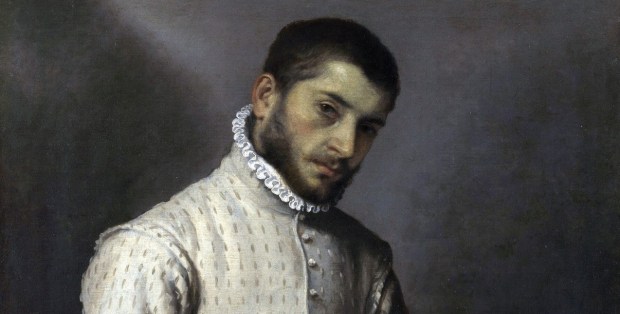
Moroni: Portrait of a Tailor

(Royal Academy, London, until 25 January 2015)

He’s a familiar sight in the National Gallery. A young tailor has been distracted in the middle of his work. Resting his scissors on the table for a moment he glances up, as if you’ve just wandered into his workroom, half-inquisitive, half-challenging. His clothes are simple but well-made, showing off his craft: his cream doublet is elaborately pinked and finely-detailed lace peeks out at collar and cuffs. In a moment his assessing gaze will shade into something more specific: a frown at being disturbed, perhaps, or a welcoming smile, but for now he’s captured in that split second where everything is still possible: a moment of infinite potential.

Continue reading

A Year in the Life of Handel: 1738 (2014-15)

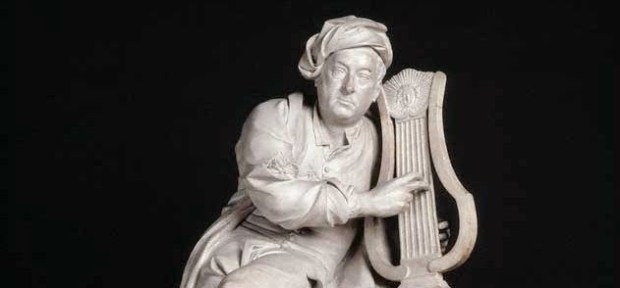
Roubillac: Handel

 (Handel House, until 4 January 2015)

In January 1738 an amateur theatre critic reported on the premiere of Handel’s new opera, Faramondo: ‘On Tuesday last, we had a new opera of Handel’s… It is too like his former compositions, and wants variety – I heard his singer that night, and think him near equal in merit to the late Carestini, with this advantage, that he has acquired the happy knack of throwing out a sound, now and then, very like what we hear from a distressed young calf.

Continue reading

Vikings: Life and Legend (2014)

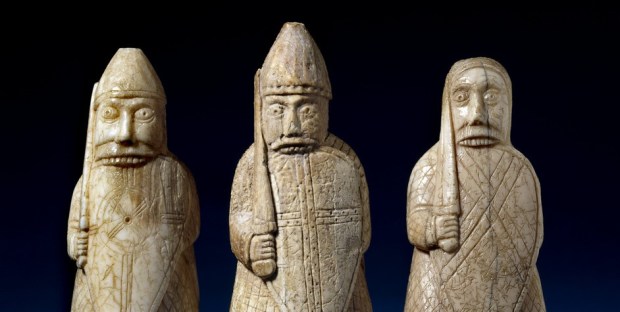
Vikings: Life and Legend

(British Museum, London, until 22 June 2014)

Bearing in mind I went to see the British Museum’s Vikings exhibition on the day after it opened, almost a month ago, you might think it strange that I haven’t got round to writing about it yet. The simple truth is that it’s been hard to weigh up my thoughts about it. And I’m not the only one who has mixed feelings. The lovely Elisa, a fellow Dunnetteer, came along with me and I think was similarly nonplussed; and I’ve spoken to several other people who’ve shared our feelings. In my particular case, I think I’d probably gone into the show with unrealistically high expectations.

Continue reading

Bosch to Bloemaert (2014)

Bloemaert: Studies of a girl's head

Early Netherlandish Drawings in Museum Boijmans van Beuningen, Rotterdam

(Fondation Custodia, Paris, until 22 June 2014)

Every spring, Paris goes a little bit crazy for drawings. The dealers’ galleries put on displays; there’s an art fair at the Bourse; and the museums and libraries hold exhibitions giving us a glimpse of the beautiful things which spend most of the year tucked away in print rooms. This year, the Fondation Custodia triumphs with a real treat of a show.

Continue reading

Veronese: Magnificence in Renaissance Venice (2014)

Veronese: Conversion of the Magdalen

(National Gallery, London, until 15 June 2014)

The National Gallery’s Veronese exhibition is already being described as the one show that you have to see this year and glowing opinions have proliferated: from The Times’s five-star review to the enthusiastic post by the exacting Grumpy Art Historian. Needless to say, I’d been very much looking forward to it. And I was especially excited because, a couple of weeks ago, I went to a very enjoyable lecture by Matthias Wivel, one of the curators, who’d suggested a way of ‘reading’ Veronese’s pictures that I was keen to put to the test.

Continue reading

Strange Beauty: Masters of the German Renaissance (2014)

Cranach: Cupid complaining to Venus

(National Gallery, London, until 11 May 2014)

If forewarned is forearmed, then I went to this exhibition fully armed with the mixed (and sometimes frankly baffled) reactions of friends and colleagues. The National Gallery are clearly trying to do something slightly different in this show, and the ambition itself is commendable, but they just don’t quite pull it off. The key distinction I’m going to have to make in this post is between the works on show, which were indeed beautiful, and the concept of the exhibition itself, which seems to skip confusingly between several different driving themes.

Continue reading

Turner and the Sea (2013-14)

Turner: The Fighting Temeraire

(National Maritime Museum, Greenwich, until 21 April 2014)

J.M.W. Turner grew up with water always close to hand: his childhood was divided between London, on the banks of the Thames, and Margate, on the Kentish coast. In the last quarter of the 18th century, this was a world of sail power, where fishing, travel or warfare depended on a good wind. By the time he died in the mid-19th century, however, that world had vanished, replaced by steamships, ironclads and roaring coal furnaces. The sea remained central to British life, though, and it found a similarly enduring place at the centre of Turner’s art.

Continue reading