Hipermestra (1658): Francesco Cavalli

Cavalli: Hipermestra

★★★★½

(Glyndebourne, conducted by William Christie, 17 May 2017)

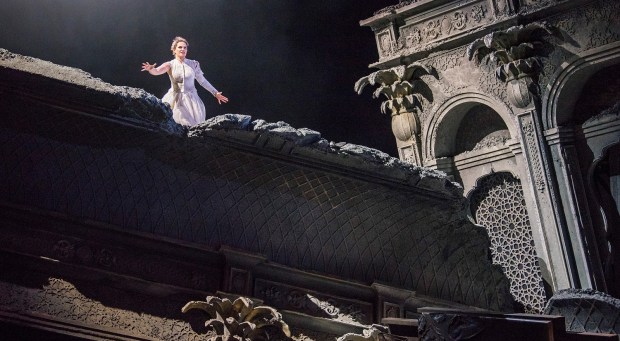
King Danao of Argos is troubled. His brother’s Egyptian troops have gathered on his border, forcing him to suggest a diplomatic match to avoid conflict. His fifty daughters will marry his brother’s fifty sons in a mass ceremony, cementing a peace treaty between the two nations. But Danao has given his daughters secret instructions. The Oracle at Delphi has warned him that one of his nephews will rob him of his life and kingdom. And so each of the fifty girls has been ordered to murder her husband on their wedding night. Each of them obeys. Except one: Hipermestra, who loves her new husband, her cousin Linceo, and urges him to escape. Her compassion will be rewarded by a tide of blood. In this thrilling premiere of an all-but-forgotten opera by Francesco Cavalli, Glyndebourne have updated an ancient story to a setting in the modern Middle East, giving it a punch that lingers long after the final curtain comes down.

Continue reading

L’Incoronazione di Poppea (1643): Claudio Monteverdi

Monteverdi: L'Incoronazione di Poppea

★★★½

(Hampstead Garden Opera at Jackson’s Lane Theatre, 12-21 May 2017)

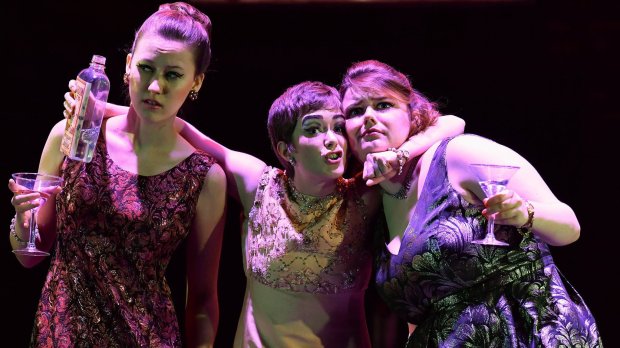
This spring, Hampstead Garden Opera are trying something new: their first Italian opera staged in the original language rather than English translation. The opera in question is Poppea, a perennial favourite of mine. Who could resist this blend of scheming, sexual abandon, murder and imperial arrogance? Certainly not me. Presented on a stripped-back set, this production focuses the attention firmly on the two women, Ottavia and Poppea, competing for the heart of Rome’s indolent, decadent emperor. With sterling support from Musica Poetica, under the baton of Oliver John Ruthven, and a number of exciting voices to add to my watchlist, it was a thoroughly enjoyable afternoon out.

Continue reading

Lawrence Zazzo: Weeping Philosophers

Lawrence Zazzo

(BBC Radio 3 Lunchtime Concert, at the Wigmore Hall, 1 May 2017)

I’ve been waiting for two-and-a-half years to see Lawrence Zazzo in the flesh. In the first flush of my Baroque obsession, back in October 2014, I bought his album A Royal Trio and fell in love with his rendition of Handel’s Va tacito e nascosto. Ever since, I’ve longed to see him live and finally got my wish in this BBC Radio 3 Lunchtime Concert at the Wigmore Hall. Languishing in the realms of the early Baroque, this recital presented a cornucopia of lute-songs and cantatas by Caccini, Frescobaldi, Strozzi and Durante. Zazzo was accompanied by three gifted musicians: Silas Wollston on organ and harpsichord; Daniele Caminiti on archlute and baroque guitar; and Jonathan Rees on bass viol and viola da gamba. By heaven, it was worth the wait.

Continue reading

Joseph and his Brethren (1743): George Frideric Handel

Malm: Joseph and his Brothers

★★★★

(London Handel Orchestra and Singers at St George’s Hanover Square, 20 April 2017)

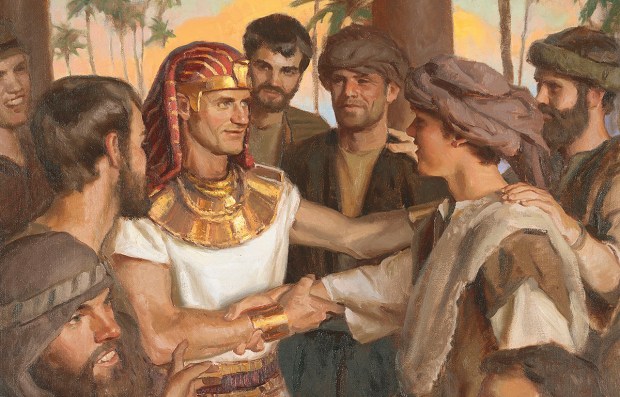
Andrew Lloyd Webber wasn’t the first to realise that a good musical could be made from the story of Joseph in Egypt. 224 years before Joseph and the Technicolor Dreamcoat was premiered, Handel chose the same subject for the second of two oratorios performed in his 1743 season (the first, a month before Joseph, was Semele). With a libretto by the radical clergyman James Miller, adapted in part from an earlier work by Apostolo Zeno, Handel’s oratorio throws us straight into the action, midway through the story. We first meet Joseph in prison in Egypt, and the tale follows his rise to power, his love for the beautiful Asenath, and his eventual reconciliation with his brothers. This was my final outing for this year’s Handel Festival and it proved a great conclusion, overseen by the ever-admirable Laurence Cummings with the London Handel Orchestra and Singers.

Continue reading

Il Duello Amoroso: Louise Alder and Emilie Renard

Louise Alder

(David Bates and La Nuova Musica at St George’s Hanover Square, 20 April 2017)

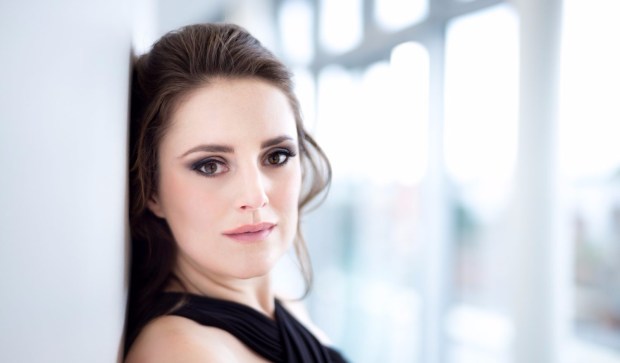
Thanks to work travel, I haven’t been able to see all that much of the London Handel Festival this year, but I’d been looking forward to this event: a programme of duets performed by two of our most talented young singers, Louise Alder and Emilie Renard. These duets were chamber pieces written by Handel during his early period in Italy and the most famous of them was the cantata Amarilli vezzosa, composed in 1708. It was a rare chance to hear these early works: I only wish La Nuova Musica’s music director, David Bates, had kept a more sympathetic balance between orchestra and singers.

Continue reading

Ormisda (1730): George Frideric Handel and Friends

Ormisda - Maria Ostroukhova

★★★★

(Opera Settecento at St George’s, Hanover Square, 28 March 2017)

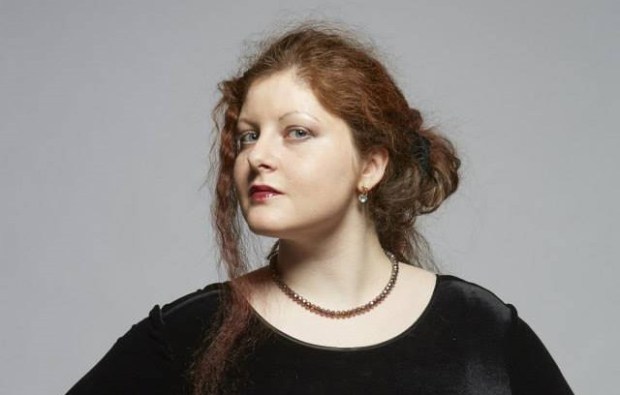
I’m running slightly behind on London Handel Festival reports, but didn’t want to forget this remarkable Orsmida, dominated by an absolutely brilliant performance from the talented mezzo Maria Ostroukhova. Like Catone and Elpidia in previous Festivals, Ormisda is a pasticcio, pulled together by Handel using arias from other composers’ operas. Not only did this enable him to fill one of the slots in the 1730 opera season, easing his workload a little, but it also introduced London audiences to some top arias from the Continent. Ormisda pulls together some very enjoyable music by Hasse, Orlandini, Vinci, Leo and Giacomelli, to tell a classic opera seria tale of dynastic politics in ancient Persia.

Continue reading

Faramondo (1737): George Frideric Handel

Handel: Faramondo

★★★

(Britten Theatre, 25 March 2017)

You can’t accuse Handel of not being productive. He wrote Faramondo while recovering from a stroke and, having finished it on Christmas Eve, began his next opera on Boxing Day. That would become Xerxes, one of his most enduringly popular scores, but Faramondo itself has never enjoyed the same acclaim as its younger sibling. There are perfectly good reasons for this, namely that the opera itself is a bit of a mess, but the students of the Royal College of Music have gamely taken up the gauntlet in this staged production, performed as part of the London Handel Festival. They’re accompanied by the London Handel Orchestra, with Laurence Cummings directing from the harpsichord; I also spotted Leo Duarte tucked in at the back with his trusty oboe.

Continue reading

Philippe Jaroussky: Bach and Telemann

Philippe Jaroussky

(with Le Concert de la Loge, at the Wigmore Hall, 1 December 2016)

In June 2015, when we met Philippe Jaroussky after his Festival Concert in Halle, we asked when he’d next be coming to London. His answer was non-committal and typically modest: he wasn’t sure; he didn’t know if the English were all that fond of what he did. But I hope Thursday’s concert at the Wigmore Hall showed that there’s hope for us yet. The recital had sold out months ago and my brilliant friend only managed to secure tickets by incessantly badgering the box office for returns. The hall was stuffed to the gunwales; the atmosphere was palpable; and yet there were times you could have heard the smallest of pins drop. Refined, elegiac and utterly professional, Jaroussky showed us all once again why he remains the hottest countertenor ticket of all.

Continue reading

Calisto (1651): Francesco Cavalli

Lucy Crowe

★★★★

(La Nuova Musica at Wigmore Hall, 28 November 2016)

Calistos are like London buses: you wait for months and then two come along at once. Mere weeks after English Touring Opera’s vivacious production, David Bates and La Nuova Musica presented their own version of Cavalli’s tale of lust, disguise and confusion. Conceived as a semi-staged performance, to make maximum use of the Wigmore’s limited space, this Calisto boasted a cast to die for and delivered some great voices; yet it didn’t eclipse ETO quite as thoroughly as I’d expected.

Continue reading

Xerxes (1738): George Frideric Handel

Anna Stéphany

★★★★ ½

(Early Opera Company at St John’s Smith Square, 18 November 2016)

With only one production so far this year, I’ve had Xerxes withdrawal symptoms, but fortunately the Early Opera Company and Christian Curnyn were there to save the day with a concert performance at St John’s Smith Square last Friday. This was billed as a concert version of their truly excellent studio recording from 2013, but in fact the entire cast is different, with one crucial exception: Anna Stéphany as the brat-prince himself. The change of cast didn’t matter, however, as EOC drafted in some of the brightest young things around, and the result was classy, perfectly-paced and probably (on balance) the best-sounding Xerxes I’ve yet heard live. Coming from me, that’s high praise.

Continue reading