Much Ado About Nothing (1598/99): William Shakespeare

Much Ado About Nothing

★★★★

(Iris Theatre, St Paul’s Church, Covent Garden, 9 July 2016)

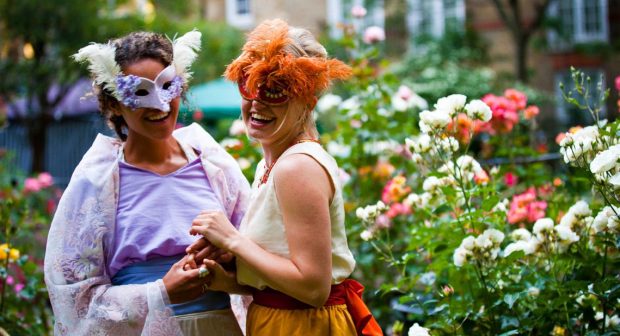
Summer has come to London (although the British weather hasn’t had the memo). These long, light evenings are the cue for the ever-wonderful Iris Theatre to roll out the red carpet for another of their outdoor Shakespeare plays, performed as promenade productions in and around the Actors’ Church in Covent Garden. This year’s show is Much Ado, probably my favourite play, and as a longstanding fan of the company I just couldn’t resist. Moreover, the play has already enjoyed critical acclaim, with four nominations for the Off West End Awards. It was bound to be a good night out so I marshalled my visiting parents and we set off for an evening of Iris’s very special brand of magic.
Continue reading

A Midsummer Night’s Dream (1595/96): William Shakespeare

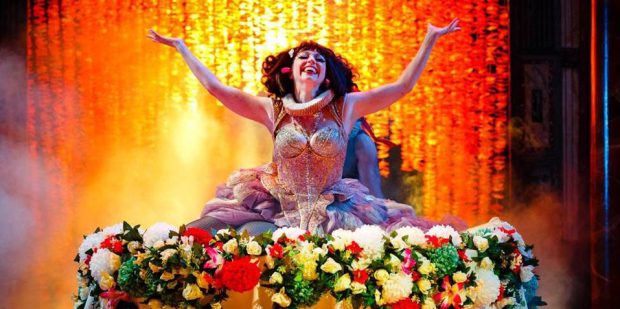
Titania (Meow Meow) on her flowery bed

★★★★

(Shakespeare’s Globe, 30 April-11 September 2016)

This Midsummer Night’s Dream had its work cut out to create the appropriate ambiance. The skies of London were weighed down with white clouds, biting winds swept down the streets and, all in all, the mood was more fit for Twelfth Night. Wrapped up against the cold, I came with some trepidation, and not only because of the weather. I’d been wondering what Emma Rice’s tenure as Globe Director would bring.

Continue reading

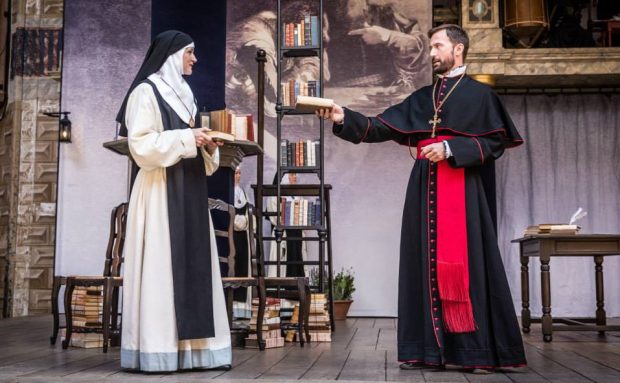
The Heresy of Love (2012): Helen Edmundson

Edmundson: The Heresy of Love

★★★★

(Shakespeare’s Globe, 28 August 2015)

I saw Helen Edmundson’s play The Heresy of Love over a month ago and, since the run finished in early September, there may be little point posting on it now. However, in recent days I’ve been turning it over in my mind again, thanks to the novel I’m currently reading: Flow Down Like Silver, about Hypatia of Alexandria. The parallels between these two brilliant women are obvious and crushing. Both were rich in intelligence and wit; both were faced with a new and unforgiving religious regime, which couldn’t tolerate that which it couldn’t control; and both were punished because they strayed beyond the confines of what was considered acceptable for a woman to know. Both stories provoke me to anger. Both deserve to be better known.

Continue reading

The Oresteia (458 BC): Aeschylus

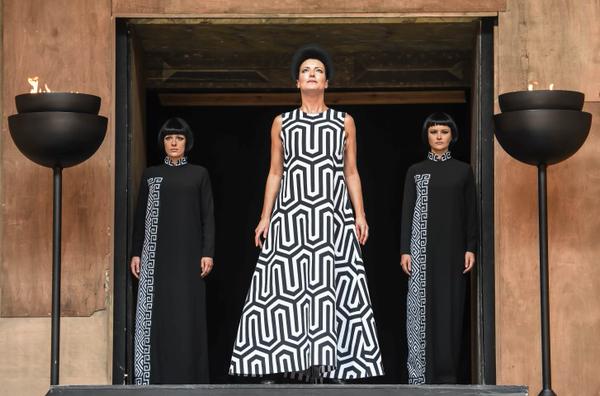
The Oresteia

★★★★

(The Globe, London, 6 September 2015)

Seeing this the day after Hamlet, I definitely feel that I’ve met my Great Tragedy Quota for this month. Written in 458 BC, when Aeschylus was in his late sixties, this feels like the Dane’s ancient counterpart: if Hamlet is the great modern exploration of the self, then the Oresteia is a monument not just to human nature, but to civilisation itself. Continue reading

Hamlet (c1600): William Shakespeare

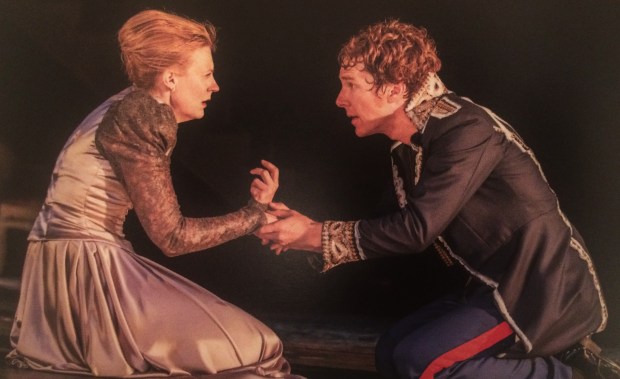
Hamlet

★★★★ ½

(Barbican Theatre, London, 5 September 2015)

Whatever your feelings about celebrity casting or, indeed, Benedict Cumberbatch, there’s no doubt that the Barbican’s Hamlet is the hottest ticket of the year here in London. I failed to get a ticket when they initially went on sale. The only reason I managed to get there at all is because a friend won two tickets in a lottery: a lottery I’d also entered, and in which I lost out. To my enormous gratitude, she invited me to come with her (as far as I recall there was no sustained guilt-tripping involved).

Continue reading

Henry V (1599): William Shakespeare

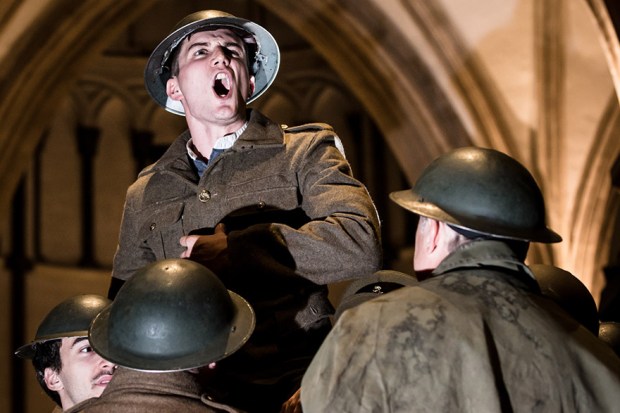
Henry V

★★★★★

(Antic Disposition at Temple Church, 25 August 2015)

One of the great things about living in London is the chance to see smaller theatre companies putting on plays in unusual spaces, and this was a great example. I’ve been on Antic Disposition’s mailing list since I was bowled over by their magnificent Tempest in Middle Temple Hall some years ago, and when I heard they were taking on Henry V in the evocative spaces of Temple Church, I couldn’t resist.

Continue reading

All the Angels: Handel and the First Messiah (2015): Nick Drake

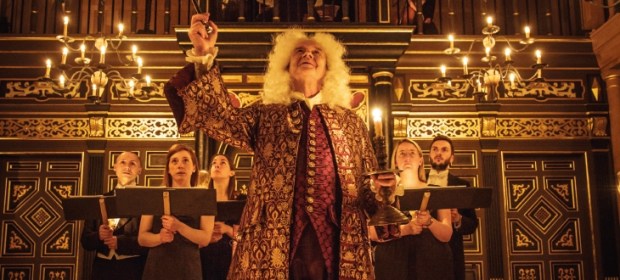
All the Angels: Handel and the First Messiah

★★★

(Sam Wanamaker Playhouse, directed by Jonathan Munby, 3 July 2015)

The Globe’s increasing involvement with early music has been one of the unforeseen consequences (for me) of the Sam Wanamaker Playhouse. As I’ve said before, its intimate atmosphere and warm acoustics have encouraged some truly exciting developments over in Southwark. There’s the exciting collaboration with the Royal Opera House to produce lesser-known early Baroque operas; there are concerts; and, least foreseen of all, new plays which explore the history of music. Last season we had Farinelli and the King, which will transfer to the West End this autumn and which has done so much to introduce a general audience to countertenors (and hopefully, for Iestyn Davies’s sake, to the difference between a countertenor and a castrato).

Continue reading

The Car Man (2000): Matthew Bourne

Bourne: The Car Man

★★★★

(Sadler’s Wells, 19 July 2015)

When I went to see Matthew Bourne’s Sleeping Beauty two years ago, I wrote about the frustration that I often feel when trying to understand classical ballet, and my corresponding fondness for Bourne’s irreverently gutsy style of storytelling. My favourite production by him will always be Swan Lake (the Adam Cooper version), but my first encounter with him was via a TV broadcast of The Car Man when I was a teenager.

Continue reading

Bacchae (405 BC): Euripides

Euripides: Bacchae

★★★½

(The UCL Classical Play; directed by Emily Louizou, at the British Museum, 20 July 2015)

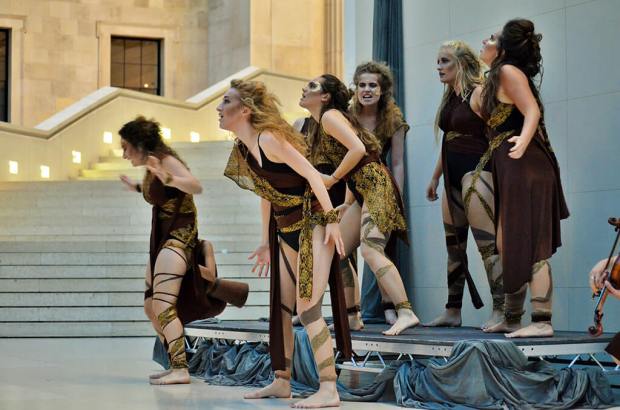
Bacchae was the first classical play that I saw, way back in 2000, and it’s still my favourite. When I heard that UCL Classics students were performing the play on Thursday night at a British Museum Members’ Evening (sold out), and there was a free dress rehearsal on the Monday, I jumped at the chance to attend. Performed in an English translation by James Morwood, this was a promenade performance, unfolding amid the columns, steps and statues of the Museum’s Great Court.

Continue reading

Research in Action: Performing Gender on the Indoor Stage

Performing Gender: Shakespeare's Globe

(Sam Wanamaker Playhouse, 7 May 2015)

We all know that in Shakespeare’s day women weren’t allowed on the stage. Recently several productions have tried to recreate the flavour of those original performances: Mark Rylance’s Twelfth Night and Richard III productions come to mind. But even these don’t give an accurate flavour of what Elizabethan and Jacobean audiences would have seen. Female roles were played by young boys aged between 12 and 22 years old, highly skilled actors who would specialise in playing women until at a certain stage they were no longer able to convince with the illusion (many ended up transitioning across the gender divide and took on male roles within the company).

Continue reading