Murillo and Justino de Neve: The Art of Friendship (2013)

Murillo: Triumph of Faith

(Dulwich Picture Gallery, London, until 19 May 2013)

London is the place to be for Murillo at the moment. This exhibition at Dulwich is complemented and echoed by a similar small show at the Wallace Collection, both of which will be ending soon. Yesterday I took the chance to visit both in one day, an experience which forced me to think a little more deeply about Murillo as an artist and which offered two different, but complementary perspectives on his painting. While the Wallace Collection looks at how the Marquess of Hertford assembled his collection of Murillos in the 19th century, Dulwich goes further back in time and homes in on the artist’s relationship with his key patron in Seville, the cathedral canon Justino de Neve (1625-1685).

Continue reading

Barocci: Brilliance and Grace (2013)

Barocci: Madonna and Child with a Cat

(National Gallery, London, 27 February-19 May 2013)

What a difference a name makes. Just over a year ago, it was virtually impossible to get into the National Gallery’s Leonardo da Vinci exhibition (and even when you were in, you could hardly see anything for the crowds). When I popped over to the National Gallery this lunchtime, however, to see their new Barocci show, I didn’t even have to queue for a ticket. In one way, this is marvellous: it’s so much more pleasurable to visit an exhibition that you can actually see; but at the same time my heart sinks a little. It’s a depressing indication that exhibition attendance isn’t really anything to do with the quality of the show or the beauty of the exhibits, but on how famous the ‘brand’ of the artist is. And in this particular case, if people decide not to bother because they haven’t heard of Barocci (which, you might think, is the perfect reason to see an exhibition), they’ll miss out on a stunning and superlatively well-organised show.

Continue reading

Masquerade (Carnival in Venice)

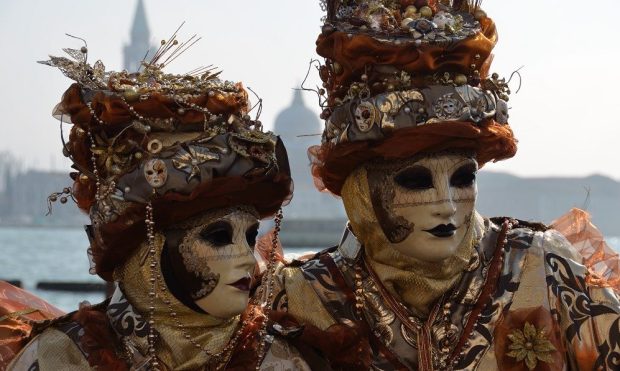
Two masked figures on the Riva degli Schiavoni

Even on an ordinary day Venice feels unreal, suspended between sea and sky, a jumble of bridges and alleyways and damp brick walls, porphyry and gold mosaic, ogee arches and pinnacles of blindingly white marble. I’ve been there twice before, but had always dreamed of going to the carnival and so couldn’t have been more excited when my parents decided to make their first trip to Venice and asked me to come along as translator and guide.

Continue reading

Fantasy and Invention (2013)

Vasari: Lorenzo de' Medici

Rosso Fiorentino and Sixteenth-Century Florentine Drawing

(The Morgan Library, New York, until 3 February 2013)

Current service has been temporarily interrupted by a business trip to New York, but even there I did my best to keep up the ‘idle’ spirit. On the afternoon of my arrival, I hotfooted it down Madison Avenue to the Morgan, hoping to keep the jetlag at bay by looking at some wonderful drawings. This January’s crop of exhibitions in New York aren’t as focused on the Old Masters as they were last year, and so the show at the Morgan was the one that bore the brunt of my expectations. I was a little disappointed to find that it took up only one room and there was no catalogue; but, nevertheless, that one room contained some beautiful things, many of which I hadn’t seen before. The purpose of the exhibition was to trace the development of Florentine drawing as it grew out of the Renaissance tradition into the full, eccentric bloom of Mannerism.

Continue reading

Outsider: Always Almost: Never Quite (2011): Brian Sewell

★★★★

Brian Sewell is now best known for being the art critic of the Evening Standard: ferociously knowledgeable, scrupulously precise and utterly intolerant of pretension. His exhibition reviews are the only ones I trust completely, and I should have read this first volume of his memoirs long before now; but I mistakenly assumed that it would be like the other art-world memoirs I’ve read. Those were dull, lifeless books, little more than a chance for the author to boast of his distinguished friends, settle scores with old enemies and rattle off a list of the famous paintings that he’s sold. I should have known better; and in any case, several people have recently urged me to read it – some struck by the elegance of the writing and others by Sewell’s brutal frankness.

Continue reading

Late Raphael (2012-13)

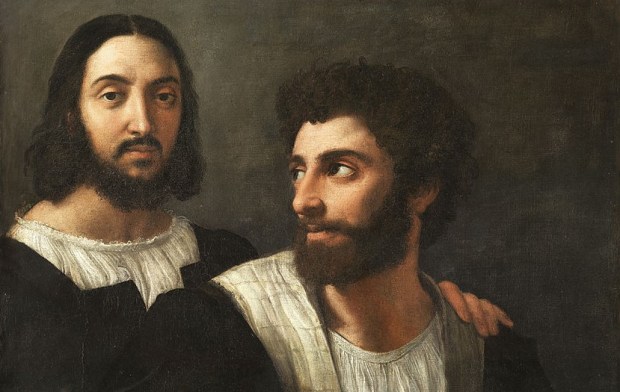
Raphael: Self Portrait with a friend

(Musée du Louvre, Paris, until 14 January 2013)

The things I do for art! Yesterday I got up horrendously early and went to Paris for the day, to visit the Louvre’s Late Raphael exhibition before it closed (yes, I took the Eurostar from London, went to the Louvre, saw the exhibition and took the train right back home again: there’s something faintly surreal about it). Previously at the Prado, this is the natural successor of the National Gallery’s 2004-5 show Raphael: From Urbino to Rome.

Continue reading

Pre-Raphaelites: Victorian Avant-Garde (2012-13)

Burne-Jones: The Rock of Doom

(Tate Britain, London, until 13 January 2013)

The Pre-Raphaelites were responsible for getting me into art history in the first place. As a teenager I fell in love with their dreamy evocations of Shakespearean and historical subjects, captivated first by the stories rather than the pictures themselves. Although I know many of their paintings extremely well, I haven’t really thought about them in context before and so this highly-acclaimed exhibition offered a chance to look more closely at the principles, motives and aims of the Pre-Raphaelite Brotherhood. It’s a tough job: many of these images are so famous, so seared onto our national consciousness, that it’s virtually impossible to judge them from the necessary distance.

Continue reading

The Lost Prince: The Life & Death of Henry Stuart (2012-13)

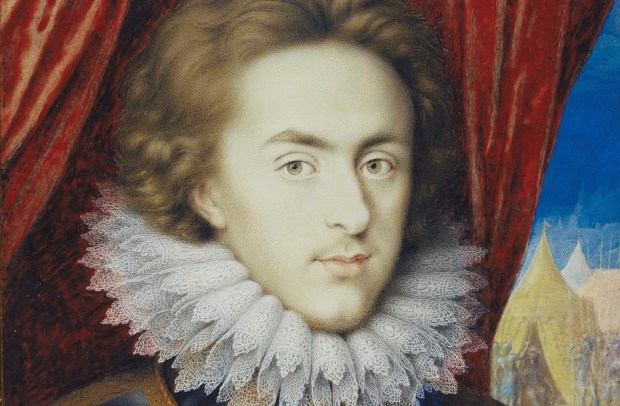
Oliver: Henry Stuart, Prince of Wales

(National Portrait Gallery, London, until 13 January 2013)

No expense was spared to educate Henry Stuart, the eldest son of James I and the future Henry IX of England. Thanks to the efforts of his tutors, friends and courtiers he showed every sign of growing up to be a perfect example of the Renaissance prince.  He was tutored in history and the classics, and his adoring father wrote a manual for him, the Basilikon Doron, which offered advice on good governance (the original manuscript is in this exhibition).

Continue reading

The Northern Renaissance: Dürer to Holbein (2012-13)

Holbein: William Reskimer

(Queen’s Gallery, Buckingham Palace, until 14 April 2013)

Back in 2008, the Queen’s Gallery put on the splendid exhibition The Art of Italy, in which the Royal Collection showed off its wealth of Renaissance and Baroque Italian paintings and drawings, assembled over four hundred years by an Italophile monarchy. It was the first exhibition I saw at the Gallery and I remember being amazed by the richness of the Collection’s holdings. The Northern Renaissance is the natural successor to that 2008 show and, while it includes some glorious objects, it is of necessity a more modest exhibition than its predecessor. It comprises 110 exhibits (compared to The Art of Italy‘s 153), of which 22 are prints rather than unique works and seven are arguably Italian rather than Northern.

Continue reading

Going Dutch (Amsterdam)

Amsterdam

Yes, it’s a terrible pun, but my imaginative faculties are exhausted and you must forgive me. I spent last weekend and the beginning of this week in Amsterdam, a trip which was spontaneous and entirely unlooked for. It was for the purposes of business, but my boss, who knows my penchant for museums, granted me an extra night in the hotel and so I had most of Sunday in which to explore this unknown city.

Continue reading