Adriano in Siria (1765): Johann Christian Bach

Bach: Adriano in Siria

★★★★

(Classical Opera, conducted by Ian Page, Britten Theatre, 18 April 2015)

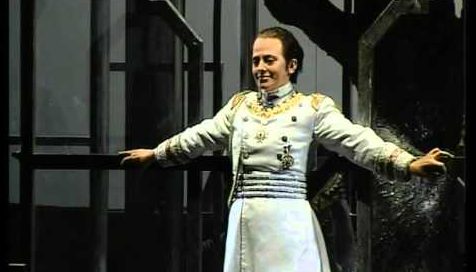
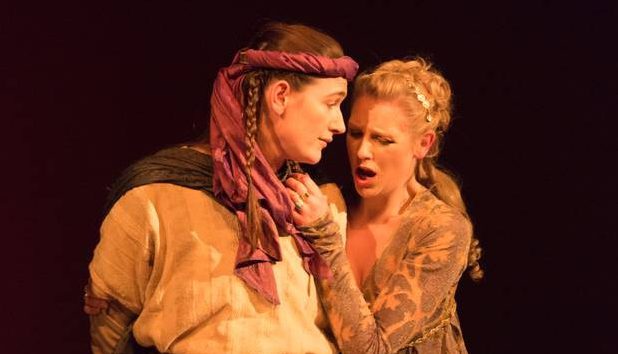
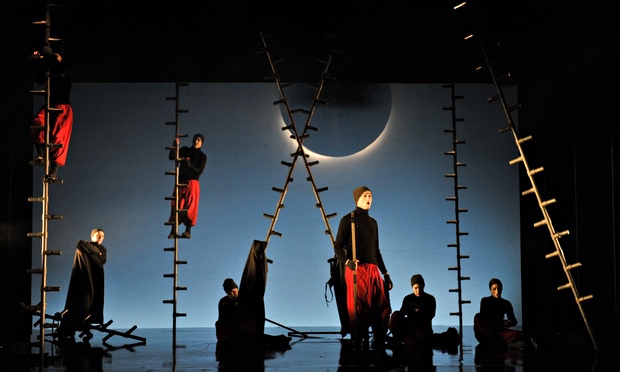
As Hadrian is one of my historical favourites, I was amused to discover that he’s the subject of a Metastasio libretto, set to music by more than sixty composers between 1732 and 1828. Classical Opera’s production is, rather remarkably, the first staging of the version by J.C. Bach (son of the Bach) since it opened in London in 1765. It’s been making waves in the press: the dominant reaction is amazement that we don’t hear more of J.C., especially since he spent most of his career in London* and was much admired.
Continue reading

Giove in Argo (1739): George Frideric Handel

Giove in Argo

★★★½

(Britten Theatre, Royal College of Music, 26 March 2015)

The final event of this year’s London Handel Festival for me was this staged version of the pasticcio opera Giove in Argo. Although Catone in Utica was also a pasticcio, the two differ because Giove is made up of arias and choruses from Handel’s own earlier operas rather than those of other composers. (However, as I’m still very much a Handel beginner, most of them felt new anyway!) It dates from 1739, the year after Xerxes, and represents one of Handel’s very last forays into Italian-language productions in London.

Continue reading

Randall Scotting: A Year in the Life of Handel: 1738

Randall Scotting

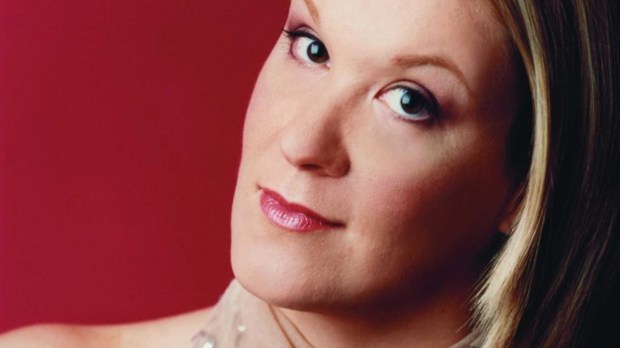
A recital by Randall Scotting and Marie van Rhijn

(Handel House Museum, 22 March 2015)

Back in October, on visiting Handel House for the first time, I wrote about their exhibition, A Year in the Life of Handel. This focused on the works produced by Handel in 1738 and the challenges he faced at the time. Not least of these was the growing indifference of the English public to Italian opera seria: audiences were thinning out and there was barely enough interest to sustain one Italian opera company, let alone Handel’s team at Covent Garden and the rival Opera of the Nobility. As if that wasn’t enough, Italian opera was also being satirised in English-language burlesques, most famously The Dragon of Wantley.

Continue reading

Catone in Utica (1732): George Frideric Handel

Handel: Catone in Utica

★★★★

(Opera Settecento at St George’s, Hanover Square, 17 March 2015)

We’re all going to be hearing rather a lot about Catone in Utica this year, so let’s get things off to a roaring start with a performance I saw last night at St George’s, Hanover Square, formerly Handel’s parish church, as part of the London Handel Festival. Although the opera was put together by Handel for his 1732 season, it’s stretching the truth a bit to say that it’s by him. Handel had to fill out his programmes somehow and so, at this stage of his career, he often produced one or two pasticcio operas each season alongside his own works. These pasticci were assembled from arias by several other composers and tailored by Handel to meet the taste of his demanding British public.

Continue reading

The Indian Queen (1695): Henry Purcell

Purcell: The Indian Queen

★★

(English National Opera, 6 March 2015)

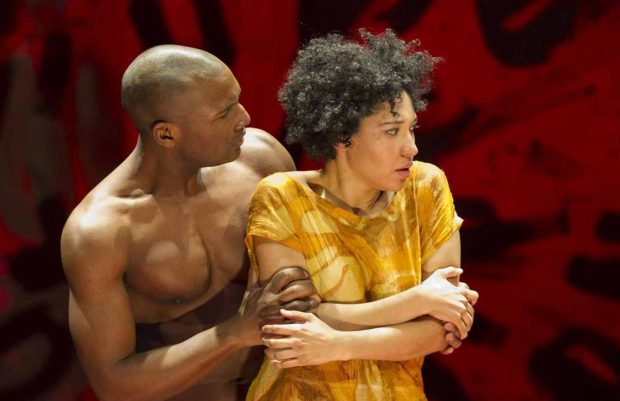
Reactions to English National Opera’s new production of The Indian Queen have been mixed. Some critics have praised it as a creative and courageous reworking of Purcell’s opera, which dares to acknowledge the atrocities carried out during the colonisation of the New World. Other people (friends and colleagues, thus, ordinary theatre-goers, not critics) have expressed bafflement and rising irritation. Apparently audience members have vanished during the intervals in a number of performances. It was clearly going to be a challenging experience but, when I went last Friday, I was nevertheless determined to enjoy it. But it didn’t quite work out like that.

Continue reading

Semele (1744): George Frideric Handel

Handel: Semele

★★★½

(Queen Elizabeth Hall, London, 10 March 2015)

Let the London Handel Festival commence! Things got underway in suitably regal style at the Queen Elizabeth Hall, with a tale of divine seduction and boundless ambition that bore a moralistic coda: be careful what you wish for.

Nature to each allots his proper sphere, But that forsaken,
we like meteors err: 
Toss’d through the void, by some rude
shock we’re broke, 
And all our boasted fire is lost in smoke.

(Chorus: Act 3, Scene 7)

Continue reading

Hercules (1745): George Frideric Handel

Alice Coote

★★★

(The English Concert directed by Harry Bicket at the Barbican, 4 March 2015)

Six months into my Baroque voyage of discovery, it’ll soon be time to jump in at the deep end for the London Handel Festival. From fully-staged operas to concerts, solo recitals and pasticci, the next month will offer a veritable banquet of Handel in all his forms. Before the Festival proper gets underway, we had an aperitif to enjoy: something of an oddity.

Continue reading

Ormindo (1644): Francesco Cavalli

Cavalli: Ormindo

★★★★★

(Royal Opera House at the Sam Wanamaker Playhouse, February-March 2015)

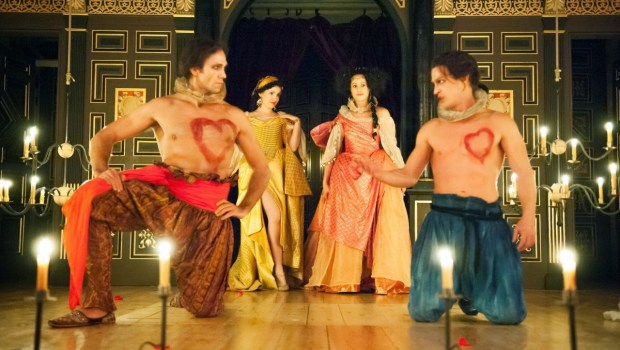
In writing about Cavalli’s Ormindo, it’s hard not to feel that everything has already been said. (But I’m going to say it again anyway.) This production made its immensely successful debut in the Sam Wanamaker Playhouse last year, blending the musical expertise of the Royal Opera House with the theatrical immediacy of the Globe. It is, quite simply, a match made in heaven: Cavalli’s operas, which predate the swaggering show-off arias of the high Baroque, feel like exuberant plays that just happen to be set to music. Naturally there’s nowhere in London more skilled at bringing such things to life than the Globe.

Continue reading

L’Oracolo in Messenia (1737): Antonio Vivaldi

Marianne Beate Kielland

★★★★

(Europa Galante, directed by Fabio Biondi, at the Barbican, 20 February 2015)

In late 1737 the composer Antonio Vivaldi found himself in dire straits. He’d been planning to put on a series of operas in Ferrara for the Carnival, but all his plans had gone wrong when the religious authorities refused him permission to enter the city. (They took exception to the fact he was a priest who never performed Mass and was known to travel in the company of a female singer.) Faced with the prospect of losing an entire season’s income, Vivaldi pulled some strings and managed to get hold of the Teatro S Angelo in Venice. With less than a month to prepare, he needed to get together a programme.

Continue reading

Xerxes (1738): George Frideric Handel

Xerxes: Handel

★★★★

(Les Talens Lyriques, with Christophe Rousset, Dresden, 2000)

You might remember that Xerxes at the ENO was the first opera I saw after the Baroque revelations of the summer and, although there was much to enjoy in that production, I itched to hear it performed in the original Italian. There isn’t a huge amount of choice on DVD at the moment so I ended up with this 2000 performance from Dresden. I held off watching it for a while, as it had an entirely female cast of principals and a visual aesthetic which looked bleak, to say the least. Then, one day I happened to see a clip of the opening scene on YouTube. Paula Rasmussen’s Ombra mai fù stopped me in my tracks.

Continue reading