La Clemenza di Tito (1791): Wolfgang Amadeus Mozart

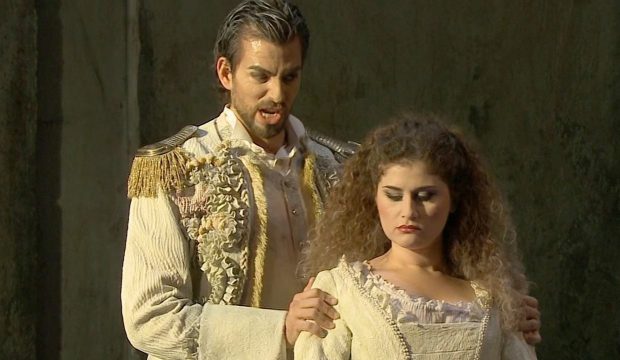
Mozart: La Clemenza di Tito (Met 2012)

★★★★

(Metropolitan Opera, New York, 2012)

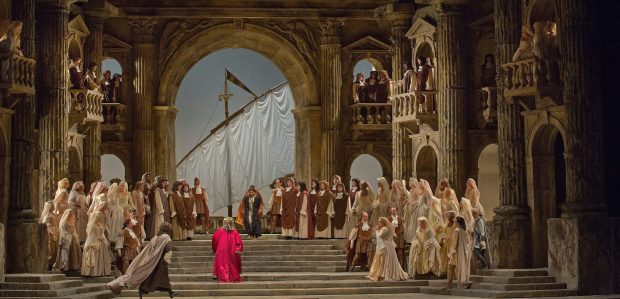
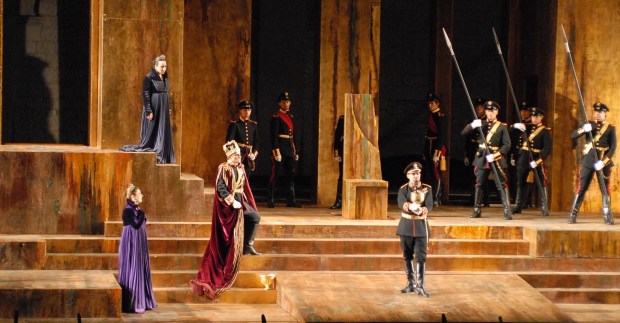
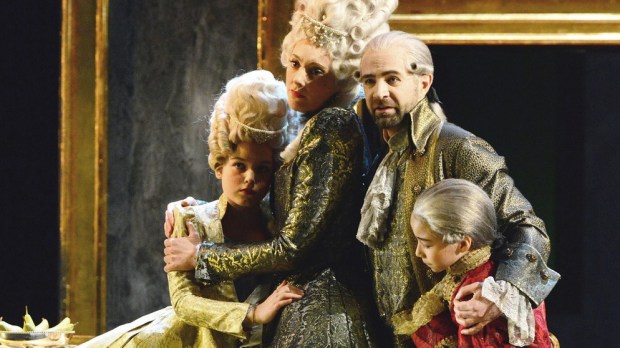
Since launching the new website, I’ve been busily spring cleaning my blog and, you know what? It’s amazing what you find at the bottom of the drafts folder. As a result, there will be several extremely belated posts cropping up over the next few weeks, starting with some Mozart, in the form of La Clemenza di Tito. As you may remember, I first encountered this opera via the modern, rather conceptual Salzburg version and was keen to compare that with a more traditional production. Enter the Met, stage left, with their legendary, ultra-conservative version. It may not be the most cutting-edge production in the book, but it gave me a visual feast of fine gowns, billowing cloaks and fabulous wigs.
Continue reading

Artaserse (1730): Johann Adolf Hasse

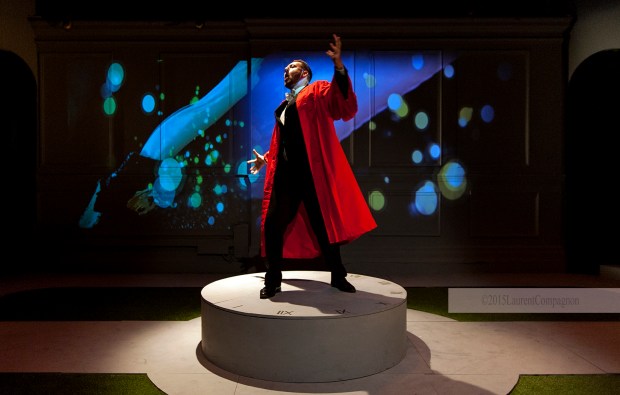
Hasse Artaserse

★★★

(Festival Valle d’Itria, Martina Franca, 2011)

In late February 1730, Hasse’s Artaserse opened at the Teatro S. Giovanni Grisostomo in Venice, mere weeks after Leonardo Vinci’s version premiered in Rome. (I think you all know the story of this opera by now. However, if you’d like to refresh your memory, check here and possibly also take a look here.) Musically there’s quite a contrast between the two versions. Vinci’s simple lyricism gives way to Hasse’s ornamentation, bells and whistles. And it’s not just the music that’s different.

Continue reading

Arminio (1737): George Frideric Handel

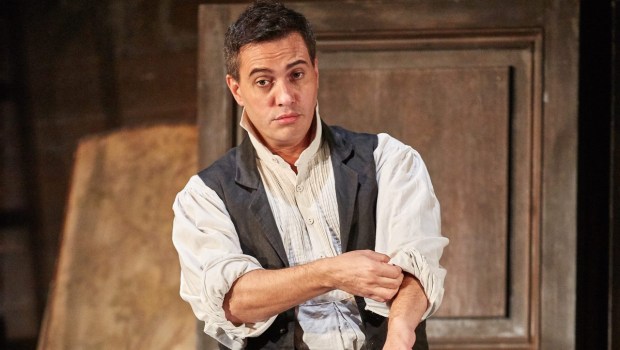
1dd12-arminio1

★★★½

(Badisches Staatstheater, Karlsruhe, 17 February 2016)

So, by a remarkable stroke of luck, my business trip coincided with the Karlsruhe Handel Festival. By even more remarkable good fortune, Parnassus were staging their new production of Handel’s Arminio on the night I arrived and there was an excellent seat still free right in the centre of the eighth row of the stalls. As they say, it would’ve been rude not to.

Continue reading

La Salustia (1732): Giovanni Battista Pergolesi

Marziano (Vittorio Prato) and Salustia (Serena Malfi)

★★★★

(Teatro Pergolesi, Jesi, 2011)

There’s no middle ground for rulers in Baroque operas. They’re either tyrants demanding submission at any cost, or weak figures who are manipulated by their ambitious courtiers. Alessandro, otherwise known as the emperor Alexander Severus (208-235), is one of the latter. When this opera opens, he’s very much in love with his new wife Salustia, the daughter of his general Marziano, and doesn’t understand why his mother Giulia dislikes her so much. Salustia, however, knows the reason only too well.

Continue reading

Don Giovanni (1787): Wolfgang Amadeus Mozart

151105 HGO's Don Giovanni

★★★★

(Hampstead Garden Opera, Upstairs at the Gatehouse, 6 November 2015)

This is well overdue and I hope Hampstead Garden Opera will forgive me, but they can rest assured that my further tentative shuffle out of the Baroque was very enjoyable. Six months after their simple and smart Xerxes, they’ve taken on another heavyweight of the operatic canon and given him their own ineffable twist: none less than the Don himself.

Continue reading

The Marriage of Figaro (1786): Wolfgang Amadeus Mozart

Mozart: The Marriage of Figaro

★★★★★

(Royal Opera House, via Vue Cinemas, 5 October 2015)

About a month ago I had a spate of ‘firsts’: my first Macbeth, in the striking film version and then, just a couple of days later, my first Figaro, thanks to the Royal Opera House’s excellent live cinema broadcasts. Heloise has been urging me to watch Figaro ever since I first expressed a cautious interest in opera about a year and a half ago. She can feel herself vindicated at last. Of course I would have loved to see the show in person, but thrift is of the essence and so I plumped for the cinema, and three hours of stunning close-ups and lush, intoxicating detail.

Continue reading

Orpheus (1647): Luigi Rossi

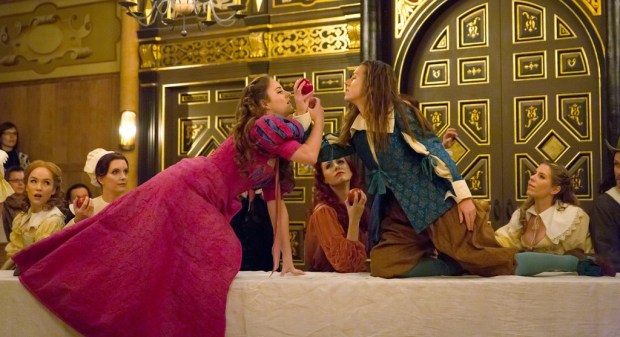
a986c-orpheus112b-2bcopy

★★★★

(Sam Wanamaker Playhouse, in collaboration with the Royal Opera, 8 November 2015)

Hot on the heels of Ormindo comes another partnership between the Globe and Covent Garden, which offers another treat of early Baroque opera in the unique ambiance of the Sam Wanamaker Playhouse. This time it’s Orpheus, directed from the gallery by Christian Curnyn with a select force of musicians from Early Opera.

Continue reading

The Creation (1798): Joseph Haydn

CreationHaydn

★★★

(Bath Assembly Rooms, 31 October 2015)

Haydn has rather slipped under my radar so far, partly because his few operas don’t form part of the standard repertoire, and partly because a friend of mine has been a little dismissive of him so I didn’t actively seek him out. But on the basis of The Creation, performed on Saturday at the Assembly Rooms in Bath by the Bath Choral Society and the Bristol Ensemble, I’m going to have to revise that opinion.

Continue reading

Xerse (1654): Francesco Cavalli

Cavalli: Xerse

★★★★★

(Theater an der Wien, 18 October 2015)

Before Handel and before Bononcini there was Cavalli. This first take on the Xerxes story doesn’t enjoy anywhere near as much fame as its younger cousin, and to my knowledge has only been recorded once, in 1985, with the title role set for countertenor and sung by René Jacobs. It’s high time for another recording and, if Emmanuelle Haïm and her excellent cast could have their arms twisted to do it, we’d be in for a treat.

Continue reading

L’Incoronazione di Poppea (1643): Claudio Monteverdi

Poppea: Vienna

★★★★

(Theater an der Wien, Vienna, 19 October 2015)

Before seeing Poppea, I’d been warned it was ‘hardcore Regietheater’, a phrase which would normally provoke serious qualms. But even I know better than to go to a Claus Guth production expecting togas and sandals. Despite my conservative tastes I can appreciate regie if it’s done well. It depends whether the director’s taken time to think about the story, or whether he’s simply thrown in sharks, parrots or a live bull for the sake of it. Guth certainly fell into the first category. His production isn’t traditional, but it’s based on an intelligent reading of the story. It toys with the audience’s expectations and makes you think afresh about the dynamics between the characters. This Poppea is good regie: deceptively playful, with a heart of darkness.

Continue reading