Restoration (1995)

Restoration

★★★

(directed by Michael Hoffmann, 1995)

I don’t usually watch a film adaptation so soon after reading the book itself, but the DVD of Restoration arrived very quickly and I couldn’t resist reacquainting myself with Robert Merivel in cinematic form. I think it helped to have read the novel so recently: it made sense of the storytelling, some of which may seem confusing if you aren’t already familiar with the plot. Also, a small note for those in the UK: the film currently seems to be available only in Region 1 format, except for a version with permanent Dutch subtitles, according to Amazon.

Continue reading

Restoration (1989): Rose Tremain

★★★★

I’ve wanted to get my hands on this ever since reading Music and Silence several years ago and it has definitely been worth the wait. Tremain has just published a sequel to Restoration, titled Merivel: A Man of His Time, so I thought I’d better catch up before everyone starts telling me how wonderful it is. I don’t know her work that well – Music and Silence and Restoration are her only novels that I’ve read to date – but in both cases I’ve been struck by her shrewdness, her poise and her sheer skill as a writer.

Continue reading

In Fine Style: The Art of Tudor and Stuart Fashion (2013)

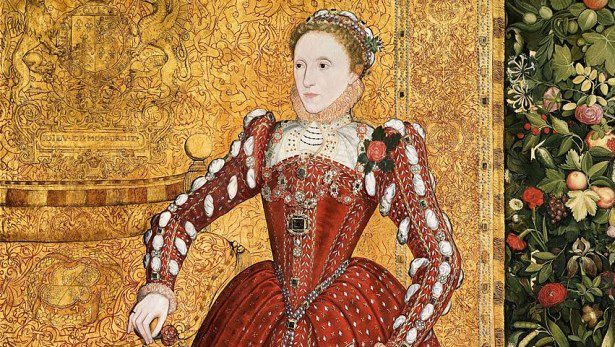
Elizabeth I as princess

(Queen’s Gallery, London, 10 May-6 October 2013)

Before we begin, let’s get one thing clear: if you have any interest in historical costume, the Tudor and Stuart courts, or textiles, then you absolutely must see this new exhibition at the Queen’s Gallery. It’s visually glorious, with a collection of splendid portraits from the Royal Collection displayed alongside surviving examples of costume from the period; and it’s also intellectually absorbing, because it takes very familiar images and, in switching the focus from the sitter to what they’re wearing, encourages you to think about portraits in an entirely new way.

Continue reading

Treasures of the Royal Courts (2013)

van Herwijck: Elizabeth I: The Hampden Portrait

Tudors, Stuarts and the Russian Tsars

(Victoria and Albert Museum, London, until 14 July 2013)

Along with my Murillo adventures last weekend, I also visited the V&A, to see their  exhibition about the early years of diplomacy between the English court and the Tsars of Russia. This has a (rather tenuous) Lymond connection, as it opens with the expedition of the adventurer Richard Chancellor, who my fellow Dunnetteers will remember from The Ringed Castle. Naturally, considering my enthusiasm for all things Tudor and Stuart, I would have gone to the exhibition anyway, but the Dunnett angle offered a welcome little extra dose of piquancy.

Continue reading

The Lost Prince: The Life & Death of Henry Stuart (2012-13)

Oliver: Henry Stuart, Prince of Wales

(National Portrait Gallery, London, until 13 January 2013)

No expense was spared to educate Henry Stuart, the eldest son of James I and the future Henry IX of England. Thanks to the efforts of his tutors, friends and courtiers he showed every sign of growing up to be a perfect example of the Renaissance prince.  He was tutored in history and the classics, and his adoring father wrote a manual for him, the Basilikon Doron, which offered advice on good governance (the original manuscript is in this exhibition).

Continue reading

The Wild, the Beautiful and the Damned (2012)

Lely: Frances Stuart

(Hampton Court Palace, until 30 September 2012)

First things first.  What a great title.  Who could resist that?  And then there is the poster, plastered across the Underground, which has been cleverly designed to show bare skin, unbound hair and rumpled sheets, without outraging the modesty of Tube bosses (who banned the comparatively inoffensive nudity of the Royal Academy’s Cranach poster back in 2008).  Beauty, lust, power, debauchery and a day out; what could be better?

Continue reading

As Meat Loves Salt (2001): Maria McCann

★★★★½

A new edition of As Meat Loves Salt has just been published in paperback.  The cover, aimed at the burgeoning understated-historical-romance market, shows a close-up of a woman’s torso, her hands in her lap. This amuses me, because although there are certainly women in the book, this cover completely fails to convey any of the story’s spirit or major themes. It would be like putting a fin-de-siècle lady with a parasol on the cover of Death in Venice. I much prefer the cover of my edition, which I’ve used to illustrate this post. Here is darkness, brooding, and a fragment of a young man’s face looming out of the shadow.

Continue reading