I, Lucifer (2002): Glen Duncan

★★★

I’m not familiar with Glen Duncan’s other books, but this one has caught my eye several times over the years – the concept tickled my sense of humour – and it seemed to be the perfect book for a languid, hot summer afternoon when I didn’t have the energy to tackle anything too demanding. Mind you, it won’t be for everyone: if you’re easily offended, I would steer clear (even though, in fact, the book is necessarily grounded in a very traditional vision of Catholicism).

Continue reading

The Wise Man’s Fear (2011): Patrick Rothfuss

½

The Kingkiller Chronicles: Book II

I have a confession. I began reading this in January on my Kindle and simply couldn’t get through it. When I felt it was time for a second bash at it, I borrowed a hard copy from the library, so that I could keep track of exactly where I was in the book. This time I sailed through much more easily. In general, The Wise Man’s Fear has the same strengths and appeal as The Name of the Wind, the first book in the series. If you enjoyed that then you should certainly carry on and read this, even though there are weaknesses in the narrative’s pace and structure in this instalment. I still can’t help but admire Rothfuss’s achievement in creating such a rich and lovingly-detailed world, with storytelling and music at its heart.

Continue reading

A Little Lower Than The Angels (1987): Geraldine McCaughrean

★★★

First things first: this is a children’s book, and I was never under any illusions about that. The cover caught my eye about four years ago, with its glorious sweep of peacocks’ feathers, and I’ve found myself coming back to admire the design ever since (it is much more beautiful than the covers of other editions I’ve seen on LibraryThing). In the end I bought it because, after all, it is a historical novel, set in the medieval period. I’m completely out of practice in judging the correct reading age for a children’s book, but I would hazard a guess that this would probably be best suited for nine to twelve-year-olds. From an adult perspective it’s charming but painted in rather broad strokes.

Continue reading

Purity of Blood (1997): Arturo Pérez-Reverte

★★★½

The Adventures of Captain Alatriste: Book II

In the second book in Pérez-Reverte’s swashbuckling series, we rejoin the eponymous captain and his page Íñigo shortly after the adventure of the two Englishmen recounted in Captain Alatriste. Life has returned to its normal rhythm and the captain is contemplating a return to active service in Flanders; but an encounter with their old friend, the poet don Francisco de Quevedo, raises the prospect of work to be done in Madrid.

Continue reading

Temptations to Devotion (2013)

Attributed to Ligozzi: The Body of Christ

Creating the Italian Altarpiece in the Renaissance and Baroque

(Christ Church Picture Gallery, Oxford, until 14 October 2013)

Since I was in Oxford to see the Ashmolean exhibition, I took the opportunity to pop in to see the current display at Christ Church Picture Gallery. I’m very fond of the gallery because, despite their limited resources, they make a real effort to keep the College’s drawings accessible through a frequently changing programme of displays. The collection isn’t digitised (which is something it would be great to change, if any Oxford students are looking for a bit of volunteering for their CV?), and James Byam Shaw’s famous catalogue doesn’t illustrate all the sheets, so these displays are the only practical way to see the lesser-known drawings.

Continue reading

The Visit of the Royal Physician (1999): Per Olov Enquist

★★★

Per Olov Enquist’s novel was a great success in his native Sweden, where it won the 1999 August Prize, and its critical acclaim continued with this English translation by Tiina Nunnally, which won the 2003 Independent Foreign Fiction Prize. It was also one of the sources of inspiration for the very good 2012 Danish film A Royal Affair, which I enjoyed immensely. Enquist’s novel shares much of its atmosphere with the film. It is a stark, claustrophobic and disturbing account of the ménage à trois which existed at the Danish court from 1769 until 1772, between the mad King Christian VII, his English wife Caroline Mathilde (younger sister of George III) and the German doctor Johann Friedrich Struensee, whose appointment as Royal Physician offers him all manner of opportunities.

Continue reading

Master Drawings (2013)

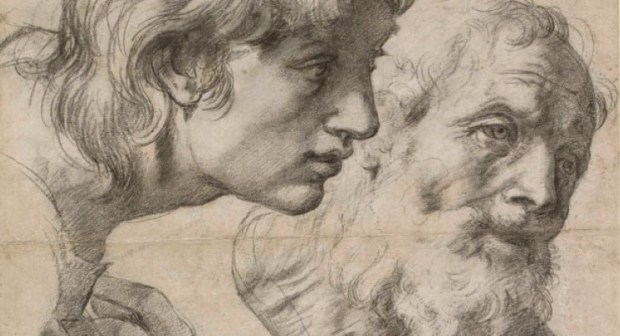
Raphael: Heads of Apostles

(Ashmolean Museum, Oxford, until 18 August 2013)

The Ashmolean Museum’s collection of Old Master drawings began with a bang in 1843 when the newly-fledged institution managed to acquire a group of Raphael and Michelangelo drawings from the collection of the late Sir Thomas Lawrence. Sheets by Rembrandt, Leonardo and Claude followed in 1855, as part of a bequest from the collector Chambers Hall and further Northern drawings were added in 1863 from the collection of the antiquarian and connoisseur Francis Douce. By having had the good fortune to be founded at a time when it was still possible to purchase great sheets by the Old Masters, the Ashmolean has built up one of the greatest collections of drawings in the country.

Continue reading

Coriolanus (1605/8): William Shakespeare

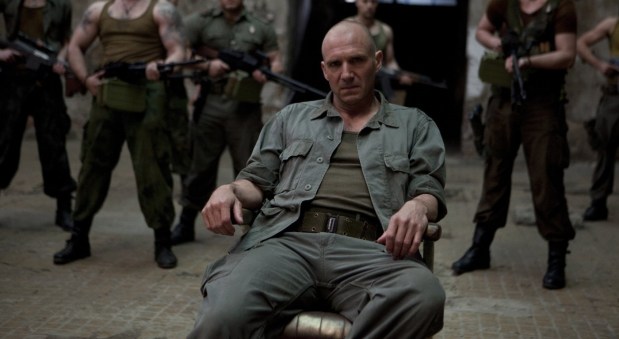
Coriolanus: William Shakespeare

(directed by Ralph Fiennes, 2011)

This was one of the many films I missed in the cinema, but I remember the critical acclaim that greeted its release in the UK last year. Last night I finally settled down to watch it; and what a treat it was. Fiennes’s directorial debut brings the action right up to date, telling the story with handheld cameras and news reports alongside more traditional techniques (the British newsreader Jon Snow has a cameo as the Fidelis TV presenter). Almost without exception, the excellent cast handle Shakespeare’s language with such ease that it feels almost like normal speech, and the story is presented with such clarity that (not knowing this play at all), I was completely gripped.

Continue reading

The Pale Horseman (2005): Bernard Cornwell

★★★

The Saxon Stories: Book II

This is the second volume in a series about the Northumbrian ealdorman Uhtred, born a Saxon but raised in captivity among the Danes as the adopted son of Earl Ragnar. The first book, The Last Kingdom, closed with a great battle at Cynuit, at which Uhtred led the Saxon forces to victory against the Danes and killed their leader Ubba Lothbrokson. This second book opens with the aftermath of the battle, as the Saxons once again fragment into their petty factions.

Continue reading

Hodd (2009): Adam Thorpe

★★★

This was my first encounter with Adam Thorpe and I can honestly say it’s one of the oddest books I’ve ever read. As a piece of literature it’s creative, subversive and intelligent. As an evocation of a historical period it’s utterly convincing, conjuring up the mixture of religious fervour and folk superstition that formed the medieval mindset. And yet, while I admired the achievement, I can’t honestly say I enjoyed it.

Continue reading