The Last Kingdom (2004): Bernard Cornwell

★★★½

The Saxon Stories: Book I

On a rather fortuitous trip to the library yesterday, I happened to see this book: the first in a series set in 9th-century Britain, at a time when the struggle between the Saxons and the Danes was at its fiercest. I haven’t read much Bernard Cornwell, despite his enormous popularity – in fact, I think Azincourt is the only book of his that I’ve read, and I can’t remember much about that. However, in the wake of King Hereafter, I thought I’d give this a go. It turned out to be a highly enjoyable read: light, full of action and (though very different from Dunnett) an interesting complement to Thorfinn’s story.

Continue reading

Life Among The Pirates: The Romance and the Reality (1995): David Cordingly

★★★★

David Cordingly was a curator at the National Maritime Museum in Greenwich for twelve years and was responsible for their 1992 exhibition Pirates: Fact and Fiction, which proved to be so popular that (rather than the planned run of four months) it stayed open for three years. As the public appetite for pirates was evidently so strong, he was invited to write a book on the back of the exhibition. Life Among The Pirates is lively and easy to read, and sets out to explore the gulf between the popular perception of pirates and the harsh reality, stretching from the Elizabethan privateers in the Spanish Main to the nineteenth-century Chinese pirates under the command of the savvy former courtesan Mrs Cheng. It’s a great introduction to the subject and has left me burning to finally read Treasure Island.

Continue reading

King Hereafter (1976): Dorothy Dunnett

★★★★½

For the last week or so, I’ve been lost in another world – in the sea-spray glinting off a longship’s figurehead, and the sheen of sunlight on helms and spears. It is the dawn of the 11th century. Viking culture, with its pillaging, sagas and piratical leaders teeters on the edge: and, falling, begins to assume the Christian values and the lineaments of the world we know today. It is also the moment when one man, by chance or the will of the Fates, finds himself in a position to begin unifying the disparate earldoms of Alba, Caithness and Orkney into a political entity that will assume the more familiar name of Scotia. That man is here most often given his pagan, Norse name: Thorfinn. History knows him by a much more famous name. Macbeth.

Continue reading

Fallen in Love: The Secret Heart of Anne Boleyn (2011): Joanna Carrick

Fallen in Love: The Secret Heart of Anne Boleyn: Joanna Carrick

(Red Rose Chain at the Tower of London and Gippeswyk Hall, Suffolk, until 16 June 2013)

This was something I heard about at the very last minute: having missed any mention of it in the press, I came across an entry on Laura Winningham’s indispensable London culture blog, The Winning Review. The prospect of seeing a play about the rise and fall of Anne Boleyn, in Tudor costume, at the Tower of London, was simply too good to resist.

Continue reading

The Great Gatsby (2013)

The Great Gatsby

(directed by Baz Luhrmann, 2013)

Baz Luhrmann has made a speciality of doomed love affairs in frenzied, hedonistic settings: the swaggering drug-hazed playground of Verona Beach in his Romeo and Juliet, and the absinthe-tinted alleyways of Montmartre in Moulin Rouge. His take on the American Jazz Age in The Great Gatsby should have been sparkling. And there are moments of visual splendour, but it feels slightly strained, as if Luhrmann is trying very hard (against his instincts) to rein in his usual manic directorial style. It’s as if he set out to make, comparatively speaking, a more understated film. And the problem is that understatement isn’t really his forte. 

Continue reading

Cry to Heaven (1982): Anne Rice

★★★★

First things first: just in case you jump to conclusions on seeing Anne Rice’s name, or the design of the current book cover on Amazon, this is not about vampires. This is one of her earlier books, published after Interview with the Vampire but before the rest of the Vampire Chronicles, and it is pure historical fiction. Moreover, it deals with a subject that (as far as I know) has been very rarely covered in fiction, with the one notable exception of de Balzac’s Sarrasine: the tragic and breathtaking phenomenon of the castrati.

Continue reading

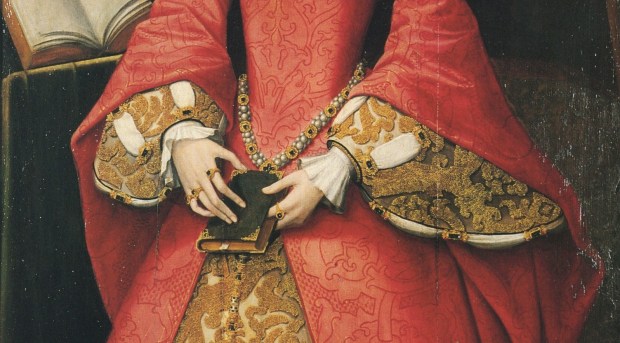
In Fine Style: The Art of Tudor and Stuart Fashion (2013)

Elizabeth I as princess

(Queen’s Gallery, London, 10 May-6 October 2013)

Before we begin, let’s get one thing clear: if you have any interest in historical costume, the Tudor and Stuart courts, or textiles, then you absolutely must see this new exhibition at the Queen’s Gallery. It’s visually glorious, with a collection of splendid portraits from the Royal Collection displayed alongside surviving examples of costume from the period; and it’s also intellectually absorbing, because it takes very familiar images and, in switching the focus from the sitter to what they’re wearing, encourages you to think about portraits in an entirely new way.

Continue reading

The Hundred-Year-Old Man Who Climbed Out Of The Window And Disappeared (2009): Jonas Jonasson

★★★★

Many of you will, most likely, already have read this: it’s been one of the hit books of the last twelve months and its cover has caught my eye many a time on bookshops’ bestsellers tables. It’s a wonder that it took me so long to get round to reading it, because Hesperus are one of my favourite independent presses; I went through a phase of compulsively buying a whole variety of books from their Classics series. Now that I’ve finally had the chance to sample The Hundred-Year-Old Man, I can completely understand why it’s been so popular. It reads like the irreverent love-child of Forrest Gump and The Girl with the Dragon Tattoo, feeding off the contemporary hunger for Scandi-crime novels but transporting its readers into a quirky genre that’s all on its own.

Continue reading

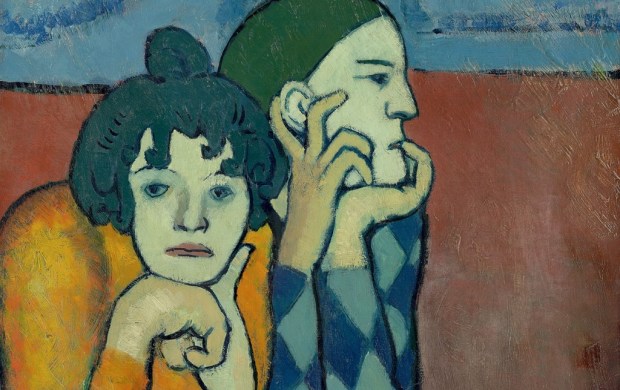
Becoming Picasso: Paris 1901 (2013)

Picasso: Harlequins

(Courtauld Institute, London, until 27 May 2013)

I haven’t left you much time to see this exhibition, but if you can get to Somerset House by the end of Bank Holiday Monday, I’d highly recommend it. The Courtauld have done again that which they do so well: choosing a very specific focus for an exhibition in order to throw new light on a familiar subject. Here they home in on one particular year in the young Picasso’s career: 1901, the year in which he came to Paris, had his first well-received exhibition at Galerie Vollard and then made his first compelling steps on the road to developing a distinctive style of his own.

Continue reading

A Virtual Love (2013): Andrew Blackman

★★★

As you’ll have noticed, I don’t often read fiction set in the present day, but in the wake of my Robin Hobb reread I wanted to move on to something completely different. Charlie of The Worm Hole mentioned this recently in her ‘currently reading’ post, and the concept intrigued me enough that I sought it out. It turned out to be a thoroughly contemporary story about love, identity and the alluring smokescreen offered by the Internet. And it shares some of the qualities of Internet media in that it’s fresh, snappy, delivered in bite-size chunks, and very much of the moment.

Continue reading