The Lost Prince: The Life & Death of Henry Stuart (2012-13)

Oliver: Henry Stuart, Prince of Wales

(National Portrait Gallery, London, until 13 January 2013)

No expense was spared to educate Henry Stuart, the eldest son of James I and the future Henry IX of England. Thanks to the efforts of his tutors, friends and courtiers he showed every sign of growing up to be a perfect example of the Renaissance prince.  He was tutored in history and the classics, and his adoring father wrote a manual for him, the Basilikon Doron, which offered advice on good governance (the original manuscript is in this exhibition).

Continue reading

HHhH (2010): Laurent Binet

★★★★

By any standards, this was an unusual choice for me. The story of the assassination in Prague of Reinhard Heydrich, architect of the Final Solution and one of the most terrifying figures in the Third Reich, is not the natural successor to Dorothy Dunnett’s Gemini. It is certainly not the kind of book I would pick out for myself. But it was persuasively and persistently recommended to me by someone whose opinion I respect a great deal and so I decided to give it a whirl. It was the right decision.

Continue reading

The Northern Renaissance: Dürer to Holbein (2012-13)

Holbein: William Reskimer

(Queen’s Gallery, Buckingham Palace, until 14 April 2013)

Back in 2008, the Queen’s Gallery put on the splendid exhibition The Art of Italy, in which the Royal Collection showed off its wealth of Renaissance and Baroque Italian paintings and drawings, assembled over four hundred years by an Italophile monarchy. It was the first exhibition I saw at the Gallery and I remember being amazed by the richness of the Collection’s holdings. The Northern Renaissance is the natural successor to that 2008 show and, while it includes some glorious objects, it is of necessity a more modest exhibition than its predecessor. It comprises 110 exhibits (compared to The Art of Italy‘s 153), of which 22 are prints rather than unique works and seven are arguably Italian rather than Northern.

Continue reading

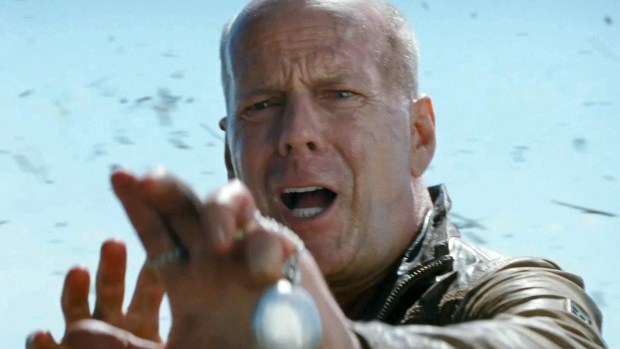
Looper (2012)

Looper

★★★½

(directed by Rian Johnson, 2012)

The year is 2044. As the voiceover at the beginning of the film tells us, time-travel hasn’t been invented yet, but in thirty years’ time it will have been. Having been invented, it will immediately be made illegal, with such high penalties that only the largest and most powerful criminal organisations dare to use it. For them, time-travel becomes the most efficient way of getting rid of their victims: they simply bundle them into time-travel capsules and beam them thirty years back in time. No bodies, no mess: the people simply disappear.

Continue reading

Cinderella Ate My Daughter (2011): Peggy Orenstein

★★★½

Dispatches from the front lines of the new girlie-girl culture

Although it was only published in 2011, Peggy Orenstein’s book has already acquired legendary status in certain circles. Her focus is primarily on girls aged between about three and ten. Her mission is to draw attention to the fact that these modern girls grow up surrounded by increasingly gender-stereotyped marketing, which offers a dismally restricted range of role models and aspirations. Orenstein argues that the apparently innocuous ‘princessification’ of little girls gives them a limited sense of their own potential and that a generation is growing up which has learned to value itself not on its brains or its courage but on how pretty it is.

Continue reading

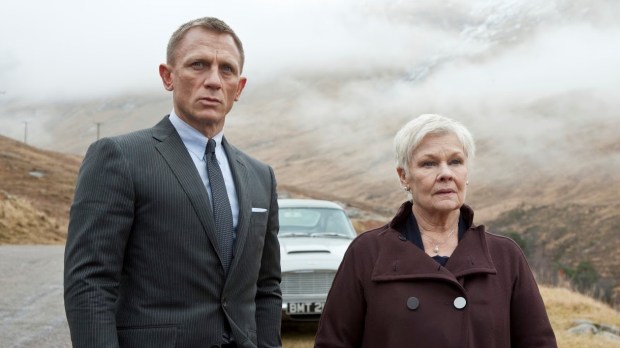
Skyfall (2012)

Skyfall

★★★★½

(directed by Sam Mendes, 2012)

Sam Mendes isn’t the kind of director you’d expect to see at the helm of a Bond film, but the gamble paid off: for me, this is the most intelligent and thoughtful instalment in the entire franchise. The essence of Bond is still here – the writers Neal Purvis and Robert Wade have been involved with the series since the Brosnan era – but it follows Casino Royale and Quantum of Solace in distilling that essence into a sleeker and more modern format. That tension between the old and the new, the traditional and the innovative, underpins the entire film.

Continue reading

Gemini (2000): Dorothy Dunnett

★★★★

The House of Niccolò: Book VIII

And so it ends, after weeks lost in this rich, beguiling other-world: it ends with sun, and an orchard near Sevigny, and a teasing glimpse of another Francis Crawford. I stayed up until midnight last night to finish this: there was no way, at this stage, that I could go to bed with only a hundred-odd pages to go.

Continue reading

Caprice and Rondo (1997): Dorothy Dunnett

★★★½

The House of Niccolò: Book VII

Time moves on apace and, in this penultimate instalment of the House of Niccolò, we rejoin Nicholas in the exile forced upon him after the revelations at the end of To Lie with Lions. Having allowed his personal vendetta to colour the dealings of his bank and almost brought down a nation in the process, Nicholas has been severed not only from his beloved company but also from his wife Gelis. Now he must take stock, judge where his future and desires really lie, and prove his competence and reliability to his friends.

Continue reading

To Lie with Lions (1995): Dorothy Dunnett

★★★★

The House of Niccolò: Book VI

The tone of the ending lingers with me yet, subdued and bittersweet rather than the dramatic cliffhanger I might have expected. After feeling rather lost in The Unicorn Hunt, I felt that this was a definite return to form. A very carefully-crafted plot on (generally) a limited geographical scale allows the characters and their relationships to shine. There are also some wonderful set-pieces – classic Dunnett – offering flashes of theatrical brilliance among the warp and weft of the intrigues.

Continue reading

The Unicorn Hunt (1993): Dorothy Dunnett

★★★

The House of Niccolò: Book V

It is a truth universally acknowledged that, just as you have a favourite book in a series, you’re likely to have a least favourite; and this is mine. Please be cautious if you haven’t read it because, later on, I won’t be able to avoid spoilers. For me it’s the least successful Niccolò book for the same reason The Disorderly Knights dissatisfied me: the story hares from place to place, never quite managing to take root.

Continue reading