Fingersmith (2002): Sarah Waters

★★★★

As the kind of person who likes to read the book before seeing the film, I was keen to read Fingersmith before the related Korean period drama The Handmaiden comes out on DVD. I’d held off reading it so far because it was the only Sarah Waters novel I hadn’t read and I was saving it as a treat. She’s a magnificent creator of character, atmosphere and dramatic tension, and all those qualities are present and correct in this dark, unexpectedly labyrinthine tale of secrets, schemes and lies in Victorian England.

Continue reading

Six Four (2012): Hideo Yokoyama

★★★

There’s definitely something very distinctive about Japanese fiction. It lavishes attention on the apparently inconsequential, the trivial, the minutiae of life, in a way that creates a strangely detached picture of life. I’m pleased to report that I found Six Four more engaging than other Japanese novels I’ve read recently – Parade or Slow Boat – but it’s still very definitely not a Western novel. Focusing on a cold-case kidnapping from fourteen years ago, it follows the staff of a provincial police station as their investigations become caught up in internal power struggles, distrust and mutiny.

Continue reading

The Captive Prince Trilogy (2012-14): C.S. Pacat

★★★½

In an ideal world, I’d use long journeys to finally read that second volume of Proust, catch up on some Herodotus, or focus on foreign-language exhibition catalogues. Instead, my brain cheerfully clocks out and I end up reading stuff like this. That isn’t to say C.S. Pacat’s trilogy is bad: on the contrary, it’s an engaging tale of political skulduggery and brooding romance. But I wasn’t going to own up to it until I saw a photo that Kerstin posted on Facebook, while lazing in the garden with her Kindle, and noticed that she was reading it too. At that point I decided that everyone’s entitled to a bit of froth once in a while, and thought I’d do a quick post on the trilogy – if only because, as Kerstin’s interest indicates, there’s more here for Dunnett readers than you might initially expect.

Continue reading

Mustang (2015)

Mustang

★★★★

(directed by Deniz Gamze Ergüven, 2015)

My parents recommended Mustang, a Turkish film they’d seen at their local film club, which complements some of the Middle Eastern films I’ve been watching recently. Like those, it focuses on the experience of being a young woman in a conservative society, and the ways in which an exuberantly Westernised younger generation can sometimes clash with their more traditional elders. It centres on the story of five teenage sisters who, after being spotted playing with boys from their school, are subjected to a strict imprisonment by their disapproving grandmother. Yet the abiding memory of the film isn’t the constraint of their new lifestyle, but the amazing warmth and love that exists between the sisters and their determination to regain control of their lives.

Continue reading

In Search of Hipermestra

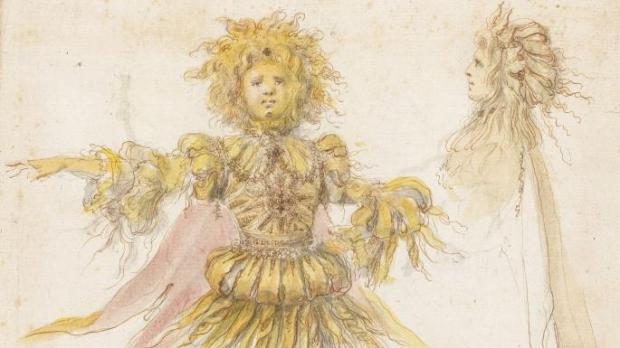
Stefano della Bella: Apollo

Glyndebourne’s current production of Francesco Cavalli’s Hipermestra brings an ancient tale of love and duty up to date, with a powerful contemporary setting. Being a historian, however, I always wonder what it would’ve been like to experience these operas as they were originally performed. What would we have seen if we’d been in the audience for Hipermestra’s premiere in 1658? Fortunately, we don’t have to leave it to the imagination. Extensive visual and written documentation records the costumes and sets. Even more excitingly, the theatre where the opera was first performed still exists and is still functioning. During a recent business trip to Florence, I took some time out to visit the Teatro della Pergola and its remarkable archives, in search of Hipermestra…

Continue reading

By Blood Divided (2017): James Heneage

★★★

The Mistra Chronicles (Rise of Empires): Book IV

A word of warning before I get into my flow: this is marketed as a potential stand-alone, but will make much more sense if you’ve read the previous three books in the Mistra Chronicles (Rise of Empires) series. I have not read these and consequently found myself floundering at first. Once I found my feet, however, I thought there was much to enjoy in this novel which takes us into rarely-mined historical fiction territory. Books set in the 15th century rarely make it further east than Venice and, indeed, we do spend some time in Venice here. But much of the story unfolds at Monemvasia and Mistra in the Peloponnese: two tiny outposts of the fading Byzantine Empire, standing proud against the looming armies of the Ottoman Turks. The true decline and fall of the Roman Empire is at hand, and it will be bound up with the story of two courageous men and the woman who is loved by both of them.

Continue reading

The Outcasts of Time (2017): Ian Mortimer

★★★

There’s a modern trend for historians to try their hand at fiction. As far as I can tell, it started with Alison Weir’s Tudor novels; more recently, Lucy Worseley and even Neil Oliver have jumped on the bandwagon. Now it’s the turn of Ian Mortimer, a brilliant medieval historian and the author of the various Time Traveller’s Guides to British history. You can understand the appeal. After all, historians have immersed themselves in the modes and manners of their specialist periods and should be perfect guides to fictional recreations of those worlds. But, but, but. Knowledge alone isn’t enough to make a good historical novel. Mortimer’s speculative time-slip moral fable is packed with instructive observations about daily life in the past, but does it work as a story?

Continue reading

In the Name Of… (2013)

In the Name Of...

★★★½

(directed by Małgorzata Szumowska, 2013)

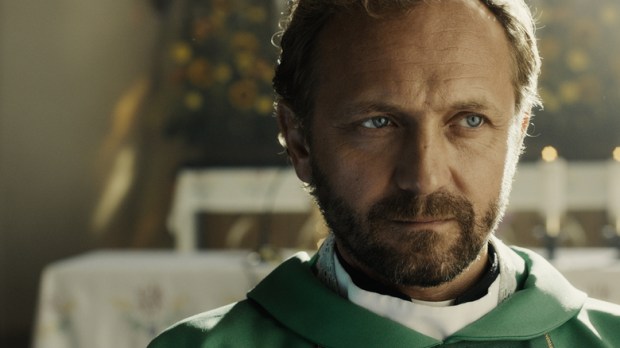
As you may have noticed, I’ve been making a real effort to watch more world cinema recently, and Amazon obligingly recommended this award-winning Polish film, which tackles the dark no-man’s-land between faith and desire. Brooding and often bleak, it focuses on Adam (Andrzej Chyra), an energetic priest who has been posted to an out-of-the-way parish in the middle of the countryside. Blessed with a talent for dealing with troubled teenagers, he has set up a residential centre for young offenders, in whom he attempts to instil respect for faith, discipline and obedience. In parts it’s oddly disjointed, but the film lingers for its stark and unsentimental view of life in the countryside, as well as its steadily thickening brew of unspoken longing and confusion.

Continue reading

Parade (2002): Shuichi Yoshida

★★★

My journey through faintly baffling Japanese fiction continues. I stumbled across this novel in the library, having decided to explore backwards from Z for once, and it caught my eye with its promise of an insight into the dislocation and atomisation of modern Japanese society. And yet, once again, it has turned out to be one of those books that I suspect Heloise has the patience for much more than me: a study of the pointlessness of contemporary life, and the strange dynamics of communal living.

Continue reading

Bryony and Roses (2015): T. Kingfisher

★★★★

I thoroughly enjoyed T. Kingfisher’s retelling of the Snow Queen legend in The Raven and the Reindeer and was unable to resist this reworking of Beauty and the Beast. It’s a fairy tale I’ve always loved, ever since I was six years old and went to see the animated Disney film at the cinema for a friend’s birthday treat. There’s much to love about the traditional version, but Kingfisher’s story is delightful in a different way, offering a no-nonsense heroine, a Beast with a dry sense of humour, and brooding dark magic.

Continue reading