The Winter Isles (2015): Antonia Senior

★★★★

Lyrical and heartfelt, this novel set in 12th-century Scotland feels like a natural successor to King Hereafter. It occupies much the same territory, following the ambitious young lord Somerled as he negotiates the rivalries and alliances of the Western Isles and develops a name for himself as a fearless warrior. Based on a figure who is as tantalising a blend of history and myth as Macbeth himself, it’s a novel that lingers on the feel of the wild land and the yawning breadth of the playful, fearsome, lovely sea, despite the occasional savagery of its battle scenes. With characters you truly grow to care about, and with a wonderful star-crossed love story at its heart, it’s a rewarding read.
Continue reading

Faramondo (1737): George Frideric Handel

Handel: Faramondo

★★★

(Britten Theatre, 25 March 2017)

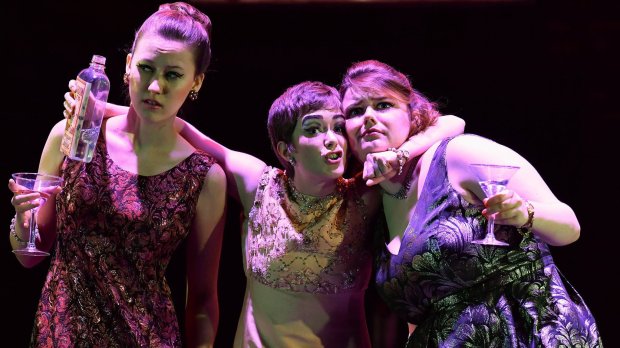
You can’t accuse Handel of not being productive. He wrote Faramondo while recovering from a stroke and, having finished it on Christmas Eve, began his next opera on Boxing Day. That would become Xerxes, one of his most enduringly popular scores, but Faramondo itself has never enjoyed the same acclaim as its younger sibling. There are perfectly good reasons for this, namely that the opera itself is a bit of a mess, but the students of the Royal College of Music have gamely taken up the gauntlet in this staged production, performed as part of the London Handel Festival. They’re accompanied by the London Handel Orchestra, with Laurence Cummings directing from the harpsichord; I also spotted Leo Duarte tucked in at the back with his trusty oboe.

Continue reading

Vermeer and the Masters of Genre Painting (2017)

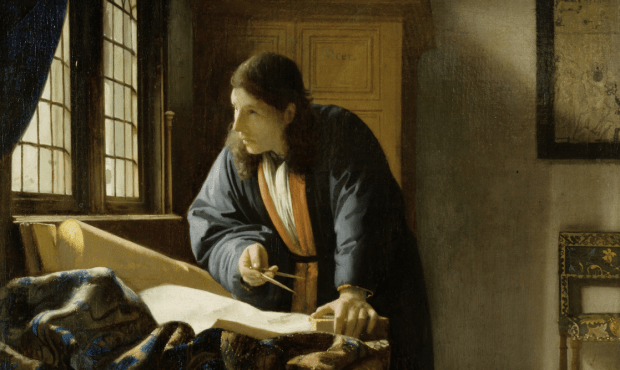
Vermeer: The Astronomer

Inspiration and Rivalry

(Musée du Louvre, Paris, 22 February-22 May 2017)

Vermeer is one of the few artists whose mere name can prompt a stampede. Nowadays he’s seen as a kind of lone genius, but this show restores him to the context of his age, showing him exchanging ideas and themes with his peers. It has proven to be one of the most popular exhibitions in the Louvre’s history, forcing the museum to introduce timed entry and forcing visitors to book in advance. Tickets cover both this and the Valentin de Boulogne exhibition and, though my heart lies with Valentin, I found myself captivated by these jewel-like pictures of the Dutch Golden Age.

Continue reading

Le Baroque des Lumières (2017)

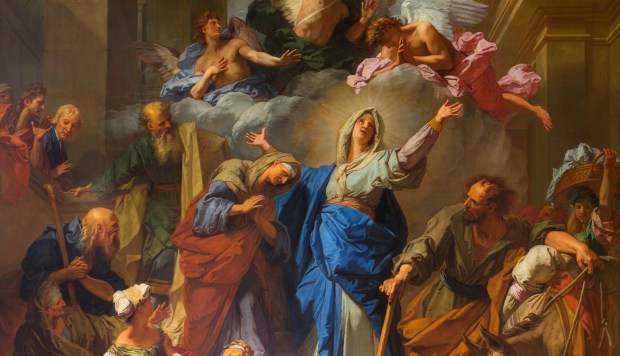
Jouvenet: The Magnificat (The Visitation)

Chefs-d’œuvre des églises parisiennes au XVIIIe siècle

(Petit Palais, Paris, 21 March-16 July 2017)

Spare a thought for French history painters of the 18th century. They’re overshadowed on one side by their glamorous 17th-century predecessors, bathed in the reflected glory of the Sun King and, on the other side, by the tousled, poetic 19th-century Romantics. If people associate anything with the 18th century, it’s frills, furbelows, plump putti and simpering shepherdesses. But this isn’t actually representative of what people would have seen at the time. The concept of the public national gallery hadn’t yet taken hold, but the French could still admire splendid works by the leading artists of the day – not in the secular cathedral of the museum, but in the literally hallowed spaces of Paris’s churches. This splendid show reunites some of the period’s great religious canvases, many of which have been restored. Vibrant colours shimmer on the walls, dismantled schemes are reunited, and a generation of virtually forgotten artists is brought back to the public eye.

Continue reading

Valentin de Boulogne: Beyond Caravaggio (2017)

Valentin: David with the Head of Goliath

(Musée du Louvre, Paris, 20 February-22 May 2017)

Around 1610, a French teenager arrived in Rome, hoping to study as a painter. His name was Valentin. Although he was just too late to meet Caravaggio, his artistic formation took place in a community beholden to the sharp contrasts and uncompromising realism of the older artist. Valentin would become known as one of the most gifted of the ‘Caravaggisti’, but this exhibition gives him credit as someone who was able to develop and transcend his sources. We move from rowdy Roman taverns, full of cardsharps, fortune tellers and impromptu concerts, to face-to-face encounters with brooding saints. Every room testifies to this underrated painter’s flair and intensity.

Continue reading

Dancer (2016)

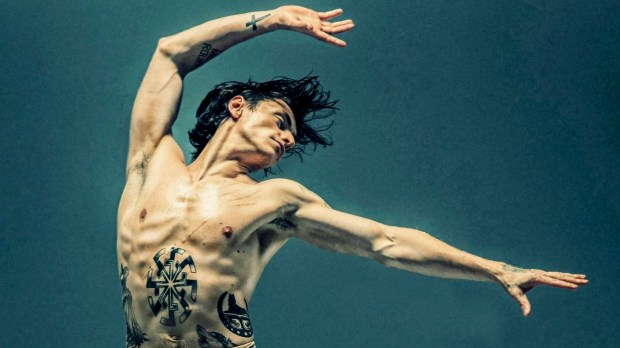
Sergei Polunin

★★★★½

(directed by Steven Cantor, 2016)

Classical ballet has always been a foreign country to me. Until Thursday, I hadn’t even heard of Sergei Polunin. But then I read a review of his current show at Sadler’s Wells which, in turn, led me to YouTube and his video Take Me to Church. Even on an iPhone screen, it took my breath away. I’m always alert to the beauty of the human form, and I admire dancing in which we see the body pushed to its limits, at the point where grace and power blend into a singular alchemy of expression. This four-minute piece, danced by a lone young man in ripped leggings in shafts of sunlight, was a ravishing spectacle of exactly that. What was the story behind this raw and emotional performance? Fortunately, this newly-released documentary was on hand to tell me more.

Continue reading

As Nature Made Him (2000): John Colapinto

★★★★

The Boy Who Was Raised As A Girl

Following on from Geniethis book explores another case which featured prominently in my A level Psychology textbook. It’s one of the most famous stories in the canon, a case which has been used on both sides of the nature-nurture debate, and one which does more than any other to prompt outrage at the medical establishment. It tells the tale of twin baby boys, born in Winnipeg in 1967 and admitted at eight months old for circumcision. When error, either mechanical or human, caused catastrophic burns to the penis of the elder twin, doctors advised that the only option was to castrate the child and raise him as a girl. His distraught parents followed this advice. This is the story of David Reimer: a story of dizzying medical hubris and humbling resilience, made deeply poignant by a tragic coda which postdated the publication of this study.

Continue reading

Oswiu: King of Kings (2016): Edoardo Albert

★★★★

The Northumbrian Thrones: Book III

In this third and (currently) last instalment in The Northumbrian Thrones, the ramifications of Oswald‘s untimely death spread across the feuding kingdoms of Britain. It is now 642 AD and the unification that seemed within reach during the reign of Edwin has crumbled away. Even Northumbria is no longer united. Oswald’s younger brother Oswiu faces a long, hard battle to secure his kingship against the mightiest ruler in the land: Penda, ambitious and ruthless king of Merica. But Oswiu has one advantage that Penda lacks: the posthumous, miracle-working reputation of the murdered Oswald.

Continue reading

The Ladies of Llangollen (1971): Elizabeth Mavor

★★★★

Like the Chevalier d’Eon, the Ladies of Llangollen came my way thanks to a work project. When trying to find an introduction to their lives, I judged that Elizabeth Mavor’s book seemed the best option, despite now coming across as slightly dated (it was published in 1971). Yet, for all that, it presents a thorough and sensitive discussion of these two remarkable women, who created an idyllic lifestyle together on their own terms and in defiance of social convention. Drawing on the Ladies’ own journals and correspondence, along with the letters of their immediate circle, newspaper reports and other documents, Mavor’s book isn’t just the sound introduction I was looking for, but an admirably unbiased and scrupulously fair double biography.

Continue reading

Vinegar Girl (2016): Anne Tyler

★★★

The Taming of the Shrew Retold

I’ve been reading quite a lot of serious books recently and I wanted a bit of a break with something light and upbeat. This installment in the Hogarth Shakespeare series, in which contemporary writers reimagine the playwright’s storylines, was just the trick. Now, I’ll be honest, no modern reworking of the Shrew can match 10 Things I Hate About You in my estimation but, that caveat stated, I thought Tyler’s take on things was light and fun.

Continue reading